Allrounder 720 E Golden Electric Slim In Design And Price
• New: Electric Allrounder with 2,800 kN clamping force • Attractive: Low investment costs, short delivery times, high level of flexibility • Slimline: New design saves space and increases overall Lossburg, 09/09/2024 The new Allrounder 720 E Golden Electric with a clamping force of 2,800 kN extends the product range of the electric series of the same name upwards. Its main advantages in a nutshell? A slim design with a price to match. Following its world premiere at NPE in Orlando, US, and its European premiere at Plastpol in Kielce, Poland, Arburg is now showing this machine for the first time at a trade fair in Germany at Fakuma 2024 (hall A3, stand 3101). It combines electrical precision, process stability and a small installation area with high component quality, low investment costs and short delivery times.
The extension of the electrical machine portfolio helps customers to meet current challenges such as increasing price pressure coupled with rising costs for labour, energy and materials as well as ever-shorter product life cycles and faster product changes. To enable attractive investment costs and a rapid return on investment (ROI), Arburg uses standardised equipment without compromising on quality and performance. So the ne”Golden” combines a high level of precision with a slimline design at a particularly attractive price/performance ratio.
Significantly smaller installation area Arburg has optimised the design so that the new Allrounder 720 E Golden Electric, with a width of just 1,848 millimetres, has a significantly reduced installation area compared to other machines in its class. This has been achieved through features such as a new safety door with recessed handles. At the same time, the door opening has been widened to 1,400 millimetres, making the ejector area more accessible, for example. Due to its smaller installation area, the new Allrounder fits into existing production grids and lines. This is of particular interest when old machine technology needs to be replaced. However, even for new production facilities that are being planned, every achievable space saving is a valuable resource. Thanks to the slim design, more machines can be set up in injection moulding production, resulting in an increased output per square metre.
Reliable, stable machine technology The Allrounder 720 E Golden Electric features high-quality machine technology to ensure stable and reliable plastic parts production. This includes a toggle-type clamping unit and direct drives from Arburg’s subsidiary AMKmotion. With an electric mould height adjustment system, mould installation heights of up to 800 millimetres are possible. The drive components are optimised for a clamping force of 2,800 kN. The proven high-quality Arburg plasticising with the “aXw Control ScrewPilot” ensures reproducible injection and excellent moulded part quality. Optimised mould venting with two-stage mould locking also plays a part in this. For convenient maintenance, the new electric Allrounder has the same easily accessible control cabinet concept as the new hybrid machines. A lubrication unit and an optional pneumatic system are located on the operating side. The parts chute in the machine base has been widened, making it easily accessible.
Flexible automation and application The new electric machine is not limited to a specific product and is quickly available, which is particularly advantageous for short-term replacement purchases and capacity expansions. It is relevant for almost every industry and of particular interest for technical injection moulding. Other typical areas of application include dimensionally stable housings for electromobility, thick-walled closures for household goods, precision components for medical technology, and the construction and leisure industries.
The Allrounder 720 E Golden Electric is equipped with the Selogica ND control system as standard. If required, additional options and functions such as core pulls and heating and cooling circuits can be easily integrated and programmed, enabling a wide range of plastic parts to be produced flexibly, efficiently and reliably.
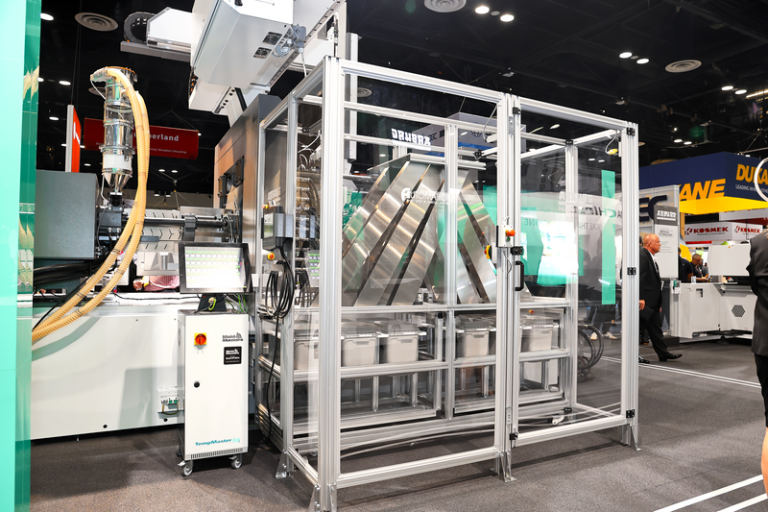
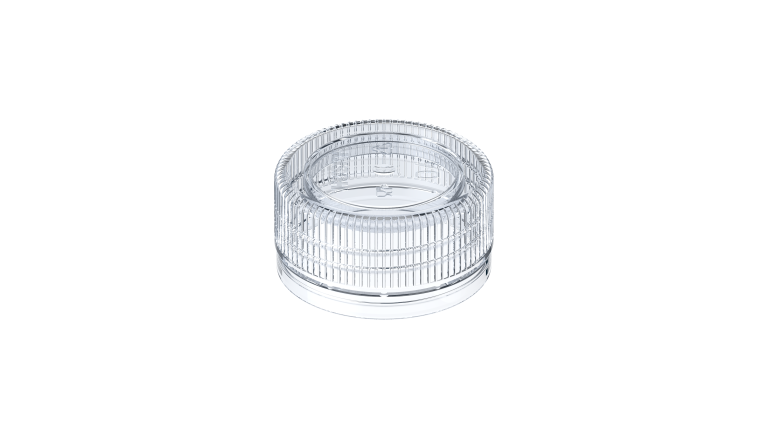
24 razor covers in 11.5 seconds. The new electric machine can also be automated with linear Multilift robotic systems and six-axis robots from Arburg. The exhibit is equipped with a Multilift V 30. At Fakuma 2024, the Allrounder 720 E Golden Electric with a clamping force of 2,800 kN and a size 800 injection unit will be producing PP razor covers by way of example. A 24-cavity mould from Hack will be used. The cycle time is around 11.5 seconds, with each moulded part weighing 1.2 grams. The 24 finished parts are then ejected in groups of four, clustered by cavity, into six boxes.
“Smart” communication for predictive maintenance
“Smart” communication between the production cell and its centrepiece, the injection mould, using OPC UA is essential for predictive maintenance. For this purpose, the “Moldlife Sense” computer system enables sensor-controlled mould monitoring over the complete life cycle and detects changes to the mould at an early stage. The measured values from various sensors on the mould can be visualised in the machine controller. If these are outside specified tolerances, an event is automatically generated. The same applies to the indicators for the built-in acoustic emission sensors, where the “noise ID” is visualised and checked to see whether it is within the given tolerances. Individual events, such as warnings, alerts and error messages, can also be displayed in the controller and documented. This allows users to identify anomalies in the process quickly and reliably and better assess what needs to be done. In an emergency, the machine stops and issues a corresponding message so that the operator can react correctly.
PET Bottle-to-bottle Recycling: Ganesha Ecopet’s Powerful way to Mitigate the Effects of Climate Change
The Indian PET recycling specialist ramps up its PET bottle-to-bottle recycling capacities with two Starlinger recycling lines to a total of 42,000 tons per year. It aims to recycle 25 % of India’s PET bottle waste by 2026.
The two new Starlinger recoSTAR PET 165 HC iV + recycling lines are set up at the recycling facility of Ganesha Ecopet Private Ltd. in Warangal, Telangana State. The company, a subsidiary of Indian PET recycling pioneer Ganesha Ecosphere Ltd., already produces recycled PET flakes and pellets for food-grade packaging as well as for filament yarns and fibres on two Starlinger lines installed in 2022. The new recycling lines are in operation since mid-2024 and triple Ganesha Ecopet’s annual production of bottle-grade rPET, raising it from 14,000 tons to a total of 42,000 tons.
EPR and consumers drive demand for sustainable products
The increasing demand for food-safe recycled PET in India has two main reasons. On the one hand, the Indian government has introduced Extended Producer Responsibility (EPR) for importers, brand owners and plastic waste processors as part of its Plastic Waste Management (Amendment) Rules in 2022 to ensure systematic collection of plastic waste. In addition, the rules stipulate that brand owners and producers must include a 30 % share of post-consumer recycled content in PET bottles by 2025, with the share being gradually increased each year to reach 60 % by 2029.
On the other hand, consumer preferences in India are changing, with sustainability being one of the top five factors for purchasing a product. Especially the large number of young consumers —i.e. millennials and generation Z— are increasingly demanding products and packaging that do not harm our planet. Brands respond to that by creating supply chains and packaging that are circular and sustainable. Recycled PET is one of the most convincing options for plastic packaging, given its continuous recyclability and lower carbon footprint compared to other alternatives, while not compromising on production scale, durability or quality.
“Our goal is not only to recycle plastics, but to create premium-quality, sustainable and viable circular solutions for brands,” said Sharad Sharma, Managing Director at Ganesha Ecosphere. “Recycling is not just an environmentally responsible choice; it is a powerful way to reduce CO 2 emissions and mitigate the effects of climate change. Starlinger’s superior food-grade PET recycling technology, combined with the operational expertise we have built up over the last 30 years on the Indian waste recycling market, enables us to push the boundaries of what is possible in PET recycling. Today, we proudly provide the best quality of recycled PET: like-to-like in properties with virgin PET, but with huge environmental savings in carbon emissions and energy. Various global FMCG brands like Coca-Cola have placed their trust in us to make their packaging circular while ensuring utmost safety and quality for the consumers.”
“Ganesha Ecosphere is one of the trailblazers for a circular plastics economy in India,” said Paul Niedl, Commercial Head of Starlinger recycling technology. “With their vast experience in the Indian plastics recycling sector and their willingness to invest in state- of-the-art technology they are able to transform post-consumer scrap into a high-quality secondary raw material for plastic packaging producers. As a technology developer and supplier, we are proud to support Ganesha Ecosphere on their way to ensure a clean, healthy and liveable future for our children.”
Focusing on sustainable production, Ganesha Ecopet also minimized the process-related carbon emissions by recycling and reusing 95 % of the consumed water as well as increasing the use of renewables in plant operations. With a total production capacity of 42,000 tons of food-grade recycled post-consumer PET per year the PET recycling company caters to Indian, US, and European markets. “We are grateful for the partnership with Starlinger and especially applaud their highly advanced, food-safe bottle-to-bottle recycling technology as well as their continuous support that has made this feat possible and circular economy a reality,” Sharad Sharma concluded.
Incentives for improving the Indian waste management sector
Ganesha Ecopet sources post-consumer PET bottles from every possible channel: online, offline, and through more than 300 suppliers and aggregators across India. The Indian government has set a focus on improving the waste management sector. Due to the size and efficiency of the already existing informal waste collection network, through which around 95 % of PET waste —one of the highest rates worldwide— in India is collected and recycled, the main goal is to optimize the current systems. There are various start- ups that are tackling multiple aspects, from piloting deposit return/refund schemes to online scrap marketplaces. The government also plays an important role by setting incentives for better Environmental, Social and Governance (ESG) practices and taxing unsustainable practices.
A pioneer in PET recycling
Ganesha Ecosphere looks back on more than 30 years of experience in the PET recycling business. Founded in 1987, the company started out as a yarn production facility. In 1994, it was among the first companies in India to reprocess PET waste to manufacture recycled polyester staple fibre (RPSF) and recycled polyester spun yarns (RPSY). By today, the group operates six production sites located in the Indian states of Uttar Pradesh, Uttarakhand and Telangana, and one in Nepal. In addition to bottle-grade rPET pellets and flakes, Ganesha Ecosphere produces rPET staple fibre for yarns, nonwovens, flame retardant fabrics, and fibre fillings. Its highest quality rPET products are produced by its subsidiary Ganesha Ecopet and marketed under the brand name “Go Rewise”. With over 2700 employees and exports to more than 18 countries, Ganesha Ecosphere ranks among the largest rPET producers in India, recycling 9.4 billion PET bottles per year.
Being integral part of TaipeiPLAS 2024, a debut summit, “Visionary and Sustainable Development Summit for the Plastic and Rubber Industry,” will take center stage on September 25 of Taipei International Plastics & Rubber Industry Show.
Speakers at the summit will be high ranking officials in the industry sharing perspectives on the integration of digitalization and decarbonization that potentially drives the industry toward smarter, more efficient, and environmentally friendly evolution.
In the morning session, “Digitalization and Sustainable Development of Plastics and Rubber Processing Equipment,” experts include Carson Jui, Application Manager of ARBURG Taiwan Branch, David Chen, General Manager of Wittmann Battenfeld (Taiwan), Catherine Huang, Chief Sustainability Officer of Victor Taichung, and Bush Hsieh, Plastics and Rubber Machinery Committee Chairman of Taiwan Association of Machinery Industry.
As for the afternoon session, “High-Value Innovative Applications of Plastic and Composite Materials,” lecturers are Sand Dee Ng, Managing Director, BASF Taiwan, Jim, Tai, General Manager of REMONDIS Taiwan, Stephen Liu, General Manager of Formosa Smart Energy, and Chuan-neng Lee, Head of Unsaturated Polyester Resins Division of ETERNAL MATERIALS. Then a panel discussion moderated by Dr. Hsien-Tang Chiu, Executive Director in Society of Plastics Engineers – Taiwan Section will be followed to deliver more insights on the application of sustainable innovative materials.
This year’s TaipeiPLAS will be held September 24 to 28 at Taipei Nangang Exhibition Center, Hall 1, in conjunction with ShoeTech Taipei, featured by three themes: “Innovative Materials,” “Advanced Manufacturing,” and “Circular Economy” with up to 500 exhibitors in 1,800 booths.
Shanghai Bozhi Expands Platemaking Capacity With Second ThermoFlexX Imager
Shanghai Bozhi Graphic Reproduction Co Ltd specializes in the production of high quality flexographic plates for customers that serve a multitude of globhttps://globalplasticsnetwok.com/?s=productionl brand owners, such as Procter & Gamble, Johnson & Johnson, Unilever, Disney, Adidas, and Yinlu Foods, as well as fast food restaurant chains KFC and McDonald’s. Applications include wine labels, aseptic packaging, self-adhesive labels, film and soft tubes, and various paper cups, to name a few.
As a member of the Flexographic Printing Branch of China Printing Technology Association, Shanghai Bozhi was among the pioneers in China to embrace ThermoFlexX thermal imaging technology. In 2020, the company decided to install a ThermoFlexX TFxX 60S Imager which has since elevated its standards in terms of both quality and productivity to higher levels. More recently, the company expanded its ambition with a dual-head TFxX 60D Imager supplemented by Woodpecker surface screening technology. “With our first ThermoFlexX Imager, we took a real leap of faith because we believed that this technology from XSYS had the potential to revolutionize our platemaking business, and we have certainly not been disappointed,” said Mr. Weining Huang, GM of Shanghai Bozhi. “That first imager brought us to new heights cementing our reputation for excellent quality and fast, reliable service, so it was an easy decision to implement the new dual-head TFxX 60D machine into our portfolio.”
Second ThermoFlexX Imager with double capacity
ThermoFlexX imaging technology excels through its high speed, excellent quality and remarkable ease of use. Featuring highest levels of automation, it thermal processing is an open system that can image all digital plates, any brand, whether for solvent, water-washable or . The ThermoFlexX portfolio includes five sizes of imagers to handle the widest range of plate dimensions. The two 60 model machines at Shanghai Bozhi’s facility can image plates up to 1067 x 1524mm (42 x 60 inches). Minimizing operator intervention, plates are automatically loaded and unloaded with just one touch of a button, while the FlexTray mobile table facilitates easy plate transport and handling to avoid accidental damage. Importantly, the company’s new TFxX 60D Imager is configured with dual 100W lasers effectively doubling productivity by increasing the output from 6 to 12 square meters per hour at the same high quality of 2540dpi.
Shanghai Bozhi also chose to implement ThermoFlexX Woodpecker surface screening technology which boosts solid ink density and delivers a smoother ink laydown with lower volume anilox, to save on costs and gain a further competitive advantage. Applying microstructures to flat-top dots on the plate surface, Woodpecker screening is introduced at the imaging stage without any changes to the workflow and helps maintain print quality at the highest printing speeds.
Bringing in a new era with ThermoFlexX
Partnering with XSYS to enjoy the many outstanding benefits of ThermoFlexX imaging and Woodpecker screening has also supported Shanghai Bozhi in establishing a dedicated technical department to better serve customers. With a team of experts who have more than 10 years of experience in flexo platemaking and printing, the prepress company can now provide customers with all the technical requirements needed to successfully convert print jobs from offset and gravure to flexo. This not only shortens the lead time for brand owners, but also greatly improves efficiency for the benefits of all stakeholders.
[Mr. Weining Huang] concluded, “The highly innovative ThermoFlexX technology immediately set us on a path of guaranteed growth, giving our company the quality and capacity boost we required. Now with the new dual-head TFxX 60D, Imager we have taken another step up to ensure we stay at the forefront of platemaking innovation in China. We are also grateful for the excellent partnership with XSYS which ensures that we maximize the full power of our two imagers as we bring in a new era for Shanghai Bozhi.”
Commenting on this second investment, Magenta Zheng, GM of XSYS China, said, “With its high level of automation, impressive speed and exceptional quality, there is no doubt that the new ThermoFlexX TFxX 60D digital imager will significantly enhance Shanghai Bozhi’s competitiveness. We are extremely proud to partner with the company and look forward to growing together with this industry innovator.”
LOHIA CORP EXPANDS GLOBAL FOOTPRINT WITH ACQUISITION OF J.J. JENKINS INC AND STRATEGIC JOINT VENTURE WITH OMGM
Lohia Corp Limited (LCL) is pleased to announce two significant milestones that mark our expansion in the global market.
We have successfully acquired J.J. Jenkins Inc. a respected name in machine manufacturing for high-tech industries, through our US subsidiary, Leesona Corp, a 130-year-old pioneer in winding machines. This acquisition aligns perfectly with our strategic vision to expand our specialty yarns and tapes portfolio in medical and defence applications.
In addition, we have formed a strategic Joint Venture with Italy’s O.M.G.M. sas, leading to the creation of OMGM Extrusiontechnik Srl. With LCL holding the majority stake. This JV represents a significant diversification of our product portfolio, introducing solutions in Extrusion and Winding systems for a variety of technical applications.
These advancements are not just about growth; they’re about bringing cutting-edge solutions to our customers and contributing to industries that make a difference. Stay tuned for more updates as we continue to push the boundaries of technology and engineering excellence.
Mr. R K Lohia, Chairman & Managing Director of Lohia Corp Limited, expressed his enthusiasm about the new ventures “Both these new partnerships are a pivotal move that will broaden our product offerings and provide our customers with even more choices and will enhance our presence in the North America and European market, at the same time strengthen our presence in all other global markets.”
LOHIA CORP EXPANDS GLOBAL FOOTPRINT
About Lohia Corp Limited
Lohia Corp Limited (LCL) stands as a testament to the power of innovation and commitment to excellence. As the flagship company of the Lohia Group, LCL has established itself as a global leader in providing comprehensive solutions for the raffia industry. With an impressive installation base of over 2,250 extrusion lines and 95,000 Circular Looms across more than 100 countries, LCL’s influence in the plastic woven fabric and bag sector is unparalleled. The company’s dedication to quality and efficiency has resulted in an astounding plastic processing capacity of 7.7 million metric tons per annum of PP & PE.
LCL’s products, ranging from packaging systems for solid bulk materials to roof underlays and tarpaulins, are not just industrial applications; they are the building blocks of industries worldwide. The company’s commitment to sustainability and innovation is the driving force that makes it the world’s largest producer of machines for the raffia sector. As we look to the future, LCL’s legacy of excellence is more than just a benchmark; it is a continuous journey towards pushing the boundaries of possibility.
About J. J. Jenkins, Inc
J. Jenkins Inc. is a very respected name based out of North Carolina, USA. They remain at the forefront of the synthetic fiber and monofilament industries. Their unwavering commitment to innovation, quality, and customer satisfaction has not only set industry standards but also fostered enduring partnerships with Fortune 500 companies including some in the medical and defence industries.
Their holistic approach, combining state-of-the-art technology with unparalleled after-sales support, exemplifies their dedication to client success. With a vast inventory ensuring rapid response times, J. J. Jenkins, Inc. is synonymous with reliability and efficiency.
About OMGM sas
Since 1965, OMGM sas is a distinguished Italian leader and has been at the forefront of the plastic processing industry, pioneering in Monofilament Extrusion, straps, ropes and various other niche applications. Their commitment to excellence is evident in their advanced technologies and versatile extrusion lines, handling a variety of materials for diverse industries.
As we look ahead, it’s clear that OMGM Extrusiontechnik Srl will continue to lead and transform the industry with their precision, innovation, and bespoke solutions. They are more than a company; they are a trusted partner in progress.
VTT Opens A Pilot Plant Utilising Captured Carbon Dioxide In Espoo, Finland – Aiming To Process Biogenic Industrial Emissions Into Long-Lasting, Recyclable Plastic
VTT Technical Research Centre of Finland, LUT University, and companies have opened a pilot plant in Espoo, Finland, to process captured carbon dioxide into compounds that can replace fossil raw materials in plastic products and chemicals. The pilot plant, built in sea containers, started operations in August. Renewable energy, the hydrogen economy and bio-based carbon dioxide emissions from industrial sectors open significant opportunities for Finland to create new sustainable industrial activity.
Finland wants to utilise bio-based carbon capture as one way of reducing greenhouse gas emissions. For example, the Government Programme aims to significantly increase the use of technological carbon sinks. The Forest CUMP research project of VTT and LUT University has investigated how bio-based carbon dioxide from, for example, the forest industry and waste incineration can be captured and converted into high-value products such as polypropylene and polyethylene. The promising results will now be put into practice as VTT and its partners open a pilot plant built in sea containers in the Bioruukki pilot centre in Espoo, Finland. “Finland has huge potential to be one of the leading countries in utilising bio-based carbon dioxide,” says Juha Lehtonen, Research Professor at VTT.
VTT’s pilot equipment for converting carbon dioxide into synthesis gas. Synthesis gas produces ethylene and propane gases for polymer production
“Finland produces around 30 million tonnes of bio-based carbon dioxide per year. If captured and converted into products, Finland could become a major producer and exporter of polymers and transport fuels made from carbon dioxide and hydrogen.” Polypropylene and polyethylene are the most common plastic types used in everyday life, which are currently mainly produced from fossil raw materials. Plastics play an important role in sequestering carbon dioxide in long-lasting products.
“The technology creates a significant export opportunity for renewable high-value-added products. Due to its extensive forest industry, Finland has a huge potential to utilise bio-based carbon dioxide. Outside the Nordic countries, large sources of bio-based carbon dioxide are rare,” Lehtonen says. The business ecosystem covers the chain from factory pipes to plastic products.
The Forest CUMP project is implemented in close cooperation with business partners as part of Business Finland’s Veturi ecosystem, which supports sustainable development. One of the Veturi companies is Borealis. Forest CUMP is part of Borealis’ SPIRIT programme, which promotes the green transition of the plastics industry.
“This is a significant development project to support our vision of capturing and utilising industrial carbon emissions by producing long-lasting or fully recyclable plastic products that can sequester carbon for a long time,” says Ismo Savallampi from Borealis. The research project has studied the entire production chain from carbon capture to ethylene and propylene production. Ethylene and propylene are the raw materials for polyethylene and polypropylene. At this stage, they are produced at VTT Bioruukki from flue gas carbon dioxide. In the future, the technology can be brought into production wherever bio-based carbon dioxide is produced, such as in forest industry or waste incineration plants.
The Forest CUMP project, funded by Business Finland, is part of the Business Finland Veturi ecosystem, which develops various solutions towards sustainable development and national carbon neutrality together with major Finnish companies. The project started in August 2022 and will run until the end of 2024. The project involves the leading companies Borealis, Neste and ABB, as well as Metsä Spring, Kemira, Vantaa Energy, Stora Enso, Kleener Power Solutions, Carbonreuse Finland, Fortum and Essity. In addition to VTT, LUT University is a research partner.
Heinlein Plastik-Technik Becomes A Member Of The ALPLA Group
Expansion of business activities and of system solutions portfolio
The ALPLA Group is further expanding its pharma division ALPLA pharma with its acquisition of Heinlein Plastik-Technik GmbH. The German packaging specialist Heinlein is one of the world’s best-known addresses for the development and manufacture of closure systems, dosing systems and application aids for the pharma and medical industries, and currently has a workforce of around 175 at its site in Ansbach, Bavaria.
‘I am delighted that we have been able to gain Heinlein Plastik-Technik, which is a long-established, global business,’ says ALPLA CEO Philipp Lehner in summary, upon successfully concluding the negotiations. ‘It is a good fit with our focus on the one hand on the dynamics of advancing technological innovations and on the global expansion of our business activities on the other. With the extensive know-how that Heinlein has to offer, we can expand our product portfolio to include high-quality primary packaging solutions for the pharma industry. The beneficiaries of this will first and foremost be our mutual customers, who will now be able to source their tailored system solutions from a single place.’
The ALPLA Group is further expanding its ALPLApharma division with its acquisition of Heinlein Plastik-Technik GmbH.
‘With Heinlein Plastik-Technik at our side, our capacities in the area of injection moulding will now considerably increase once again,’ adds Walter Knes, Managing Director of ALPLA pharma: ‘We additionally plan to turn the Ansbach site into a technology centre for injection moulding and automation technology for the entire ALPLA pharma group.’
Saskia Wellhöfer-Meyer, owner and CEO of Heinlein Plastik-Technik, sees the acquisition as the perfect opportunity to systematically further develop the company’s site: ‘We look forward to applying our broad expertise in the development and production of precision closure and dosing systems. I firmly believe that, as we continue to operate largely independently as a “Member of ALPLA pharma”, we will henceforth be in an even better position to cater to the market demand for comprehensive, high-quality and competitively priced system solutions.
Specialist in the manufacture and development of primary packaging
Heinlein has been steadily investing in expanding its site since 2018. Measuring more than 22,000 square metres, it now comprises development, construction including the company’s own mould construction and mechanical engineering, and production together with moulding and assembly. Innovative injection moulding technologies and state-of-the-art in-line production serve as the basis for the manufacture of primary packaging made of plastic.
Heinlein’s machine fleet currently comprises more than 60 injection moulding and assembly machines. More than a billion plastic components are produced annually in three-shift operations. All the process steps, from the products’ development and manufacture to assembly and delivery, are subject to global quality assurance standards and are consequently certified in accordance with ISO 9001, HACCP, GMP 15378 and ISO 13485. Heinlein is additionally heavily involved in environmental matters and sustainability projects, and endeavours to also involve its customers, partners and suppliers in this engagement.
Interrogating Quality Issues in Polymer 3d Printing
Quality control is paramount in additive manufacturing (AM), particularly when it serves as a production technology. Unlike traditional manufacturing methods, where defects can often be visually detected and corrected, AM operates on a layer-by-layer basis, making it imperative to catch errors early in the process. Any deviations in material properties, printer calibration, or design specifications can result in defective products, compromising functionality and in some cases, even posing safety risks. In mission-critical industries such as aerospace, marine and medical, where precision and reliability are non-negotiable, the consequences of inadequate quality control can be catastrophic, ranging from equipment failure to patient harm. Robust quality control protocols in AM are essential to ensure consistent, high-quality parts, minimise waste, and guarantee the reliability and safety of end use products.
Moreover, in production settings, maintaining quality control is essential for cost-effectiveness. Inaccurate or inconsistent 3D prints can lead to scrapped materials, increased production time, and costly rework. These inefficiencies can erode profitability and competitiveness. Robust quality control processes enable manufacturers to identify and rectify issues promptly, reducing waste and optimising resource utilisation. By focusing on quality control in AM, businesses such as 3DPRINTUK can uphold their reputation for delivering reliable, high-quality products for customers while simultaneously improving operational efficiency and ensuring their long-term success in an increasingly competitive marketplace.
3DPRINTUK operate to ISO 9001 and 14001 standards
KEY QC CONCERNS IN AM
Quality control in AM parts is critical due to several key issues that can significantly impact end-use functionality. Firstly, dimensional accuracy and warping are common challenges. Variations in temperature, cooling rates, and part geometry can lead to warping and distortion during the printing process. This can result in parts that do not meet the required tolerances or fit together properly, impacting their functionality in assemblies or causing issues in applications where precision is essential.
Second, material properties and consistency are vital. The quality and consistency of the plastic material used in AM can vary, affecting the mechanical, thermal, and chemical properties of the final part. Inconsistent material properties can lead to unpredictable performance, making it difficult to ensure that parts meet the necessary specifications for their intended use. These quality control issues in additively manufactured plastic parts can have a cascading effect, compromising the overall functionality and reliability of end-use products, and underline the necessity of rigorous quality control measures in this manufacturing process. Finally, layer adhesion is a crucial concern especially with technologies such as Fused Deposition Modelling (FDM). In AM, parts are built layer by layer, and inadequate adhesion between layers can lead to weak bonds, reducing overall part strength and durability. This can result in parts that are prone to delamination or cracking under stress, compromising their functionality and reliability.
ADDRESSING QC CONCERNS
Ensuring the quality of AM parts requires a combination of techniques and strategies to address various aspects of the printing process. Calibration of the system(s) being used is fundamental to achieving precise and consistent results. Regularly calibrating and maintaining the 3D printer ensures that it operates within specified tolerances. Choosing the right plastic material is also crucial for achieving desired mechanical and thermal properties. Materials need to be sourced from reputable suppliers and users such as 3DPRINTUK should perform quality checks to ensure consistency. Material testing, including mechanical property characterisation, can help validate material suitability and identify potential variations that may affect part quality. In addition, real-time monitoring of the printing process can identify issues as they occur. Techniques such as in-situ sensors, thermal imaging, and computer vision can be employed to monitor factors like temperature, layer adhesion, and print speed. When deviations are detected, the printer can make automatic adjustments or trigger alerts for manual intervention, ensuring consistent print quality. After printing, post-processing steps like surface smoothing, support removal for some AM processes, powder removal for processes such as SLS, and heat treatment can improve the final part’s aesthetics and mechanical properties. Additionally, comprehensive inspection methods, including visual inspection, 3D scanning, and non-destructive testing (NDT) techniques are critical for verifying part quality, dimensional accuracy, and structural integrity. Finally, maintaining detailed records and documentation throughout the AM process is essential. This includes recording parameters such as print settings, material batches, and inspection results. Such records are invaluable for traceability and quality control audits, helping identify any trends or deviations in production that may require corrective actions.
Rigorous QC & machine maintenance is the only way to deliver part accuracy and consistency.
CONTINUOUS IMPROVEMENT So, it can be seen that ensuring the quality of AM parts is a multifaceted process that involves precise printer calibration, careful material selection and control, real-time process monitoring, thorough post-processing, and diligent record-keeping. Combining these techniques allows bureaux such as 3DPRINTUK to produce parts that meet or exceed the required specifications, ensuring their functionality, reliability, and safety in various applications. Effective quality control is essential for unlocking the full potential of AM technologies while maintaining high standards of product quality.
However, continuous improvement is also essential when assessing the quality of AM parts for a number of reasons. Firstly, AM technologies are rapidly evolving, with advancements in materials, processes, and printer capabilities occurring regularly. Stagnation in quality control practices can lead to a widening gap between existing standards and the state-of-the-art in 3D printing. By continually refining quality assessment methods, subcontract manufacturers such as 3DPRINTUK can adapt to these changes and ensure their products remain competitive, reliable, and aligned with industry best practices.Secondly, the inherently complex nature of AM processes means that unforeseen defects and issues can arise during production. Continuous improvement allows for the identification and rectification of these issues, reducing the likelihood of defective parts reaching customers. It also helps in optimising the printing parameters, minimising waste, and improving efficiency, which is particularly crucial in production environments. Overall, embracing a culture of continuous improvement in quality control for AM parts ensures that bureaux such as 3DPRINTUK can stay at the forefront of technology, deliver consistent quality, and enhance customer satisfaction.
SUPPLIER QUESTIONS
When selecting a sub-contract 3D printing company for producing production runs of end-use parts, it’s essential for the customer to ask specific questions and evaluate the manufacturer’s responses to ensure confidence in their ability to maintain high-quality standards. By asking these questions and evaluating the thoroughness and transparency of the subcontract bureau’s responses, the customer can gain confidence in their ability to consistently deliver high-quality end-use parts for their production runs. What quality control processes do you have in place during the entire additive manufacturing process? The bureau should describe a comprehensive quality control system, including printer calibration, material inspection, process monitoring, post-processing, and inspection protocols.
How do you select and verify the quality of the materials used for production? The bureau should explain their material sourcing practices, quality testing procedures, and provide traceability information for materials used in each part. How frequently do you calibrate and maintain your 3D printers, and what measures are in place to ensure print consistency? The bureau should have a clear schedule for printer calibration and maintenance, ensuring precise and consistent prints. Do you employ real-time monitoring during the printing process, and how do you handle deviations or defects as they occur? The bureau should detail their real-time monitoring techniques and how they address deviations, either through automated adjustments or manual intervention. What post-processing steps do you perform, and how do you ensure the quality of finished parts? The bureau should list their post-processing procedures and quality inspection methods.
Can you provide documentation and traceability records for the parts you produce, including print settings, material details, and inspection results? The bureau should commit to maintaining comprehensive records, ensuring traceability and transparency throughout the production process.Do you hold any quality assurance certifications (e.g., ISO 9001) or industry-specific accreditations relevant to our application? The bureau should provide evidence of relevant certifications and accreditations that demonstrate their commitment to quality standards.Can you share examples of similar projects you’ve completed and provide references from past clients? The bureau should showcase their experience in handling projects of a similar scale and complexity, along with references for verification. How do you stay up-to-date with the latest additive manufacturing technologies and continuously improve your quality control processes? The bureau should describe their commitment to ongoing training, research, and adaptation to technological advancements in the industry.
CASE STUDY
A focus on quality is critical for a company such as Eco SUB Robotics, a spin off from Planet Ocean, a specialist in the provision of high quality, marine scientific instruments for research, survey, naval and operations support. Eco SUB Robotics regularly utilizes 3DPPRINTUK as a supplier for a number of key 3D printed parts. These 3D printed components have to operate in salt water, in very low temperatures, and under extreme pressure some 2,500m below sea level, while at the same time remaining water-tight and intact.
SLS 3D printed parts by 3DPRINTUK. Image courtesy of EcoSub.
Eco SUB Robotics sought a 3D printing subcontractor that priorities quality above all else. The company’s instruments require parts that seamlessly integrate with existing OEM components and other precision-manufactured parts, such as those created through CNC machining and laser cutting. This requirement underscores the need for a subcontractor with an impeccable focus on accuracy and consistency.
The marine instruments designed and manufactured by Eco SUB Robotics are intricate assemblies where each component must align perfectly with others to ensure optimal performance and reliability. This precision is crucial for the instruments to function correctly in harsh underwater environments. Therefore, Eco SUB Robotics needed a 3D printing partner capable of producing parts with exacting tolerances and high-quality finishes. The ability to deliver parts that not only meet but exceed industry standards in terms of accuracy and durability was a non-negotiable criterion in their selection process. By partnering with 3DPRINTUK, which is committed to exceptional quality, Eco SUB Robotics has been able to maintain its reputation for producing top-tier marine scientific instruments. The collaboration highlights the critical role of choosing a subcontractor which shares the same dedication to precision and quality, ultimately contributing to the success and reliability of ecoSUB Robotics’ innovative marine solutions.
SUMMARY
When looking to partner with an external 3D printing expert, it is important that prospective customers interrogate the integrity of the quality control system in place to ensure the viability and functionality of parts produced. Quality is not negotiable for AM parts produced for end-use applications, and as AM becomes an increasingly viable production technology, the ability to demonstrate a focus on quality control and part validation is of explicit importance.
Altana Innovation Award: YUNICO(R) Technology Enhances The Sustainability And Safety of Packaging
Every year, the ALTANA Innovation Award celebrates the most promising new developments from the globally active specialty chemicals group. This year, a team from ALTANA’s ACTEGA division secured this top honor. The award was given to the patented YUNICO® technology platform, which will play a role in accelerating sustainable transformation of the packaging industry.
ACTEGA’s products address, among other things, packaging applications where food contact safety and sustainably are critical. YUNICO® provides a platform technology that broadens ACTEGA’s solution set to offer to its customers. Fundamentally, this technology unlocks the ability to disperse highly customizable compounds into stable water-based coating. ACTEGA’s customers pair this coating technology to enable new functionality – including barrier properties, recyclability, and adhesion – in their packaging.
YUNICO® provides barrier properties against water, water vapor, and oil, among other things. Whether for drinking cups, stand-up pouches, or pizza boxes, the barrier protects the contents and packaging from external influences throughout the entire shelf life, helping to maintain quality.
“The innovative team behind YUNICO® has developed a true platform technology that will play a fundamental role in making the sustainable transformation of packaging a reality”, says Ben Lux, CTO of ACTEGA. “For our customers and the entire packaging industry, packaging recyclability, reduction of Scope 3 emissions, and food contact safety are the top priorities. YUNICO® delivers this using ACTEGA’s well-known thermoplastic elastomers – which are free of PVC, BPA, and VOCs – and provides a future-friendly platform to leverage the increasing availability of new biobased raw materials being introduced to the market.”
Innovative strength and customer focus characterize winning team
“The innovative YUNICO® technology combines our ambition to develop sustainable and pioneering product solutions that open up new, diverse potential for our customers. By enabling recycling, YUNICO® helps to promote safer and more sustainable food packaging for the entire industry. The winning team from ACTEGA has impressively demonstrated what sets ALTANA apart: innovative strength and customer focus,” says Dr. Petra Severit, Chief Technology Officer of ALTANA.
With the ALTANA Innovation Award, the company recognizes outstanding research achievements by its employees. In addition to innovative performance, criteria such as creativity, economic efficiency, and sustainability are also taken into account in the assessment. In addition, the product developments have already been successfully launched on the market.
TaipeiPLAS & ShoeTech Taipei 2024 Kicks off in September, Welcoming Visitors from all over the World
The TaipeiPLAS 2024 (Taipei International Plastics & Rubber Industry Show), the biennial event, is expected to host 400 exhibitors in 1,800 booths, achieving a 38% increase in scale compared to the 2022 edition. TaipeiPLAS 2024 is thrilled to welcome the return of internation
TaipeiPLAS & ShoeTech Taipei 2024 Kicks off in September, Welcoming Visitors from all over the World
The TaipeiPLAS 2024 (Taipei International Plastics & Rubber Industry Show), the biennial event, is expected to host 400 exhibitors in 1,800 booths, achieving a 38% increase in scale compared to the 2022 edition. TaipeiPLAS 2024 is thrilled to welcome the return of international buyers after 6-year hiatus caused by COVID-19. According to TAITRA, as of now, visitors from over 45 countries have registered to attend, including delegation groups from India, Vietnam, Myanmar, and Algeria.
This year’s TaipeiPLAS will focus on such main themes as “Innovative Materials,” “Advanced Manufacturing,” and “Circular Economy,” embodying the latest industry trends. The all-star exhibitor team includes CHEN HSONG, CHUMPOWER, CLF, Conair, CYKF, Diing Kuen, FCS, FKI, Formosa Chemicals & Fibre, Formosa Plastics, HUARONG, igus, JSW, LUNG MENG, Maguire, MORETTO, MULTIPLAS, POLYSTAR, Siemens, TENSO, Victor Taichung, al buyers after 6-year hiatus caused by COVID-19. According to TAITRA, as of now, visitors from over 45 countries have registered to attend, including delegation groups from India, Vietnam, Myanmar, and Algeria.
This year’s TaipeiPLAS will focus on such main themes as “Innovative Materials,” “Advanced Manufacturing,” and “Circular Economy,” embodying the latest industry trends. The all-star exhibitor team includes CHEN HSONG, CHUMPOWER, CLF, Conair, CYKF, Diing Kuen, FCS, FKI, Formosa Chemicals & Fibre, Formosa Plastics, HUARONG, igus, JSW, LUNG MENG, Maguire, MORETTO, MULTIPLAS, POLYSTAR, Siemens, TENSO, Victor Taichung, WITTMANN, and YE I.
With the added three brand-new zones, “Bio, Recycled Plastics & Green Products,” “Composite Materials,” and “Adhesives & Glues”, TaipeiPLAS aims to provide a comprehensive showcase of the latest advancements in the industry, high-performance products for diverse applications, and circular economy solutions.The application of plastics and rubber are rather extensive, with immense potential for replacing steel, wood, and glass. Beyond that, the ongoing development of high-performance materials that are more durable, corrosion-resistant, heat-resistant, and lightweight, boosts the use of plastics and rubber in aerospace, smart mobility, healthcare, and green energy.
Notably, CHEN HSONG will introduce its self-developed all-electric liquid silicone rubber injection molding machine, ideal for medical, electronic, optical, and consumer products. Besides, igus will present its dry-tech bearings, which are created as a replacement for traditional metal bearings particularly in special and extreme environments. And the eco-friendly TPU resins from Great Eastern Resins Industrial features high toughness, mechanical strength, bio-compatibility, and superior performance with improved environmental footprint compared with traditional materials.
In recent years, the global plastics and rubber industry has been striving for low carbon approaches. At TaipeiPLAS 2024, visitors can not only dig into the industry’s sustainable and green supply chain but gain insights from industry leaders. As a result, the “Visionary and Sustainable Development Summit,” held on September 25, will gather experts from BASF, ARBURG,WITTMANN, REMONDIS, Victor Taichung, Formosa Plastics, and Eternal Materials to share their experiences in low carbon transformation.
TaipeiPLAS 2024 will be held from September 24 to 28 at Taipei Nangang Exhibition Center, Hall 1, in conjunction with ShoeTech Taipei (Taipei International Shoe Making Technology Show). Online visitor registration is now available on www.taipeiplas.com.tw. For more information, visit the website, follow the social media pages, and subscribe to the newsletter.