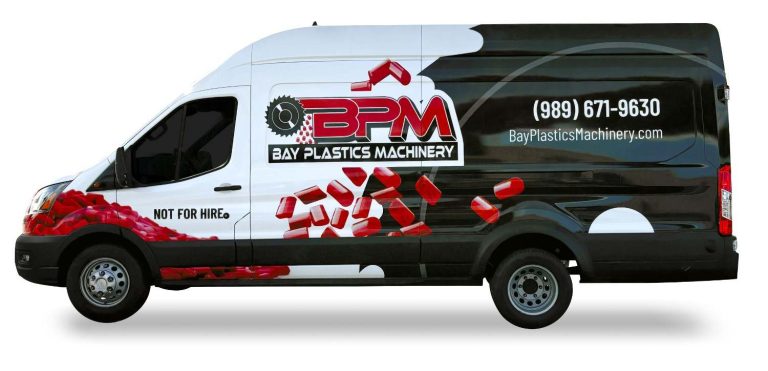
Bay Plastics Machinery has expanded its personalized pickup-and-dropoff regional repair routes and hired an additional employee to manage the expansion.
Earlier this summer, Bay expanded its regional service routes into North and South Carolina, as well as the Florida Panhandle, to facilitate repair of customers’ strand pelletizer rotors and upper feed rolls. Bay vans also deliver spare parts and other essential components along the routes. Using vans to pick up and return components, Bay began its services directly from its Bay City, Michigan, headquarters, into Ohio, Kentucky and Indiana to service customers. It also offers services in Tennessee, Alabama and Georgia.
“We’ve seen strong interest in the program, which is why we’re committed to expanding it,” said AG Fath, Vice President – Growth and Operations for the company. “Downtime costs our customers, and ongoing hiring challenges across the manufacturing industry can make it difficult to address equipment and production issues in-house. By expanding our service routes, we’re providing customers with a faster, more convenient way to access the support they need, so they can get back into production.”
To support the expanding routes, Mike Gaulden has been hired to serve as Manager – Southeast Service Route Operations. He is based at Bay’s warehouse in the Atlanta suburb of Smyrna. Bay opened that facility in January when adding service routes in Georgia and Tennessee. The facility stores new spare parts for a variety of machines as well as customers’ components picked up for repair. Bay also provides rotor and feed roll service on all makes and models of pelletizers for customers who use a variety of machine brands.
10th All in Print China 2026: Where the international print and packaging industry meets Asia’s innovative strength
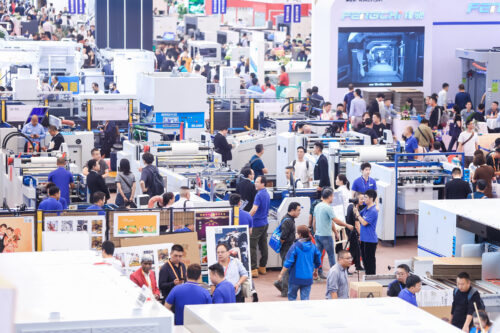
Artificial intelligence, automated production processes, innovative materials and sustainable packaging solutions are transforming the print and packaging industry worldwide. All in Print China 2026 will bring these developments to life from 12 to 16 October 2026 at the Shanghai New International Expo Centre (SNIEC), bringing together international technology providers, printing and packaging companies, and decision-makers from one of the industry’s most important markets. As part of the drupa alliance, the trade fair connects the Chinese market with the international print and packaging community, enabling trade visitors and companies from around the world to discover technological developments first-hand and establish new business contacts.
More than 1,100 exhibitors will present their solutions across 120,000 square metres of exhibition space. The organisers expect more than 120,000 trade visitors from over 120 countries and regions. Internationally established technology providers including BOBST, Canon, Epson, HEIDELBERG, HP, Kodak and Konica Minolta have confirmed their participation. This makes All in Print China one of the leading events for the print and packaging industry in Asia.
“All in Print China is far more than a trade fair – it is the definitive gateway to Asia’s most vibrant print and packaging market. For 23 years, it has stood as a trusted global beacon for technology launches, cross-border collaboration, and firsthand insight into the fast-evolving Chinese and Asian customer landscape. As we celebrate our 10th edition, we take pride in this remarkable journey and reaffirm our unwavering commitment to championing innovation and international dialogue in an industry that never stands still.” says Evian Gu, General Manager of Messe Düsseldorf (Shanghai) Co., Ltd.
China as a driving force for print and packaging China is a major production, technology and sales market for the international print and packaging industry. All in Print China offers international trade visitors the opportunity to experience current technology and investment trends first-hand and gain insights into developments and requirements in the Chinese market.
“International markets are evolving rapidly, with different technological priorities. This makes platforms that provide orientation and facilitate direct exchange across market boundaries all the more important. All in Print China fulfils this role in a key market for our industry and is therefore an important part of the drupa alliance,” says Sabine Geldermann, Director drupa, Portfolio Print Technologies at Messe Düsseldorf.
From AI to packaging production: technologies for the next generation of production The exhibition concept of All in Print China comprises seven thematic areas: Digital Printing & Pre-press, Comprehensive Printing, Packaging Printing & Post-press Converting, Comprehensive Packaging, Label & Flexible Packaging & Materials & Fittings, Inks & Innovative Materials, and Innovative Digital & Intelligent Technologies.
Increasingly interconnected production processes are a key focus: workflow automation, data-driven production and AI-supported process control demonstrate how technologies and individual production steps can be integrated into seamless workflows.
Where know-how meets business: high-level exchange with international reach Alongside technology presentations, knowledge transfer and international business development are further key areas of focus at All in Print China. More than 60 accompanying events will address current developments and future topics in the industry. These include the Printing Innovation and Development Forum, the Flexo Printing Innovation & Development Conference, Country Day and the Asian Print Awards. Guided Tours will also take trade visitors directly to relevant technologies and applications at the trade fair.
Hosted Buyer programmes, international delegations and matchmaking formats will bring qualified buyers from regions including Europe, the Americas, Southeast Asia and the Middle East together with exhibitors. These will be complemented by visitor groups from key Chinese production and industrial regions. For international companies, Messe Düsseldorf’s International Pavilion provides a professionally organised joint stand and an attractive opportunity to showcase their solutions at All in Print China and establish contacts in the Chinese market. In this way, the trade fair combines technology and knowledge transfer with concrete business opportunities and market access.
drupa alliance connects international growth markets All in Print China is jointly organised by the Printing Technology Association of China (PTAC), the China Academy of Printing Technology (CAPT) and Messe Düsseldorf (Shanghai) Co., Ltd. Since its premiere in 2003, it has developed into an important platform for exchange between Chinese and international players in the print and packaging industry. As part of the drupa alliance, All in Print China is integrated into Messe Düsseldorf’s international network. With events in key markets, the drupa alliance provides additional access to regional customers, technologies and business opportunities, connecting the international community across national borders and beyond individual trade fair dates.
drupa in Düsseldorf is the global highlight of this network. From 9 to 17 May 2028, the world’s leading trade fair for Printing Solutions will once again bring together international top decision-makers from across the entire value chain.
Morocco Food World: New trade fair in Morocco bolsters the interpack alliance
With Morocco Food World, Messe Düsseldorf is expanding its involvement in the food and packaging market in the MENA region and providing interpack customers with direct access to new business opportunities.
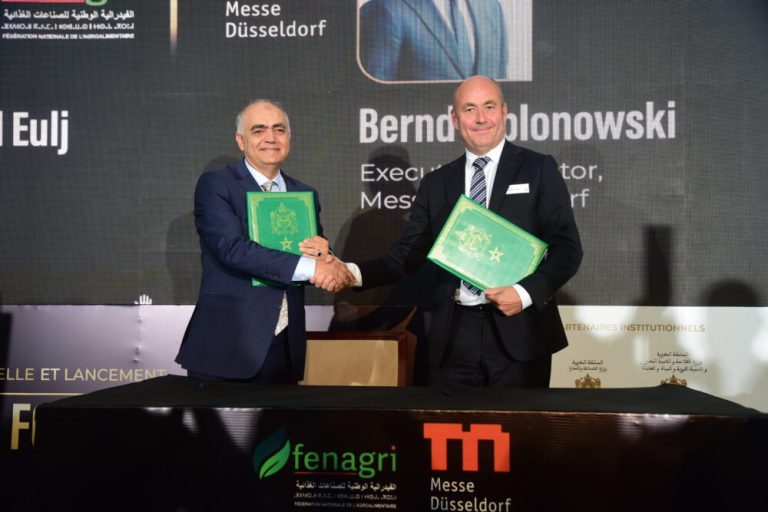
With Morocco Food World, Messe Düsseldorf is tapping into a further market and organising its first dedicated trade fair in the MENA region. The trade fair is set to take place in autumn 2027. Messe Düsseldorf’s partner is the Fédération Nationale de l’Agroalimentaire (FENAGRI), the national association of the Moroccan food industry.
The new event will focus on the food industry while also bolstering the interpack alliance’s presence in North Africa. For as food production expands and modernises, so too does the need for high-performance processing, safe and efficient production methods and state-of-the-art packaging solutions. It is precisely this combination of food, processing and packaging that makes Morocco Food World a natural addition to the interpack alliance’s international portfolio.
For Messe Düsseldorf, Morocco represents the next step in its commitment to the MENA region. It has been present in Egypt since 2019, with its own processing and packaging event. Today, Food Africa and interpack Middle East Africa in Cairo form a trade fair duo that unites food production with the relevant processing and packaging technologies. Morocco complements this network at a different strategic location: the country lies just a few kilometres from Europe, is closely integrated with European markets and, at the same time, offers access to the markets of West Africa. Morocco is therefore ideally placed to evolve further as an international hub for the food, processing and packaging sectors.
Says Thomas Dohse, Director of interpack at Messe Düsseldorf: “We are delighted to be working with our partners to establish a new trade fair – Morocco Food World – in a market where so much is happening right now.” Morocco has a dynamic food industry, is investing in modern production facilities and serves as a unique bridge between Europe and Africa. That is precisely where we see the great opportunity: “We want to bring people, businesses and markets together and open up new opportunities for our clients in this exciting region.”
Growing food industry drives demand for technology
Morocco has developed into a major economic and industrial centre in North Africa. Economic growth of around 4 to 4.5 per cent is expected in both 2026 and 2027. Investment in infrastructure and industry, close economic ties with Europe and access to West African markets lend the location additional significance.
For the processing and packaging sector, developments in the food industry are of particular relevance. Morocco has a diverse agricultural and food industry and among other items, it exports fruit and vegetables, fish and seafood and processed foods. At the same time, its domestic market is growing. With increasing demands on quality, workmanship, product safety and international marketing, there is a need to modernise production – and with that, the demand arises for efficient processing technology, automation and quality assurance, as well as for packaging solutions, packaging materials and packaging supplies.
This is precisely where the new trade fair comes in. In FENAGRI, Messe Düsseldorf has a partner which, as the representative body for the Moroccan food industry, is closely networked with the country’s trade associations and companies. Morocco Food World brings together food manufacturers and processors, retailers and international buyers with suppliers of products, technologies and services. This provides exhibitors from the interpack network with direct access to a user industry that is investing and continuing to develop its production structures.
With Morocco Food World, the interpack alliance is thus gaining another strategically important location at the crossroads between Europe and Africa – and forging new links for the international processing and packaging sector.
HIPLEX 2026 Set to Showcase Plastics Innovation at HITEX from August 7–10
Plastic isn’t waste until we waste It: HIPLEX 2026 to Demonstrate Circular Economy Live: Plastic Industry veterans
Watch Plastic Waste turn into roads, homes and T-Shirts at HIPLEX 2026: Experts
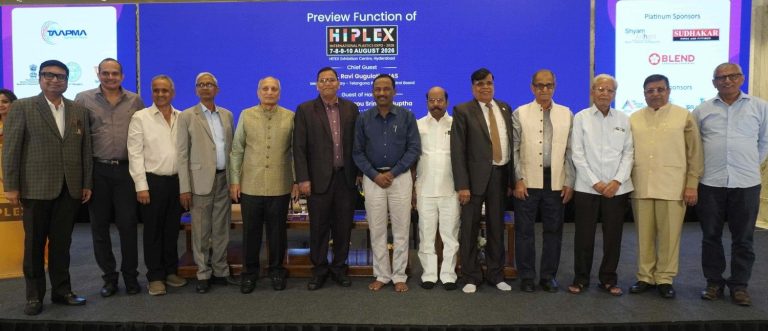
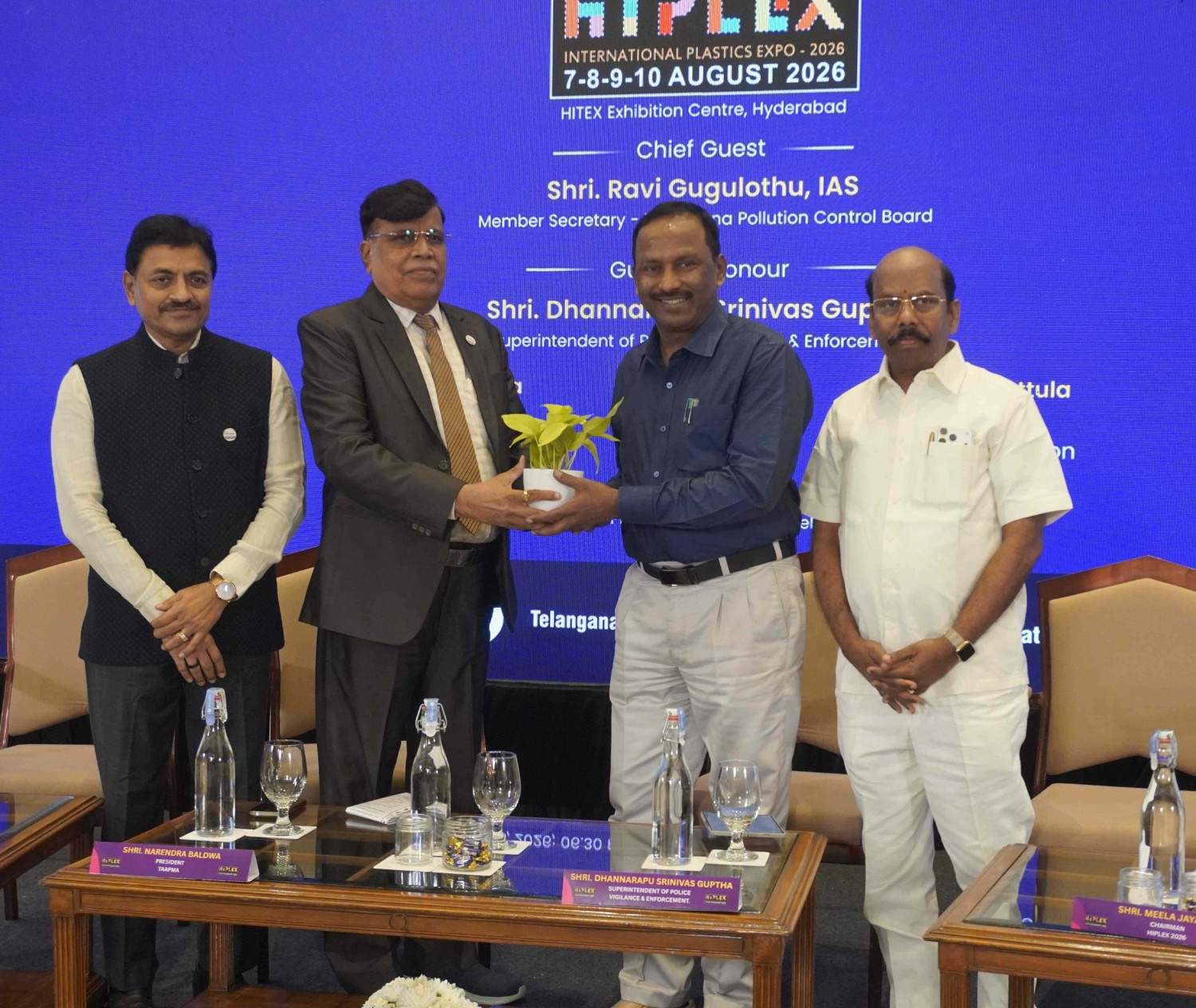
Dhannarapu Srinivas Guptha_Sp Vigilance And Enforcrement Seen Addressing The Gathering At The Hiplex
The roadshow for HIPLEX 2026, India’s third largest plastics exhibition held, setting the stage for one of the country’s biggest plastics industry events.
More than 500 exhibitors are expected to participate, while over 50,000 business visitors, including manufacturers, technology providers, buyers, investors, policymakers and entrepreneurs from India and abroad, are expected to visit the four-day exhibition.
Narendra Baldwa Seen Welcoming Superintendt Of Police–Vigilance And Enforcment Dhannarapu Srinivas Seen Inaugurating Hiplex Roadshow
Themed “The Rise of Atmanirbhar & Viksit Bharat in Amrit Kaal: Invest to Transform,” HIPLEX 2026 will showcase cutting-edge machinery, raw materials, processing technologies, recycling solutions, automation, sustainability initiatives and finished products across the entire plastics value chain.
Addressing the gathering, Dhannarapu Srinivas Gupta said that plastics are often viewed only through the lens of pollution, whereas modern life and industry are deeply dependent on them. The challenge before us is not to eliminate plastics but to use them responsibly, recycle them effectively and build a sustainable circular economy.”
Nearly 40,000 manufacturing units provide livelihoods to around 18 lakh people.
Dhannarapu Srinivas Gupta Seen Unveiling The Plastic Times Second Editon_ A Souvenir Of The Expo
Plastic isn’t waste until we waste It: HIPLEX 2026 to Demonstrate Circular Economy Live: said Plastic Industry veterans who spoke on the occasion. Watch Plastic Waste turn into roads, homes and T-Shirts at HIPLEX 2026, they added
Speaking on the occasion, Mr. Meela Jayadev, Convener, HIPLEX 2026, said the plastics industry continues to be a key driver of India’s manufacturing growth.
HIPLEX 2026 has expanded to 26,000 square metres, making it the largest edition in the event’s history, he said
HIPLEX 2026 is more than an exhibition; it is a platform that brings together innovation, investment, sustainability and business opportunities under one roof.
One of the major attractions will be the Recycling Pavilion, which will demonstrate the circular economy in action, including how 25 discarded plastic bottles can be converted into a T-shirt. Visitors will also witness innovative applications of recycled plastics, including plastic roads, railway sleepers, bricks, benches, bus shelters and houses.
The exhibition will feature live demonstrations of plastics processing machinery, interactive knowledge sessions, business networking opportunities, investment facilitation, technology partnerships and concurrent industry events.
The exhibition profile includes plastics processing machinery, moulds and dies, raw materials, specialty chemicals, masterbatches, printing and packaging solutions, testing equipment, research and development, post-processing technologies and finished plastic products.
With its strong industrial ecosystem, progressive policies, world-class infrastructure and strategic location, Hyderabad has emerged as one of South India’s leading hubs for the plastics and polymer industry.
Enhancing Productivity with Maximum Process Stability and Pellet Precision
New Features for Greater Efficiency and Quality
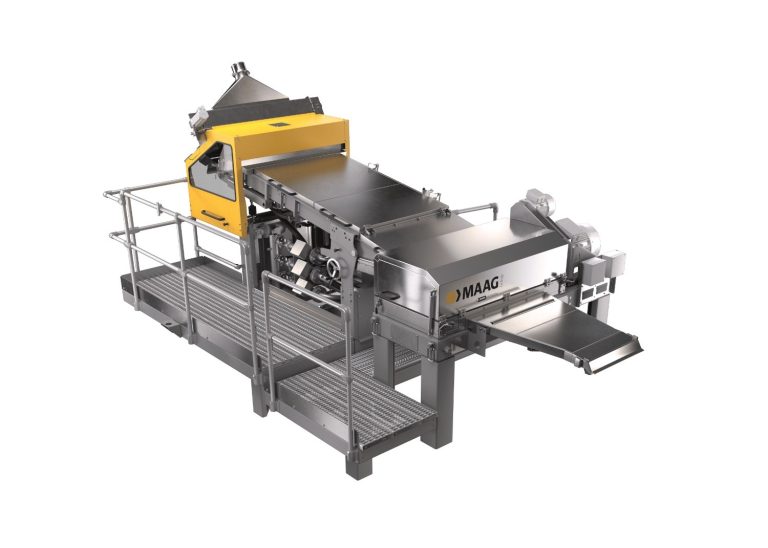
For decades, MAAG has set benchmarks in underwater strand pelletizing technology (USG). With the new M²-USG generation, the company introduces a system designed to deliver enhanced process stability, higher throughput, and consistently superior pellet quality. Design improvements combined with advanced sensor integration enable customers to achieve more reliable production and improved operational efficiency.
Focus on Reliability and Product Quality
The new development is engineered to ensure maximum system availability (>99% OEE) and highly stable production processes. Reduced downtime and minimized scrap rates help lower operating costs while improving overall plant profitability.
At the core of the system is the newly developed M²-USG cutting head, designed to simplify operation and maintenance while minimizing the risk of operator error. Maintenance procedures can largely be performed without tools, and cleaning times have been significantly reduced, allowing operators to return to production faster.
From Polymer Melt to Perfect Pellets
MAAG systems are engineered to produce uniform, cylindrical pellets with minimal fines. During the process, the polymer melt passes through a die plate, is cooled and automatically guided into the pelletizer.
Precise control of process parameters is essential. Incorrect settings can cause strand adhesion, unstable cutting conditions, and ultimately production interruptions. The M²-USG addresses these challenges with a series of targeted design optimizations, helping customers maintain stable, efficient, and sustainable production.
Mastering the Critical Startup Phase
The startup phase is often one of the most critical moments in pelletizing operations. During this stage, polymer strands must be reliably transferred into the guide system.
A newly developed scraper combines high operating speed with particularly gentle strand handling. The strands are cut sequentially at the die plate and fed into the strand guide section and the cutting head with a controlled time delay. This significantly reduces the risk of strand sticking, clogging or excessive startup waste, resulting in faster and more reliable process ramp-up.
Seamless Transition for Enhanced Stability
An optimized water film on the startup table prevents turbulence and reduces the risk of strands sticking together. In addition, transport water is injected immediately after cutting, preventing potential blockages inside the cutting head, even when processing high-temperature polymers or challenging materials such as polycarbonate.
The result is smoother machine operation, improved process stability and increased system availability for the customer.
Larger Cutting Rotor for Higher Performance
The new cutting head features a compact and optimized design with improved sound insulation. The rotor diameter has increased from 162.5 mm to 200 mm, while the number of blades has grown from 30 to 36.
This upgrade enables significantly higher throughput while extending service life by 20%. A stable cutting gap ensures consistently high pellet quality and reduces maintenance requirements and spare-part consumption further lowering operating costs.
High Capacity in a Compact Design
The M²-USG is available in machine widths of 600, 900, and 1200 mm. At 600 mm width, the system achieves throughputs of up to 13,000 kg/h (PET), while the 1200 mm version reaches up to 24,000 kg/h – significantly exceeding the performance of previous models.
This higher capacity allows processors to achieve the same output with smaller machine sizes, reducing both capital investment and installation footprint.
Integrated Sensors for Maximum Efficiency
Integrated sensors continuously monitor key parameters such as vibration, temperature, flow rates, and pressure to ensure an optimal production at the sweet spot. Any deviations are immediately detected and reported, also via remote monitoring, helping operators prevent process instability and scrap.
A camera system monitors strand flow, while compressed air consumption is also tracked. In addition, energy-efficient reluctance motors contribute to lower energy consumption and improved sustainability.
Conclusion
With its advanced engineering, improved process stability, and outstanding pellet quality, the new M²-USG sets a new benchmark in underwater pelletizing.
Customers benefit from reduced operating costs, higher throughput, improved efficiency, and integrated sensor technology that ensures maximum process reliability.
Precision Micro Molding for Medical and Automotive Applications
In micro injection molding, starlim relies on MicroPower production cells from WITTMANN
New applications in medical technology, automobile electronics and other industries are generating a rising demand for micro parts made of silicone. starlim, the world’s largest silicone processor, is well prepared. At its headquarters in Marchtrenk, Austria, an entire department is dedicated to micro molding – equipped with MicroPower injection molding machines from WITTMANN and its own cleanroom.
At starlim, the MicroPower is the standard equipment in the area of silicone micro molding. Pictures: Starlim Spritzguss GmbH
“For us, everything below a part weight of ten milligrams is micro”, says Dominik Kreuzmayr and passes around two sample parts at the conference table during our visit in Marchtrenk, an O-ring and a hearing aid component. Kreuzmayr is the marketing team leader and was previously the driver of the micro molding department’s in-house development. He knows that there is no universally accepted definition of micro injection molding. The classification at starlim is based on many years of experience and a deep understanding of the material behavior inside extremely fine mold structures. For entirely different rules apply here, says Kreuzmayr.
The two micro parts are packaged in transparent bags. Measuring 0.7 x 0.4 mm, the O-ring by itself is too small to pick it up with our fingers. It is a prime example of the precision of mass-produced micro components.
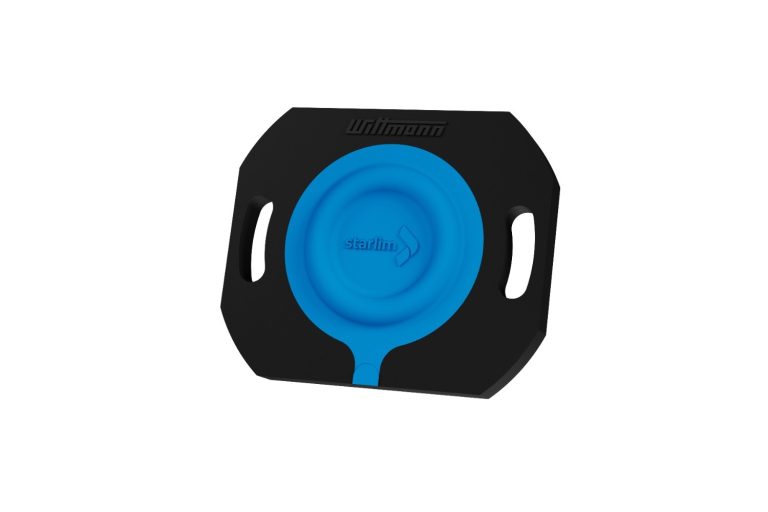
By direct comparison with the O-ring, the hearing aid component measuring 6 by 5 by 1 mm looks almost large, but it impresses viewers by its design. It is a two-component part. At its center, there is a membrane consisting of blue-colored liquid silicone (LSR), which is surrounded by a robust thermoplastic frame made of PBT, which facilitates the assembly inside the hearing device. The application determines the size of the part.
Two-component part for hearing aids: ultimate injection molding precision is the prerequisite for accurate sound reproduction.
Extremely accurate and stable regulation
This particular hearing aid component was produced inside a single-cavity mold on an all- electric MicroPower injection molding machine. “For industrial mass production, we stop at four cavities”, explains Kreuzmayr. 16 cavities would already be too many, since wherever highest precision is required on the sub-millimeter level, it is important to have the cavities arranged very closely together. The main challenge in producing the hearing aid components are the narrow tolerances in the area of the corrugation on the membrane body. “Here we must be able to rely on the injection molding machine’s control accuracy, for in contrast to injection molding of larger parts, the remnant melt cushion plays no part here”, emphasizes Günter Polt, Application Engineer in starlim’s micro injection molding department. Polt has been working in the area of silicone injection molding for almost 30 years. When he moved to the micro molding department several years ago, “it was quite a shock”, he confides to us with a wink. “You cannot judge the quality of the parts with the naked eye. That is often only possible under a microscope.”
The MicroPower is not just an injection molding machine, but a complete production cell. It accommodates all process components within an extremely compact space.
“The MicroPower machines recommend themselves by their extraordinary precision in the execution of all parameter settings”, points out Kreuzmayr. “This extremely sensitive dynamism combined with absolutely stable and accurate regulation is setting new benchmarks. Here, people are really re-thinking their standards of process reliability and repeatability.”
In the case of these hearing aid components, the high impression accuracy is not only decisive for efficient assembly. In this application, high precision is much more important for accurate sound reproduction. The tolerance margins for the finished two-component part are plus/minus two micrometers. This requires a very precise adjustment and control of the clamping force, as well as a very precise mold.
Integrated quality control
The mold comes from the in-house mold-making shop, where the roots of the now globally successful group of companies lie. In1974, Franz Sterner founded the mold-making business Sterner Werkzeugbau GmbH (formerly Franz Sterner GesmbH). Ten years later, the company Starlim Spritzguss GmbH (formerly Starlim Gummi- und Kunststoffverarbeitung GmbH) was established. These two business segments have long since become an inseparable entity. Molds are now being made exclusively for the company’s own production.
In micro molding, a magnifier is not always sufficient for checking the quality of molded parts. This is often only possible under a microscope.
A big advantage for the customers – they get coordinated solutions from a single source and benefit from the knowledge transfer and integrated development. Only new laser technologies and micro-3D printing make it possible to construct molds for such tiny hearing aid components with so stringent acoustic quality standards.
For mass production it is planned to test the vibrational properties of the membrane in-line, that is directly following injection molding, still inside the cavity. This is the most efficient way, since there the extremely tiny parts are still in a defined position and need not be realigned for the quality check. For the vibration test, the mold-makers have integrated a sound emitter and a laser measurement system inside the robot gripper. “With this hearing aid component, we have achieved a real break-through, thanks to innovative mold technology and extremely efficient processing technology”, says Kreuzmayr.
Compact on two square meters of production floor
The integration of further production steps such as quality control is extremely well supported by the MicroPower’s design concept. On a floor space of just two square meters, the all-electric work cell fits in the entire equipment, including the clamping unit with a rotary plate, the patented two-step injection system, plus materials handling, automation, a temperature controller, the quality control system, and further process units. All of this while still keeping the mold space with a 400 mm distance between platens easily accessible. Linear guides ensure highly sensitive mold protection, and thanks to a high-precision 5-point toggle lever system, the clamping force is very evenly distributed across the mold parting line. “The machine’s design enables us
The MicroPower offers ample room for automation. In addition to the vertically integrated Scara robot, solutions developed by customers can also be integrated via interfaces.
to move the injection plunger right up to the mold parting line”, is how Jochen Sassmann, Regional Sales Manager of the WITTMANN Group and cooperating closely with starlim’s micro molding team, describes yet another feature contributing to high processing efficiency. It significantly reduces the sprue in size or even eliminates it altogether. Since fully vulcanized LSR cannot be recycled, silicone injection molding reaps the greatest benefit from this material-saving process.
Making the most of what the machines have to offer
15 years have gone by since starlim established its micro molding department. Then, the first micro molding machine from Battenfeld quickly arrived on its production floor. “At that time, Battenfeld was the only company able to supply micro machines for industrial mass production”, Kreuzmayr states. “The machine concept was continuously further developed and today defines the state of the art in micro injection molding in terms of precision and efficiency”, says Sassmann. With the MicroPower injection molding machine, the WITTMANN Group, of which Battenfeld is a part, still holds a unique selling point today.
Several MicroPower injection molding machines are currently operating at starlim in Marchtrenk, some inside the new clean room, where items such as high-precision products for eye surgery are being produced. Every one of these machines is tailored to fit the requirements for some special product group. There are some machines fully equipped for single-component injection molding, as well as two-component machines and one integrated system consisting of two individual machines connected to each other via a robot. The integrated system increases flexibility. It allows for the highly efficient production of two- component parts, but the two machines can also be utilized independently of one another
with single-component molds. In terms of automation, the MicroPower concept offers ample freedom. In addition to the vertically installed Scara robot, which is an integral part of the MicroPower production cell, various handling systems can be integrated via interfaces – including systems developed in-house by starlim.
Multi-component machine or integrated solution? – For each new project, the question of which production concept yields the higher overall efficiency is thoroughly investigated. The proportion of two-component products is currently about 40 per cent. The Micro Molding team at starlim is certain that this percentage will rise. Inquiries for two-component parts are already being launched more frequently now, but they also take up more time in product development.
Mass production, which originally tipped the balance towards cooperation with the WITTMANN Group in micro molding, still dominates the daily production scene in Marchtrenk to this day. Batch sizes in the millions are quite common. “MicroPower machines cope reliably with these extreme challenges and ensure a safe process for us”, says Dominik Kreuzmayr. In this context, starlim’s micro molding team also points to the good cooperation with the WITTMANN Group. “We communicate fast across short distances, and have so far found solutions for all challenges we have faced by putting our heads together. Thanks to our good partnership, we are really able to make the most of everything the machines have to offer in terms of technology.”
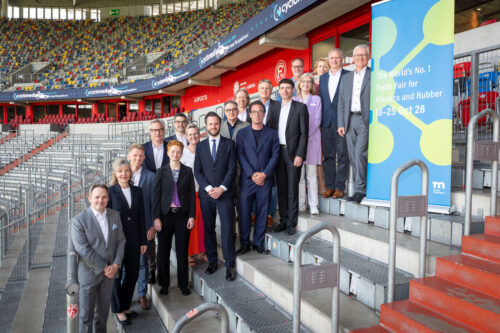
The inaugural meeting of the Exhibitor Advisory Board has marked the start of preparations for K 2028. The world’s leading trade fair for the plastics and rubber industry will take place in Düsseldorf from 18 to 25 October 2028. The Advisory Board supports Messe Düsseldorf in the strategic and conceptual development of K and advises it on fundamental issues regarding the focus, programme structure and communication of the world’s leading trade fair.
At the start of the Advisory Board meeting, the committee unanimously elected Dr Axel von Wiedersperg, CEO of Brückner Group SE, as its new Chairman. He succeeds Ulrich Reifenhäuser, who has led the Advisory Board since 2004 and played a key role in shaping K over the past two decades.
Dr Axel von Wiedersperg holds a doctorate in law and has been Managing Director of the Brückner Group since 2009. He possesses many years of industry and market knowledge in the plastics and rubber sector, as well as an extensive international network within the industry. He has been a member of the K Exhibitor Advisory Board since 2023 and was therefore already involved in the preparations for K 2025 and the strategic development of the trade fair. In addition, he serves on the board of the VDMA Plastics and Rubber Machinery Association.
The meeting focused on a joint review of K 2025, the evaluation of the exhibitor and visitor survey, and an initial outlook on the direction of K 2028. Key themes for the upcoming event were discussed, and the next steps for the strategic development of the world’s leading trade fair were initiated.
The K Exhibitor Advisory Board represents the entire spectrum of the trade fair – from machinery and plant engineering through the production of plastics and rubber to their processing. It comprises representatives from the exhibiting industry as well as leading industry associations.
Next-Generation Rotating Retractors Improve Cleaning Precision In Processing Lines
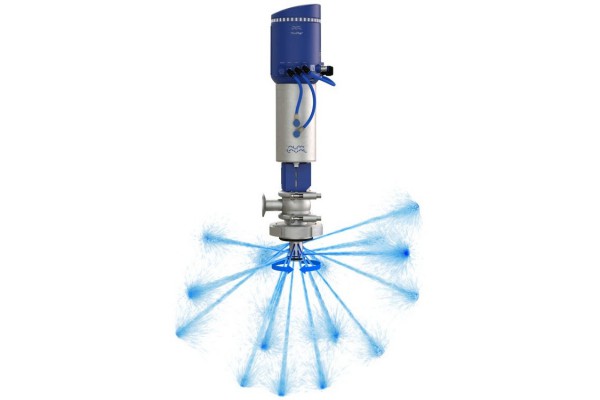
In spray-drying applications, including powder production, within hygienic processing industries, incomplete cleaning of hard-to-reach surfaces can lead to contamination risks, product loss, and costly downtime. To address these challenges, Alfa Laval today announces the launch of the Controlled Rotating Retractors, designed to effectively remove residues and contaminants from ducts, pipes, tanks, and enclosed areas.
The introduction of the high-performance CIP cleaning devices underscores Alfa Laval’s commitment to providing manufacturers across the dairy, food, beverage, pharmaceutical, and biotech industries with solutions that optimize cleaning performance in hygienic processing lines.
These innovative devices expand Alfa Laval’s tank cleaning portfolio of retractable cleaning devices. They deliver up to twice the cleaning efficiency of traditional static spray ball systems, effectively reaching shadow zones while reducing water and cleaning media consumption. By achieving full coverage with fewer devices, they enable safer, faster, and more resource-efficient operations.
“These controlled rotating retractors make it possible to access challenging areas with fewer devices,” says Kim Kjellberg, Global Tank Cleaning Portfolio Manager at Alfa Laval. “They deliver what today’s manufacturers demand – faster, more precise cleaning with minimal manual intervention. Moreover, they also improve operational performance, support sustainability goals, and cut installation and cleaning costs.”
Reduced resource consumption and lower costs
The Controlled Rotating Retractors reduce water and cleaning media usage by up to 55% compared to static spray balls. Their extended jet reach allows each unit to cover a larger surface area, minimizing the number of devices required. As a result, manufacturers can lower both capital expenditures and operating costs while maintaining high cleaning performance.
Validated performance and process control
Integrated with the Alfa Laval ThinkTop V70 sensing and control unit, these retractable cleaning devices provide real-time monitoring and performance validation. This ensures full process control, minimizes downtime, and enhances workplace safety by reducing the need for manual intervention.
During production, the rotating cleaning retractors remain sealed and flush with the vessel wall, preventing contact with the product area. During cleaning, the cleaner head extends to provide full coverage of product-contact surfaces. Once the cleaning cycle is complete, the cleaner head retracts, leaving the duct, pipe, tank, or enclosed area ready for immediate production.
Maintenance made easy
Simplify maintenance with a one-handed tool that allows easy wear-part removal without detaching the supply tube, keeping the retractor securely connected for safe, easy servicing even in hard-to-reach areas.
Documentation and compliance
The devices support good manufacturing and hygienic practices and comply with FDA, EU and China regulations. For high-purity pharmaceutical and biotechnology applications, the Controlled Rotating Retractor UltraPure includes Alfa Laval Q-doc documentation, providing full traceability of all product contact parts. Q-doc covers conformity declarations, material certificates, relevant test certificates, and documentation to support a smooth qualification and validation process.
Aduro Clean Technologies Inc., a clean technology company using the power of chemistry to transform lower value feedstocks, like waste plastics, heavy bitumen, and renewable oils, into resources for the 21st century, today announced
An underwritten U.S. and Canadian public offering of 1,028,645 common shares at a price of US$15.20 per common share for gross proceeds to the Company, under the Public Offering, of US$15,635,404, before deducting underwriting discounts and Public Offering expenses.
A concurrent non-brokered private placement of up to 471,698 common shares at the Offering Price per common share for gross proceeds to the Company, under the LIFE Offering, of up to US$7,169,810, before deducting any finder’s fees and other LIFE Offering expenses, for aggregate gross proceeds to the Company of up to US$22,805,214, before deducting discounts, fees and other Offering expenses. Canaccord Genuity is acting as sole bookrunner for the Public Offering. In connection with the Public Offering, the Company entered into an underwriting agreement with Canaccord Genuity, as representative of the several underwriters in the Public Offering.
Aduro intends to use the net proceeds from the Offering for expenditures related to the design, engineering and construction of first-of-a-kind demonstration-scale industrial plant, ongoing research and development costs and the remainder for general corporate purposes and working capital. The Public Offering is expected to close on or about June 11, 2026, subject to the satisfaction of customary closing conditions including the listing of the offered common shares on the Toronto Stock Exchange and the Nasdaq Capital Market and any required approvals of the TSX and Nasdaq. The Public Offering is not conditional on the closing of the LIFE Offering, and the LIFE Offering is not conditional on the closing of the Public Offering. The LIFE Offering is expected to close on or about the Closing Date, or such other date as the Company may determine, and, in any event, on or before a date not later than 45 days after the date hereof. The LIFE Offering may close in one or more tranches.
The Public Offering is being made pursuant to an effective shelf registration statement on Form F-10, as amended, previously filed with the U.S. Securities and Exchange Commission on December 15, 2025 and became effective upon filing, and the Company’s Canadian short form base shelf prospectus dated December 15, 2025 and an accompanying prospectus supplement to the Base Shelf Prospectus.
The Base Shelf Prospectus relating to the Public Offering and describing the terms thereof has been filed with the securities regulatory authorities in British Columbia and Ontario and with the SEC in the United States and is available for free by visiting the Company’s profiles on the SEDAR+ website maintained by the Canadian Securities Administrators at sedarplus or the SEC’s website at sec, as applicable. The Prospectus Supplement will be filed with the securities regulatory authorities in British Columbia and Ontario and the SEC. Copies of the Final Prospectus may be obtained, when available, at the SEC’s website at sec or from Canaccord Genuity LLC.
Before you invest, you should read the Final Prospectus and other documents the Company has filed or will file with the with the securities regulatory authorities in British Columbia and Ontario and the SEC, for more complete information about the Company and the Offering.
The LIFE Offering is being made to purchasers resident in all provinces of Canada, except Québec, pursuant to the listed issuer financing exemption from the prospectus requirement available under Part 5A of National Instrument 45-106 – Prospectus Exemptions and Coordinated Blanket Order 45-935 Exemptions from Certain Conditions of the Listed Issuer Financing Exemption of the Canadian Securities Administrators. Subject to compliance with the terms of the LIFE Exemption, the common shares offered under the LIFE Exemption will not be subject to resale restrictions pursuant to applicable Canadian securities laws. In addition, the LIFE Shares may be offered for sale on a private placement basis pursuant to available exemptions from the registration or prospectus requirements to investors resident in certain other jurisdictions outside of Canada and the United States; provided it is understood that the Company will not be required to register or make any filings in such jurisdictions.
The Company anticipates certain insiders of the Company may participate in the LIFE Offering. Any participation in the LIFE Offering by insiders constitutes a “related party transaction” as defined under Multilateral Instrument 61-101 – Protection of Minority Security Holders in Special Transactions. However, the Company expects to rely on exemptions from the formal valuation and minority shareholder approval requirements of MI 61-101 based on the fact neither the fair market value of the LIFE Shares subscribed for by the insiders, nor the consideration for the LIFE Shares paid by such insiders, would exceed 25% of the Company’s market capitalization as at the date of this press release.
The Company intends to rely upon the exemption set forth in Section 602.1 of the TSX Company Manual in connection with the Offering, which provides that the TSX will not apply its standards to certain transactions involving eligible interlisted issuers on a recognized exchange.
This press release shall not constitute an offer to sell, or the solicitation of an offer to buy any of the Company’s securities, nor shall such securities be offered or sold in the United States absent registration or an applicable exemption from registration, nor shall there be any offer, solicitation or sale of any of the Company’s securities in any state or jurisdiction in which such offers, solicitations or sales would be unlawful prior to registration or qualification under the securities laws of such state or jurisdiction. None of the LIFE Shares will be registered under the United States Securities Act of 1933, as amended, and such securities may not be offered or sold in the United States absent registration or an exemption from registration.
All amounts in this press release are in United States dollars unless otherwise indicated. All foreign exchange calculations set forth in this press release is based on the exchange rate posted by the Bank of Canada on June 9, 2026 of US$1 = C$1.3947.
The twentieth edition of PLAST, the international exhibition dedicated to the plastics and rubber industry, successfully ended on June 12th at Fiera Milano, Rho. Four intense days of exhibition confirmed the event’s role as a benchmark for the sector, decisively overcoming the cautious outlook of the eve in a global geopolitical and
Mario Maggiani, CEO, Plast 2026
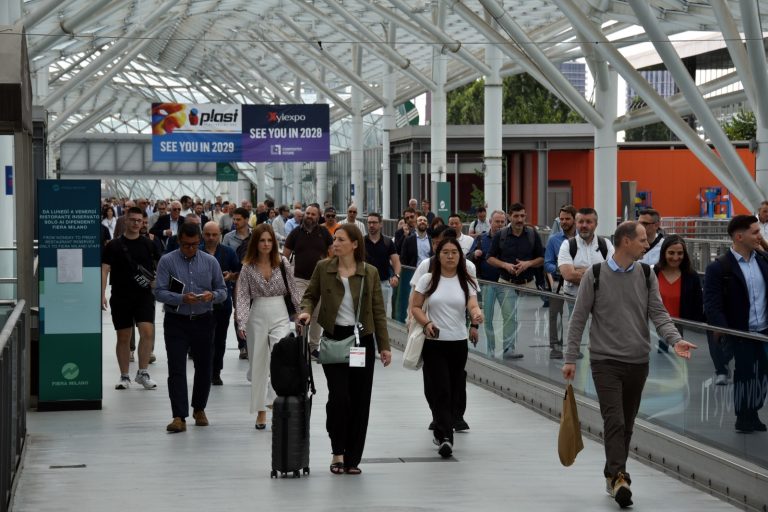
macroeconomic context marked by severe uncertainties, trade tensions, and instability in international markets. The final figures certify the success of the event: 35,000 attendees – with a significant share of foreign visitors equal to 25%, coming from 110 countries – and over 1,000 exhibiting companies, 44% of which were international. The entire event spanned an exhibition area of 40,000 square meters: an impactful result for a market undergoing a phase of profound transformation.
A complete supply chain: from specialized halls to startup innovation
The strength of PLAST 2026 certainly lay in its ability to capture a snapshot of the entire supply chain. Great interest was generated by the satellite shows and thematic areas: RUBBER, the meeting point for the elastomer industry, organized in collaboration with Assogomma; 3D PLAST LAB, developed with Indexlab – Politecnico di Milano, focusing on the frontiers of additive manufacturing; and PLAST MAT,
the showcase dedicated to polymeric materials. A fundamental added value in terms of new content was brought by the innovation ecosystem, thanks to the presence of around twenty Italian startups that presented cutting-edge solutions ready to be integrated into the manufacturing fabric to visitors.
A qualified audience and internationalization
Among the most encouraging signs, the extremely high professional profile of the visitors stands out. Thanks to the enhancement of the strategic incoming project developed in collaboration with ICE Agency, among the approximately 9,000 international operators visiting, the presence of over 350 selected foreign delegates must be highlighted, who confirmed the strong attractiveness and commercial centrality of the fair.
Alessio Fineo, Project Manager, Plast 2026
Drawing the balance of this edition is Mario Maggiani, Managing Director of Promaplast: “We do not hide that our forecasts on the eve were marked by the utmost prudence. We feared far heavier repercussions of the global geopolitical situation on PLAST, which instead confirmed itself as a European point of reference for the plastics and rubber industry, restoring confidence to many of the exhibitors we met. The reality is that today the exhibition world, more than other sectors, is suffering the backlash of a diversification in ways of doing business, especially in the B2B field; this is why we are diversifying the format of PLAST, not only through the addition of satellite shows but also by providing a conference program capable of covering all facets of the supply chain and responding to the updating needs of a rapidly evolving sector.”
He is echoed by Alessio Fineo, Head of the Exhibition Department at Promaplast: “From the opinions gathered at the fair, many have noted the quality of the visitors and the delegations of foreign companies that showed interest in the products on display. The efforts of the entire team to promote PLAST generated results that went beyond expectations.”
A top-tier program of conferences and seminars
Confirming the dynamism of the event was the success of the program of seminars and
institutional conferences, which in some cases registered a full house. The rich educational and debate palimpsest was made possible thanks to the fundamental synergy with the main stakeholders and industrial partners of the sector. Meetings saw the close collaboration of leading trade associations and research entities – including Corepla, IPPR Plastica Seconda Vita, PlasticsEurope Italia-Federchimica, Unionplast, The European House Ambrosetti, TMP, Assorimap, Assogomma, Ipack-Ima, Largo Consumo, PVC Forum/VinylPlus Italia, and Made Competence Center I4.0 – who chaired the discussion tables, offering concrete answers to the regulatory and technological challenges of the future.


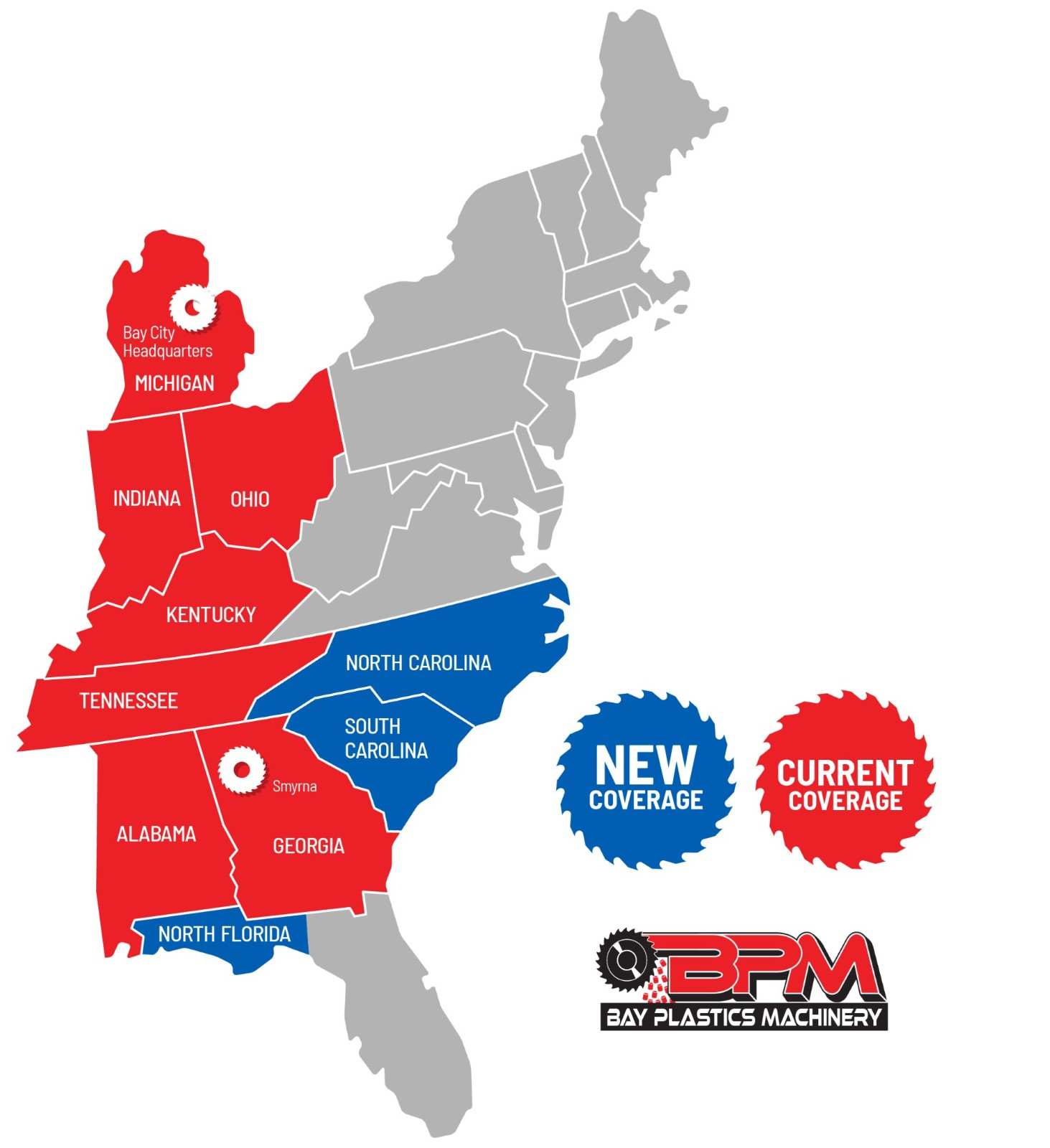 Earlier this summer, Bay expanded its regional service routes into North and South Carolina, as well as the Florida Panhandle, to facilitate repair of customers’ strand pelletizer rotors and upper feed rolls. Bay vans also deliver spare parts and other essential components along the routes. Using vans to pick up and return components, Bay began its services directly from its Bay City, Michigan, headquarters, into Ohio, Kentucky and Indiana to service customers. It also offers services in Tennessee, Alabama and Georgia.






 the showcase dedicated to polymeric materials. A fundamental added value in terms of new content was brought by the innovation ecosystem, thanks to the presence of around twenty Italian
 Meetings saw the close collaboration of leading trade associations and research entities – including