Home Blog Page 68

Clariant’s MegaMax catalysts will power China’s first biomass-to-green methanol project

Clariant’s MegaMax catalysts will power China’s first biomass-to-green methanol project

  • Clariant is collaborating in a China’s biomass gasification-to-green methanol project, scheduled to start up in the first half of 2025
  • Project will rely on Clariant’s high-performance MegaMax methanol synthesis catalyst and will be China’s first commercialized biomass gasification-to-green methanol plant
  • The catalyst is perfectly suited for green methanol production due to its high activity and enhanced stability

Clariant, a sustainability-focused specialty chemical company, today announced that its MegaMax catalyst was selected for a China’s biomass gasification-to-green methanol project. The plant will use a combination of farm waste and wind power to produce up to 250,000 tons per annum of green methanol in two phases by 2027. Construction of the first plant phase began in March 2024 and is expected to start producing green methanol in the first half

Clariant’s MegaMax is an excellent solution for China’s first biomass-to-methanol project, as it provides enhanced stability and tolerance to the fluctuation of the system required for green methanol production. It also offers outstanding activity – even at very low reactor temperatures and pressures. Thanks to the catalyst’s enhanced selectivity, production yield is low in by- of 2025 as China’s first commercialized biomass gasification-to-green methanol plant.

Georg Anfang, Vice President Syngas and Fuels at Clariant Catalysts, commented, “We are very pleased to be part of this groundbreaking project. With over 50 years of expertise in methanol synthesis and a clear commitment to developing innovative catalysts for the energy transition, we are an ideal partner for this prestigious sustainability project. Green methanol will play a crucial role as renewable fuel as well as feedstock for green chemical production.”

product formation, significantly improving the economics of green methanol synthesis.

Clariant will provide comprehensive technical service to ensure optimal catalyst performance through its Applied Catalyst Technology (ACT) team of highly qualified engineers and experts. Further support can be provided through the CLARITY digital service portal, which offers access to real-time plant data to enhance reliability, safety, and profitability.

www.clariant.com

#clariant#modernplasticsindia #modernplasticsasia #modernplastics #plasticsnews #plasticsplanet #modernrecyclingindia #modernplasticsglobal #modernplasticsworld #plasticstalk #modernplasticsgermany #modernplasticsnetwork #plasticdevelopment

LG Chem and Reifenhäuser Agree to Collaborate on Establishing Competitive MDO PE Films for Sustainable Packaging

LG Chem and Reifenhäuser Agree to Collaborate on Establishing Competitive MDO PE Films for Sustainable Packaging

  • LG Chem and Reifenhäuser sign MOU to develop Machine Direction Oriented (MDO)-PE blown films and flat films for recyclable packaging
  • Aiming to surpass the normal market by producing recyclable films at competitive cost in a stable process
  • LG Chem and Reifenhäuser set new standards in downgauging for competitive production of MDO-PE films

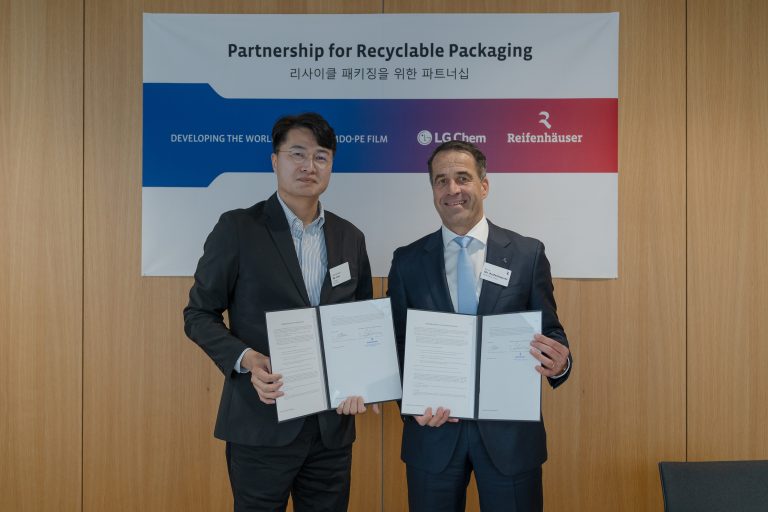
South Korea’s leading global chemical company LG Chem and the extrusion machine manufacturer Reifenhäuser have signed a Memorandum of Understanding (MOU), confirming further extensive cooperation. The aim is to further develop and market competitive Machine Direction Oriented (MDO)-PE blown films and flat films for recyclable packaging. The partners are building on a successful track record: In May 2024, the companies had presented the world’s first MDO-PE film only 18 micrometers (μm), which had been produced on an EVO Ultra Stretch blown film line from Reifenhäuser with specially developed PE materials (Polyethylene).

Bernd Reifenhäuser, CEO of the Reifenhäuser Group, says: “The demand for flexible mono-material packaging is growing rapidly. But MDO-PE films must be stable and economical to produce in order to make the leap from a niche to a broad market. With LG Chem and Reifenhäuser, we have found the perfect match of raw material, extrusion technology and process know-how that will pave the way. For the first time, processors will be able to produce recyclable MDO-PE films at competitive production costs in a stable process that can be optimally further processed.”

Dr. Lee Choong Hoon, Vice President and Head of NCC/PO Business Unit at LG Chem, adds: “We are very pleased to have found an experienced technology partner in Reifenhäuser to successfully combine sustainability and profitability. Our combined technology has achieved unprecedented records in downgauging MDO-PE film – and that was just the beginning. We will continue this path together to accelerate the recyclability for flexible packaging.”

Further downgauging for competitiveness

With perfectly coordinated system technology and formulation, processors will in future receive a tried and tested, complete package for immediate market access in the field of flexible mono-PE packaging. LG Chem and Reifenhäuser are also working on further reducing material consumption by downgauging towards the level of conventional PET-PE laminates and thus making the production of MDO-PE films more profitable. Technically, this isachieved due to the different densities of PET film and MDO-PE film by replacing the standard 12 μm PET film with a 16 to 17 μm MDO-PE film. With the reduction to 18 μm, the partners are already very close to achieving this goal. However, the experts see further potential: “The downgauging limit has not yet been reached,” says Christoph Lettowsky, Technical Sales Manager at Reifenhäuser Blown Film. “Thanks to the patented position of our MDO Ultra Stretch unit directly in the line’s haul-off, the film is stretched from the first heat. This makes the process particularly stable, which is otherwise often the limiting factor for material reduction. We therefore see even more scope, which we will use in combination with further recipe developments for even thinner films in the future.”

The 18 μm MDO PE film without PFAS additives was produced stably and reproducibly over many hours in test runs at the Reifenhäuser technical center and then printed and processed into finished pouches. The demand for PFAS-free materials is growing mainly in Europe as PFAS does not decompose in nature and has negative impacts on the environment. International guests were able to see the reliability of the process and the performance of the film for themselves at an open house on November 7.

https://reifenhauser.com

#reifenhauser#modernplasticsindia #modernplasticsasia #plasticsislife

#plasticstalk #modernplastics #modernplasticsworld #plasticsnews

#plasticsisgood #plasticsplanet #plastics


Asahi Kasei Receives 2024 TSMC Excellent Performance Award In Recognition Of Its Pimel Photosensitive Dielectric For Advanced Semiconductor Packaging

Asahi Kasei Receives 2024 TSMC Excellent Performance Award In Recognition Of Its Pimel Photosensitive Dielectric For Advanced Semiconductor Packaging

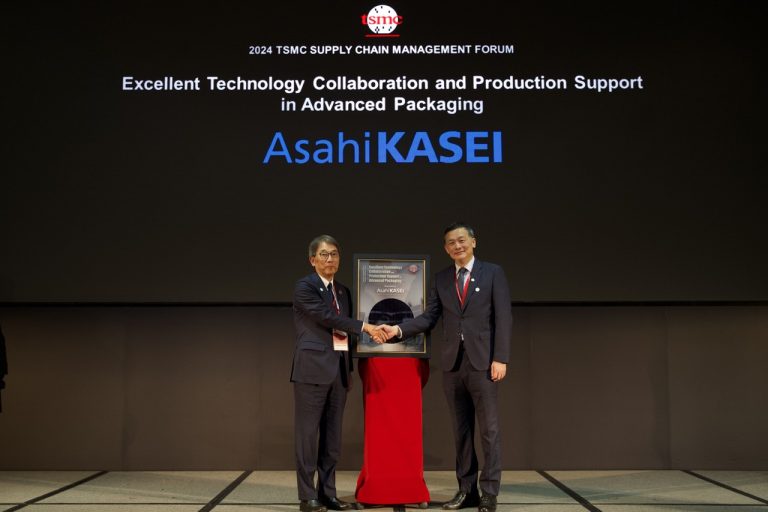
Asahi Kasei received a 2024 TSMC Excellent Performance Award for its Pimel photosensitive Polyimide material, in recognition of its “Excellent Technology Collaboration and Production Support in Advanced Packaging” at the 2024 Supply Chain Management Forum held by Taiwan Semiconductor Manufacturing Co., Ltd. on December 2, 2024.

TSMC presents the Excellent Performance Award to suppliers that have made remarkable contributions to its technology leadership and manufacturing with advanced semiconductor processes over the past year. At the award ceremony, TSMC Chairman & CEO Dr. C.C. Wei thanked suppliers for delivering timely and high-quality professional services to drive continuous improvement of the supply chain and related industries.

Pimel has been used for worldwide semiconductor applications such as buffer coatings, passivation layers for bumping, and dielectric layers for re-distribution bumping. As semiconductor technology continues to advance, the demand for materials like Pimel has grown, with these applications becoming increasingly vital in supporting the evolution of more complex and compact semiconductor devices.

Nobuko Uetake, Lead Executive Officer of Asahi Kasei and Senior General Manager of its Digital Solutions Administration, commented, “It is a great honor for Asahi Kasei to receive this award. Pimel  photosensitive dielectric is a mainstay of our Digital Solutions, which is one of Asahi Kasei’s “10 Growth Gears” (GG10) businesses to drive our next phase of growth. We are proud to be able to develop Pimel  products that meet customer requirements by leveraging our technological capability and quality assurance system built up over many years. With a new plant for Pimel scheduled to start operation this fiscal year, we look forward to providing swift and reliable supply of products that support advanced semiconductor manufacturing processes.”

visit www.asahi-kasei.com.

#asahikasei.#modernplasticsindia #modernplasticsasia #modernplastics#plasticsnews#plasticsplanet #modernrecyclingindia#modernplasticsglobal#modernplasticsworld#plasticstalk#modernplasticsgermany#modernplasticsnetwork #plasticdevelopment

DFG to Fund New Collaborative Research Center (CRC) for the Intelligent Production of Lightweight Plastic Structures

DFG to Fund New Collaborative Research Center (CRC) for the Intelligent Production of Lightweight Plastic Structures

With CRC/TRR 402, RWTH Aachen University, TU Chemnitz and TU Dresden are jointly laying the foundation for the sustainable further development of lightweight plastic construction

The German Research Foundation (DFG) approved funding for the new Collaborative Research Centre (CRC) ‘Intelligent production technologies for lightweight plastic structures with load-dedicated 3D grading of the reinforcement architecture’. RWTH Aachen University, TU Chemnitz and TU Dresden are thus jointly launching a pioneering research project that can secure up to twelve years of research at the highest level.

Three leading lightweight construction locations are pooling their expertise

With RWTH Aachen University, Chemnitz University of Technology and TU Dresden, three renowned universities and leading lightweight construction centres are working on this joint project. ‘This collaboration combines outstanding expertise in plastics technology, simulation and materials research,’ emphasises Prof. Hopmann. ‘Together, we have laid the foundations to revolutionise the production of lightweight structures in the coming years.’

The new CRC is being coordinated by Chemnitz University of Technology under the leadership of spokesperson Prof Dr Lothar Kroll. ‘’A CRC represents the Champions League of research, so to speak, and the funding approval is the result of an intensive and competitive application process, which we mastered together with our partners,‘’ explains Prof Kroll. Prof Christian Hopmann is also delighted with the decision: ‘The grant shows how relevant our research project is for science and industry, especially with regard to the urgently needed measures for more sustainability in mobility.

Pioneering research for sustainable mobility

The new CRC aims to develop resource-efficient lightweight plastic components that stand out thanks to load-appropriate reinforcement architectures.This offers enormous potential for the automotive and aviation industries in particular: the combination of innovative materials and processes should enable the development of components that are light, stable and recyclable.

In the first funding phase, the CRC will focus in particular on researching technologies and manufacturing processes that integrate both continuous and discontinuous fibre reinforcements. This combination enables a load-appropriate material design and makes the components suitable for mass production. At the same time, great importance is attached to sustainability: Research will consider recycling strategies during the development phase already to optimise the entire life cycle of the products.

In the first funding phase, the research team will develop two demonstrators – a profiled and a flat structural element – which will serve as a test environment for the new technologies. With each subsequent year of funding, the complexity of the components will increase in order to meet the requirements of industry in the long term.

https://www.ikv-aachen.de/

#www.ikvaachen.de##modernplasticsindia #modernplasticsasia #modernplastics

#plasticsnews#plasticsplanet #modernrecyclingindia#modernplasticsglobal

#modernplasticsworld#plasticstalk#modernplasticsgermany

#modernplasticsnetwork #plasticdevelopment

ENTEK Lithium Separators Receives Direct Loan From Department Of Energy Loan Programs Office For Indiana EV Battery Separator Manufacturing Plant

ENTEK Lithium Separators Receives Direct Loan From Department Of Energy Loan Programs Office For Indiana EV Battery Separator Manufacturing Plant

ENTEK, the only U.S.-owned and U.S.-based producer of ‘wet- process’ lithium-ion battery separator materials, announced today that it has received a direct loan of up to $1.2 billion to ENTEK Lithium Separators LLC (ENTEK) from the U.S. Department of Energy’s (DOE) Loan Programs Office (LPO).

The loan will substantially finance the new facility in Terre Haute, Indiana to manufacture lithium-ion battery separators to be used primarily in electric vehicles (EVs). This project will strengthen and onshore the lithium-ion battery cell supply chain, enabling the creation of batteries used in advanced technology vehicles.

“For forty years, ENTEK has been serving the battery separator component needs of its customers with a commitment to productivity and innovation that our customers require for their battery applications,” stated ENTEK CEO Larry Keith. “The separator is a critical battery component responsible for the safety of the lithium batteries that we are increasingly relying on in many aspects of both our daily lives and as a country as we move to compete globally in energy storage critical to our national security.”

A battery separator is a microporous membrane sandwiched between the anode and cathode of a battery. The principal functions of the battery separator are to prevent electronic conduction (i.e., shorts or direct contact) between the anode and cathode while permitting ionic conduction via the electrolyte. Separators play an essential role in the performance and safety of lithium-ion batteries. ENTEK manufactures both ceramic coated and uncoated separators.

“ENTEK is a technology company at its core with expertise in equipment design and fabrication, process technologies, and materials science,” stated ENTEK CTO Richard Pekala, “These competencies make ENTEK the right company to lead the U.S. expansion of separator component manufacturing.

” ENTEK will be able to customize battery separators to accommodate numerous EV battery designs. The separators produced will be able to accommodate all existing lithium-ion EV battery chemistries, including NMC, NCA, LMFP, and LFP. Additionally, ENTEK will be able to sell its separators to manufacturers of lithium-ion batteries for energy storage applications.

ENTEK aims to become the U.S.’s first end-to-end, domestic supplier of “wet process” battery separators for the North American lithium-ion EV battery market. The project will make a significant contribution to domestic separator capacity and help US EV battery manufacturers satisfy the Inflation Reduction Act’s domestic content rules under the 30D Clean Vehicle Credit.

The project is expected to create 763 construction jobs and 635 operational jobs. ENTEK’s hiring strategy includes a focus on local labor, including workers who have been displaced from manufacturing industries. ENTEK’s recruitment partnerships include Ivy Tech Community College, Indiana State University, local workforce boards and workforce systems, community-based organizations, and Apprenticeship Readiness Programs.

www.entek.com

#entek#modernplasticsindia #modernplasticsasia #modernplastics#plasticsnews#plasticsplanet #modernrecyclingindia#modernplasticsglobal#modernplasticsworld#plasticstalk#modernplasticsgermany#modernplasticsnetwork #plasticdevelopment

Exciting Initiative From Westfalia Fruit In The Netherlands: Driving Sustainability And Innovation With Tattooed Mangos

Exciting Initiative From Westfalia Fruit In The Netherlands: Driving Sustainability And Innovation With Tattooed Mangos

Westfalia Fruit, a leading multinational supplier of avocados and a range of fresh vegetables and fruit, is proud to announce the launch of laser etching on mangoes. Driven by its Netherlands-based operations, this initiative eliminates the need for individual plastic PLU stickers. After extensive testing and trials, the uniquely lasered mangoes have been introduced to customers in Europe.

Exciting Initiative from Westfalia Fruit in The Netherlands: Driving Sustainability and Innovation with Tattooed Mangos. (Photo: Westfalia Fruit, PR042)

Mathijs Benard, Head of Operations Central Europe who joined the Netherlands-based team in March this year and who has been heavily collaborating with the German operations team, says: “Since joining Westfalia, my focus has been on improving collaboration and efficiency. The introduction of laser etching, which is almost like a tattoo on the mango, has been an exciting project. Not only does it make the fruit stand out in- store, but it also has the potential to save up to 10 million plastic stickers a year. What we can laser on the fruit is only limited by our imagination and customer needs. Currently, we are etching the fruit origin, customer branding, and product reference.”

Strengthening operations and widening capabilities in The Netherlands

The laser project was a collaboration between Westfalia’s capabilities in The Netherlands and in Germany to ensure the fruit’s quality and shelf life were preserved. Customer feedback has been very positive, and the plan is to expand the range further across Europe in the near future.

Wim Destoop, President of Europe, adds: “Mathijs’ role as Head of Operations Central Europe demonstrates the refreshed structure of Westfalia in Europe. By uniting the expertise of our operations in The Netherlands and Germany with the packing capabilities of the former EuroWest facility, we are well-positioned to ensure continuity and deliver exceptional customer service.”

Also joining the Westfalia Netherlands team as Head of Commercial is Marcel van der Linden, a seasoned professional with over 30 years of experience in fresh produce, particularly tomatoes. Marcel remarks: “I’ve certainly joined Westfalia at an exciting time following the acquisition of EuroWest and the combination of the two teams with one clear focus – leading in quality and packing.”

Westfalia’s Poeldijk production facilities showcase diverse capabilities. While the company is renowned for its expertise in avocados, these facilities also offer year-round packing solutions for sprouts, capsicum, and other vegetables. “We are committed to providing customers with innovative solutions that showcase our broad services and flexibility,” adds van der Linden, “With state-of-the-art packing lines equipped with robotic technology, we can deliver a variety of pack formats, customized to meet the unique needs of each customer.

www.westfaliafruit.com

#westfaliafruit#modernplasticsindia #modernplasticsasia #modernplastics#plasticsnews#plasticsplanet #modernrecyclingindia#modernplasticsglobal#modernplasticsworld#plasticstalk#modernplasticsgermany#modernplasticsnetwork #plasticdevelopment

Sauber Motorsport Optimizes the Post Processing of SLA Parts on Large Build Platforms with C1 Max

Sauber Motorsport Optimizes the Post Processing of SLA Parts on Large Build Platforms with C1 Max

50 % faster, improved surface quality, and more environmentally friendly

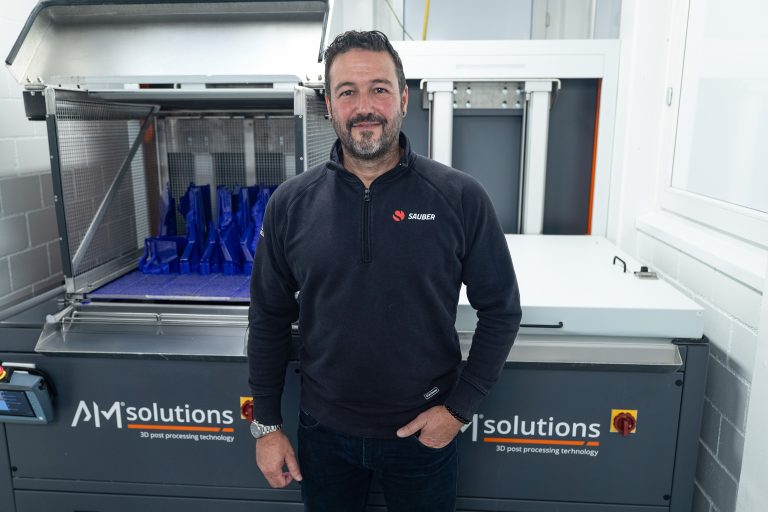
Since February, Sauber Motorsport has been using a C1 Max from AM Solutions – 3D post processing technology for the post processing of SLA printed parts on their 3D Systems ProX 800 machines. The C1 Max is also compatible with the newer SLA 750 series. The system was developed as part of the existing technology partnership between the two companies and excels in many areas, particularly in terms of efficiency, surface quality, user-friendliness, environmental compatibility, and health protection.

The parts that Sauber Motorsport produces with SLA printing are highly complex and require maximum precision. This is evident from their application, as they are almost exclusively used in the wind tunnel for Formula 1 and are crucial for a vehicle’s aerodynamics. To consistently and quickly deliver high-quality 3D printed parts – approximately 1,000 parts per week between October and February – efficient post- processing is essential. “In the past, we had to manually perform many steps in the chemical post processing of SLA parts,”explains Vitor Sousa, Head of AM Plastic & CNC for AM at Sauber Motorsport.”This not only took a lot of time, especially with seven printers, but it was also a significant strain on the staff working with the solvents. Since February, we have been using two C1 Max machines from AM Solutions and are extremely satisfied.”

50 percent time savings with significantly improved surface quality

The C1 Max is based on the C1 concept and was specifically adapted by AM Solutions – 3D post processing technology to meet the needs of Sauber Motorsport for using large build platforms. SLA-printed parts are immersed in the treatment tank using an automatically lowering build plate and are surrounded by a specially temperature- controlled process fluid. A propeller, working in tandem with perfectly coordinated but individually controllable nozzles, ensures optimal flow around the parts and maximum flexibility. A mesh basket also ensures that no parts are lost or damaged in the immersion tank. The perfectly coordinated interaction of chemical, thermal, and mechanical processes softens the support structures, allowing them to be easily and gently removed. In the past, each part had to be laboriously processed by hand with a spatula, requiring extended PPE equipment. “This saves us a lot of time. We used to need an entire day to post process the output of our seven machines. Now, half a day is enough,”explains Sousa. ” Scrap is also minimized, and the surface quality is significantly higher, requiring much less effort in further post processing.”

More environmentally friendly process fluid and improved health protection

The C1 Max uses a specially developed process fluid from AM Solutions – 3D post- processing technology that is more environmentally friendly than conventional fluids. This also has a positive effect on the health of the staff, who can now work in the room without wearing masks.”The health protection of our employees was a very important argument for us,”Sousa emphasizes. Another practical advantage is that no additional equipment is needed when emptying the system. Once the medium is saturated, it is safely pumped out via the integrated pump and disposed of by a service provider. Overall, the cleaning effort for the system has been significantly reduced compared to before.

Future-oriented customer solution specifically developed for large build platforms

The development process of the C1 Max spanned about a year and a half, during which data and parts were continuously exchanged. An important aspect was determining the optimal size of the system. This allows the processing of a build volume of 750 mm (length) x 750 mm (width) x 550 mm (height) and thus the processing of a complete build plate of the 3D Systems ProX 800 or the SLA 750. Another advantage is that the "bare" plates can be easily placed in the system overnight for cleaning. "We used to have to laboriously dry-ice blast around 25 plates every Friday. Now, we can repurpose the space and time for other tasks," Sousa explains. To be prepared for future printer versions, adapters were used to make the machine flexible and adjustable to future needs.

“Formula 1 is the pinnacle of motorsport, which means we operate at the highest technical level. Safe and efficient processes are crucial for us, and with the C1 Max, we’ve taken another big step in that direction,” Sousa concludes.

Rösler Oberflächentechnik GmbH / AM Solutions

For over 80 years, the privately owned Rösler Oberflächentechnik GmbH has been actively engaged in the field of surface preparation and surface finishing. As global market leader, we offer a comprehensive portfolio of equipment, consumables and services around the mass finishing and shot blasting technologies for a wide spectrum of different industries. Our range of about 15,000 consumables, developed in our Customer Experience Centers and laboratories located all over the world, specifically serves our customers for resolving their individual finishing needs. Under the brand name AM Solutions, we offer numerous equipment solutions and services in the area of additive manufacturing/3D printing. Last-but-not-least, as our central training center the Rösler Academy offers practical, hands-on seminars to the subjects mass finishing, shot blasting and additive manufacturing. The Rösler group has a global network of 15 locations and approx. 150 sales agents.

www.rosler.com

www.solutions-for-am.com

www.sauber-group.com

#rosler #solutions-for-am #sauber-group #modernplasticsindia #modernplasticsasia #plasticsislife #plasticstalk#modernplastics #modernplasticsworld #pasticsnews #plasticsisgood #plasticsplanet#plasticsrecycling#plasticmagazine #PlasticIndustry#modernplasticsmiddleeast #indianmagazine #innovations #modernplasticsamerica #modernplasticsbangladesh #modernplasticsasia #modernplasticsitaly

One-stop solution for data-driven decisions

One-stop solution for data-driven decisions

When it comes to high-performance extrusion lines, SML is one of the technological leaders and has been in the market for extrusion machines for more than 25 years.  When developing digital services for its lines, SML adheres to the same “all in-house”-approach which applies to all of its other core competencies.

“For several years now “industry 4.0” has been a popular buzzword but the underlying question is always how the companies that operate our machines can benefit from the rapid developments being accomplished in the digital sector,” Christoph Strasser, Team Leader of SML’s Digital Business Unit, says. Like all of its other core competencies, such as mechanical engineering, electrical design or automation, SML makes sure to keep the development of digital solutions strictly in-house. Close co-operation among the different departments, all located at SML’s headquarters, supports the creation of coherent extrusion concepts with perfectly harmonised digital solutions.

bitWise: Analysing data – increasing productivity

Bitwise, the data generation and analysis tool, is at the heart of SML’s digital activities. Today it is used in more than 200 extrusion lines around the world. “bitWise enables the comprehensive collection, processing, analysis and transmission of manufacturing data – in an extraordinarily fast and easy manner. The process knowledge bitWise generates, helps to continuously optimise both the manufacturing processes and the product quality,” Christoph Strasser continues. Its main purposes are to streamline workflows, identify and solve problems pertaining to quality, analyse machine defects – and, above all, to increase machine productivity.

 The most popular areas of application include

  • The real-time monitoring of various process-relevant or quality-relevant production values, such as the melt temperature, extruder pressure or coating weight – with an alarm function, if certain values deviate
  • Digital shift books for the systematic documentation of all events during a shift
  • The bitWise Track and Trace function: all of the data generated during production can be assigned to a specific, finished film roll, for example via a QR code. This presents new opportunities for quality control and product enhancement.

 Flexible dashboards for operators and CEOs

bitWise enables data-driven decision making, regardless of the organisational level – execution, planning or enterprise. It supports the machine operators, the maintenance team, shift leaders, quality managers and not least the CEO / management. To simplify day-to-day work, the bitWise dashboard can be customised to suit the specific field of activity of the user. Since bitWise is per se a web-based solution, remote access, i.e. via a tablet or a personal computer is possible, provided that the company can cater to the system requirements.

SML takes care of bitWise

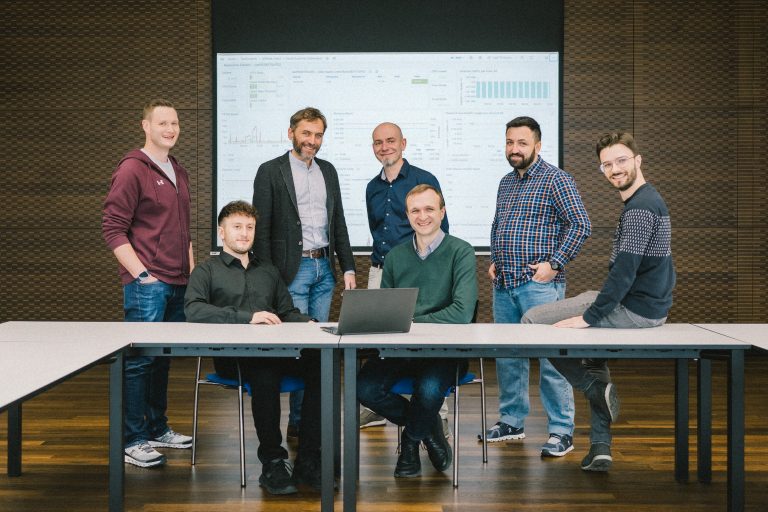
bitWise was created by a highly skilled team of seven full-stack software developers and data scientists with a wealth of experience in automation and data analytics who now continue to develop it on a regular basis. The fact that bitWise is made 100% at SML generates an array of benefits. Above all, that SML takes care of it in a comprehensive way:

  • Automatic updates from SML
  • SML observes the components used and closes security issues
  • SML monitors the local bitWise server attached to the extrusion lines, customers are notified by SML before problems occur.
  • New features can be added automatically
  • Personal support and assistance

 Open system – interconnectivity

One vital characteristic of bitWise is its system openness: The data exchange is based on open standards such as HTML and OPC-UA. So bitWise provides full interconnectivity for the comprehensive exchange of data between the extrusion line and connected machine auxiliaries, such as the inspection system, cloud-based solutions or the ERP.

https://www.sml.at/

#sml#indianplasticmagazine #modernplasticsaward #plasticnews #modernplasticsgermany #ginujoseph #modernplastic #plasticindia  #plasticrecycling #sustainability #modernplasticsglobalnetwork #modernglobalnetwork #modernplasticsaward2023 #plasticmagazine #PlasticIndustry

50 Years of Rubik’s Cube: A Plastic Cube that Keeps the World in Suspense

50 Years of Rubik’s Cube: A Plastic Cube that Keeps the World in Suspense

From ABS plastic to recycled materials

U’ L’ ULUF U’ F’ – doesn’t mean anything to you? And yet you have probably already acted according to this pattern: when trying to solve the Rubik’s Cube. The plastic cube is celebrating its 50th anniversary this year. Originally made of wood, it is now of course made of plastic (some of it even recycled) and is as popular as on the first day.

From today’s perspective, it is difficult to imagine that the development of the small cube took six years. But where rapid prototyping, fused deposition modeling and the like make development easier for us today, in the past there was nothing. The cube had to be designed and built by hand. In 1974, the Hungarian Ernő Rubik developed the Rubik’s Cube, which has been world famous since the 1980s and bears his name. Rubik built the first models out of wood.

When the cube went into mass production, manufacturers switched to acrylonitrile butadiene styrene copolymer (ABS) and injection molding. After the black individual parts were produced and assembled, they were covered with the typical colorful stickers made of polypropylene film. The design is as simple as it is practical and the cube has never really gone out of fashion since the 1980s. The

cube was developed at a politically difficult time. While it became a bestseller in its native Hungary through word of mouth alone, distribution beyond the Iron Curtain was difficult. According to inventor Rubik (who was an architecture professor), it was simply too complex in the eyes of western companies. A toy that only a fraction of buyers would ever solve? Not interesting.

One company finally took the risk and estimated the sales figures (quite optimistically) at one million. Just off the mark: 30 million of the plastic cubes were sold worldwide in the first year. To date, the Rubik’s Cube has been sold almost 500 million times – about 52 times the current Hungarian population.

Today, the Rubik’s Cube brand belongs to the Spin Master company and is keeping up with the times when it comes to plastic. In addition to the many cube variants made of conventional plastic, Spin Master has developed the Rubik’s Re-Cube from 100 percent recycled plastic, taking a big step towards sustainability in the plastics industry. It is made of 100 percent recycled plastic. But that’s not all in terms of sustainability: in 2021, Spin Master Corp. in the USA teamed up with the company TerraCycle to make the cubes more recyclable. If the cube is no longer wanted, it can be sent to TerraCycle. There it is melted down and then processed into park benches, for example.

So what is the cryptic combination “U’ L’ ULUF U’ F'” all about? It’s simple: Cubers use letter combinations like this to note down their movements. The letters stand for the side of the cube that is to be moved (U for Up, L for Left, F for Front, etc.). An apostrophe is added when the side is turned anti-clockwise. Mathematicians have been racking their brains for decades over the shortest solution to the Rubik’s Cube, the so-called God’s number.

Have you got a taste for it? To ensure that users don’t despair after the first turn, there are numerous instructions on how to solve the cube. The official Rubik’s Cube website also provides a guide.

The God’s number describes the ideal solution to a mathematical problem. In the case of the Rubik’s Cube, this means solving the cube with as few turns as possible. The difficulty for the mathematicians lay in the number of possible combinations. There are 18 possibilities for the first move with the cube, then 18 more for the next move, and so on. This results in 43 trillion different positions. In 2010, the German mathematician Herbert Kociemba and the Californian computer scientist Thomas Rokicki proved that the God’s number is 20.

Aside from the recycled plastic, the Rubik’s Cube is also keeping up with the times in terms of digitalization. It is also available equipped with Bluetooth, so that an app can track every movement. But whether old school or modern: the Rubik’s Cube has fascinated people for decades. Incidentally, its inventor needed over a month to solve it the first time. So don’t worry if it takes a little longer.

The Rubik’s Cube in numbers

  • Records : Max Park solves the 2023 cube in 3.13 seconds. A robot from Mitsubishi Electric Corporation needs only 0.305 seconds.
  • Size : The largest Rubik’s Cube is 21×21 squares.
  • Solution : There are 43 trillion ways to solve the Rubik’s Cube. This number of cubes could cover the earth 200 times.
  • Documentary : In 2020, Netflix released the documentary “The Speed ​​Cubers”. Here, too, Max Park is one of the protagonists.
  • Pop culture : The Rubik’s Cube also appears in films, for example in 2012 in “The Amazing Spiderman” with Andrew Garfield, in 1998 in “Armageddon” or in the animated children’s film “Wall-E”.

https://www.k-online.de/

#rubiks. #k-online.de #modernplasticsindia #modernplasticsasia #plasticsislife #plasticstalk#modernplastics #modernplasticsworld #pasticsnews #plasticsisgood #plasticsplanet#plasticsrecycling#plasticmagazine #PlasticIndustry#modernplasticsmiddleeast #indianmagazine #innovations #modernplasticsamerica #modernplasticsbangladesh #modernplasticsasia #modernplasticsitaly

Wayland Additive Partners With TECCLUSTER A/S Across Nordic & Baltic Regions For Sales of Calibur3

Wayland Additive Partners With TECCLUSTER A/S Across Nordic & Baltic Regions For Sales of Calibur3

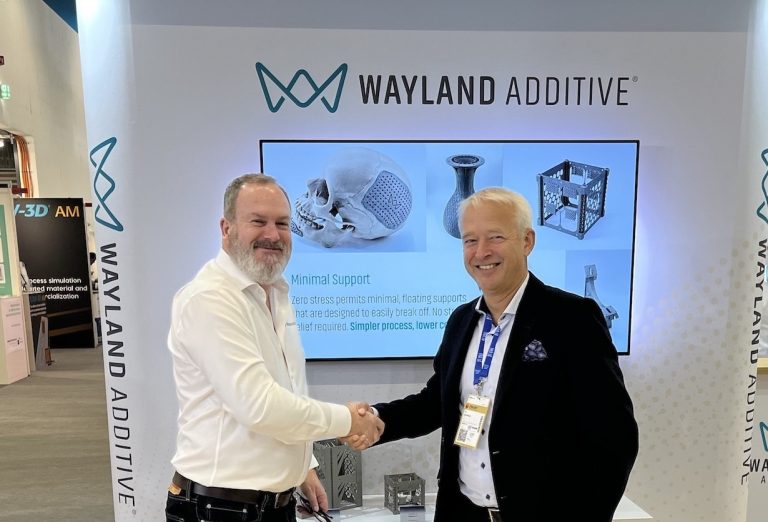
As you may have noticed, things are ramping up at Wayland Additive, and the company is excited to announce a further partnership agreement, with TECCLUSTER A/S based in Denmark.

Per Lynnerup is the Technical and Managing Director of TECCLUSTER, an engineering company with more than 30 years of experience with 3D printers and industrial 3D printing. He founded the company in 2003, however, his experience with additive technologies dates back to the very beginning, to 1989. With such impressive longevity in the AM sector comes a wealth of knowledge and expertise that Lynnerup is able to share with consistent and demonstrable successes. He has established important and valuable connections with stakeholders and allied partners across many industry sectors, supporting them to deploy additive technologies for wide ranging projects at national and international levels.

Since establishing TECCLUSTER, Lynnerup has successfully expanded its reach from the Danish market to include the whole Nordic region and the Baltics. This is the territory that TECCLUSTER will focus on in partnership with Wayland.

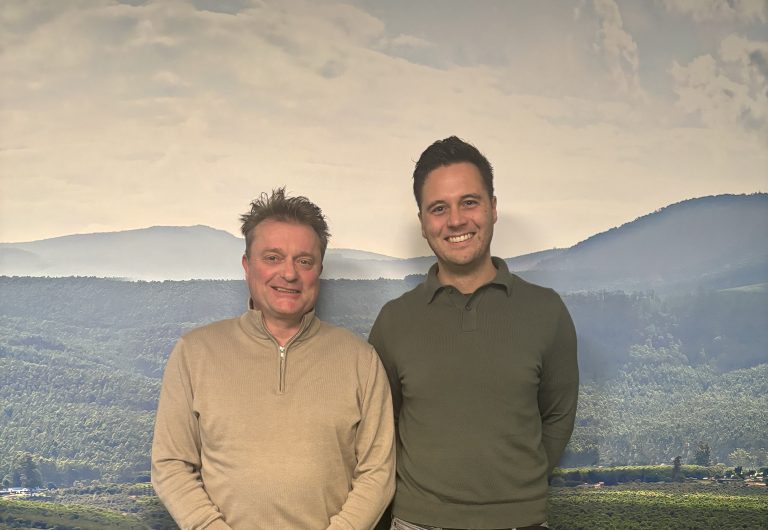
Commenting on the partnership agreement, Lynnerup said: “I have worked with 3D printers since 1989 and I have known Pete [Hansford] for many years. His experience in this industry is almost — ALMOST — as long as mine. What the Wayland team has achieved with the NeuBeam process is remarkable and solves many of the issues that companies using metal AM technologies face. It is particularly impressive that the Calibur3 system can deliver advanced applications in a much broader range of metal materials, including notoriously difficult materials such as Tungsten and Moly [Molybdenum] and associated alloys. Add to this the fact that parts produced by Calibur3 require only a fraction of the post processing that other metal processes require, and the Calibur3 system is a compelling solution for manufacturers with complex metal applications. I am looking forward to sharing this solution across my network.”

Peter Hansford, CRO at Wayland Additive, also commented on the partnership agreement, which was finalized at Formnext 2024: “This agreement with TECCLUSTER further demonstrates the excitement about, and the very real demand for, the capabilities of our NeuBeam process. As Per says, we have known each other for a long time, and he is one of the most knowledgeable people I know in this industry. It is brilliant that Wayland and TECCLUSTER will be working together to deliver the capabilities and the advantages of Calibur3 to a wider audience. I am delighted to be working Per and expanding machine sales across the Nordic and Baltic regions.”

www.wayland.com

https://teccluster.com

#/teccluster#.wayland.#modernplasticsindia #modernplasticsasia #modernplastics#plasticsnews#plasticsplanet #modernrecyclingindia#modernplasticsglobal#modernplasticsworld#plasticstalk#modernplasticsgermany#modernplasticsnetwork #plasticdevelopment