Home Blog Page 35

Chemco & Kandoi Join Forces in ₹450 Cr Gujarat Project for rPET FIBC Bag Production

Chemco & Kandoi Join Forces in ₹450 Cr Gujarat Project for rPET FIBC Bag Production

In a path-breaking partnership to redefine India’s sustainable packaging, Chemco Group, India’s largest PET converter, and Kandoi Group of Industries, a technology textile industry leader, announced a strategic joint venture for the construction of two integrated greenfield manufacturing units at Vapi and Dahej in the state of Gujarat. With an investment of ₹450 crore, the project will be dedicated to the manufacture of FIBC (Flexible Intermediate Bulk Container) bags completely made from recycled PET (rPET).

The upcoming facilities will offer a closed-loop system from PET bottle collection and washing to tape extrusion, weaving, and final bag fabrication ensuring full traceability, consistent quality, and reduced environmental impact. Designed to recycle over 10 million PET bottles per day (approximately 3.6 billion annually), the plants will operate entirely on renewable energy and offer a high-strength, low-carbon alternative to traditional polypropylene and polyethylene packaging.

“This joint venture is a step toward building a circular economy rooted in India’s unique strengths. By transforming everyday PET waste into high-performance industrial packaging, we want to create value not just for businesses, but for communities and the environment. Our vision is to establish India, particularly Bharat’s industrial heartlands, as a global hub for sustainable manufacturing, where innovation, inclusion, and impact go hand in hand,” said Ram Saraogi, Chairman, Chemco Group.

“This partnership brings together two industry leaders with deep technical expertise and a shared commitment to circularity. We’re excited to set a new benchmark in high-performance, export-ready packaging made entirely from recycled PET,” said Niranjan Agarwal, Managing Director,

Kandoi Group of Industries. Beyond its environmental goals, the venture is built on a strong foundation of social equity. It is expected to generate over 2,500 direct and indirect jobs across collection, processing, logistics, and manufacturing. By partnering with Urban Local Bodies (ULBs) and municipal corporations, the initiative aims to formalize India’s informal waste collector network offering steady livelihoods, improved working conditions, and integration into a more transparent and efficient waste ecosystem.

The rPET-based FIBC bags are fully aligned with India’s Extended Producer Responsibility (EPR) framework and global ESG expectations. With end-to-end control over sourcing, recycling, and fabrication, the joint venture offers a scalable model for sustainable, compliant industrial packaging with reliable recycled content and traceable supply chains.

Commercial production is expected to begin by the end of 2025. Both Chemco Group and Kandoi Group plan to scale capacity in phases and explore export opportunities to position India as a global supplier of sustainable, industrial packaging solutions.

https://kandoiglobal.com/
https://www.chemcogroup.com/

#kandoiglobal #chemcogroup#Modernplasticsindia #Pasticsnews 
#ModernPlasticsIndiaMagazine #PrintPublication #Modernplasticsbangladesh

PRINT & DIGITAL CONVENTION 2025 Ends Successfully, Marking a Milestone for the Print Industry

PRINT & DIGITAL CONVENTION 2025 Ends Successfully, Marking a Milestone for the Print Industry

During times of deep market change, the PRINT & DIGITAL CONVENTION again demonstrated its role as a nodal point of innovation, exchange, and future planning. A trade fair, conference, and practical applications combined, it again established Düsseldorf as an important meeting place for the DACH region’s print, media, and communications industry – and sent one loud message: the industry is evolving, well-connected, and forward-looking.

From May 13 and 14, attendees at the PRINT & DIGITAL CONVENTION were able to experience the most up-to-date technologies, actual applications, and strategic solutions strategies. Brand owners, agencies, production managers, and communications experts alike received tangible ideas for their projects – and saw how print and cross-channel ideas can complement each other in successful integrated strategies.

Industry Hub with Strong Partners

With over 40 exhibitors – including industry leaders such as Canon, FKS, Horizon, Konica Minolta, KURZ, and Polar Mohr – and a high-caliber lecture program featuring around 40 sessions, the conference trade show reinforced its position as key meeting point for the print, media, and communications sector in the DACH region. Especially popular were the hands-on highlight projects, developed in collaboration with partners across the entire value chain. These projects demonstrated how technology, creativity, and strategic thinking can be combined to achieve success in modern marketing.

“Our sincere thanks go to the exhibitors, speakers, and partners who continuously engage with us to further develop and shape the PRINT & DIGITAL CONVENTION,” emphasized Rüdiger Maaß, Managing Director of the Fachverband Medienproduktion e.V. (FMP). “The event now feels like a true class reunion of the industry – marked by personal, in-depth conversations, a familiar atmosphere, and a shared drive to make a difference.”
Sabine Geldermann, Director of drupa at Messe Düsseldorf, also highlighted the special relevance of the event: “The PRINT & DIGITAL CONVENTION has become a fixture in the industry calendar, not least because it offers guidance, inspiration and practical solutions. It impresses with its practical relevance, innovative applications and in-depth expertise, and strikes a chord with the industry.”

Knowledge Transfer, Networking, and Fostering New Talent

As a conference and trade show, the PRINT & DIGITAL CONVENTION once again provided as a dynamic platform for in-depth discussions. Visitors gained valuable insights into the possibilities of modern print, packaging, and digital technologies through direct conversations at exhibition stands and lectures, offering real added value for their projects. Brand owners, agencies, and media professionals found inspiration for achieving their strategic communication goals.

Promoting young talent was also a priority at this year’s PRINT & DIGITAL CONVENTION. Following the successful launch of the Youngster Talent Initiative in previous years, several vocational schools once again participated with their classes – seizing the opportunity to experience current topics, technologies, and real-world applications first-hand. Combining classroom knowledge with practical insights and direct interaction with exhibitors and experts helped deepen their understanding of industry trends and laid the groundwork for valuable networking and sustainable talent development.

A Joint Signal for the Future

Fitting the future-oriented character of the PRINT & DIGITAL CONVENTION, another key initiative was announced: almost exactly one year after the last drupa, the leading trade fair confirmed its partnership with the industry campaign WE. LOVE.PRINT. This collaboration represents a strong alliance within the community – and symbolizes shared innovation, a commitment to quality, and a sustainable perspective in the print, media, and communications sector.
“By partnering with the WE. LOVE.PRINT initiative, drupa is supporting the campaign’s nationwide efforts to emphasize the industry’s value and economic importance,” said Sabine Geldermann, Director of drupa at Messe Düsseldorf. “Together, we are creating momentum, expanding our reach and emphasizing the resilience and future viability of the print sector.”

https://www.drupa.com/

#drupa #Modernplasticsindia #Pasticsnews #ModernPlasticsIndiaMagazine
#PrintPublication #Modernplasticsbangladesh

Fortum Joins Vianode in Boosting Sustainable Materials Flow for Electric Vehicles

Fortum Joins Vianode in Boosting Sustainable Materials Flow for Electric Vehicles

Vianode, an advanced battery materials company, and Fortum Battery Recycling, a specialist in recycling valuable metals from electric vehicle (EV) batteries, have signed a Memorandum of Understanding to collaborate on developing a sustainable EV battery recycling value chain.

Under the agreement, the two companies will work together to:

  • Secure supplies of high-quality recycled graphite concentrate from Fortum’s hydrometallurgical plant in Harjavalta, Finland
  • Develop and optimize recycled graphite materials for use in their commercial-scale anode production
  • Evaluate and enhance the performance of recycled graphite in advanced battery components

“Recycling graphite from end-of-life batteries is vital to reduce dependence on virgin raw materials, lower carbon emissions, and build sustainable supply chains. Access to recycled graphite concentrate with potential to scale volumes over time will support Vianode’s ambition to deliver high-quality anode materials with an industry-leading CO₂ footprint below 1 kilogram CO₂e per kilogram of graphite by 2030”, says Dr. Stefan Bergold, Chief Commercial Officer of Vianode.

Graphite anode material represents the largest component of lithium-ion batteries by weight, typically around 70 kilograms per EV. By integrating recycled graphite into its production processes, they aim to accelerate the development of low-carbon, high-performance battery materials.

“Fortum Battery Recycling and Vianode have a shared commitment to a more sustainable and less resource-intensive EV battery industry. By recovering valuable and critical graphite from used batteries and returning it to the cycle as battery-grade material, we help enable the production of new lithium-ion batteries with a significantly lower environmental footprint,” says Tero Holländer, Head of Business Line, Batteries, Fortum Recycling & Waste.

They recently launched its first high-performance anode material made from recycled battery-grade graphite as part of the company’s strategy of creating the world’s most sustainable anode graphite and enable a truly circular North American and European battery value chain.

Towards 2030, Europe is expected to see a significant increase in battery recycling as the first generation of EVs reaches the end of their life and new EU legislation requires higher recovery rates and the use of recycled materials in new batteries.

https://www.vianode.com/

#vianode #Modernplasticsindia #Pasticsnews #ModernPlasticsIndiaMagazine
#PrintPublication #Modernplasticsbangladesh
Kistler Academy Rolls Out Enhanced Course Catalog for Mold Technology

Kistler Academy Rolls Out Enhanced Course Catalog for Mold Technology

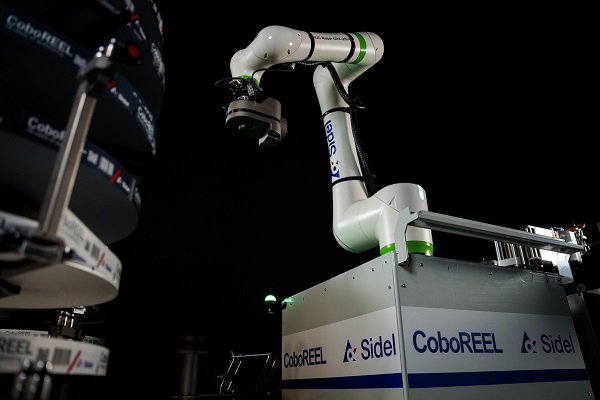
Using your expertise to get the most out of sensor technology: The Kistler Academy, an ISO-certified training institution, organizes courses for users from the injection molding industry for plastics. Kistler experts provide the knowledge required for optimum sensor use, efficient process design, monitoring and control, as well as profitable data evaluation. The broadened range now includes courses on part and mold design and AI-based data analysis.

A large number of cavity pressure sensors, the use of specific software and data management alone do not guarantee high efficiency in injection molding production. Only with the right knowledge and skills will users be able to make the best and most profitable use of these technologies.

“We have noticed that many production plants already use sensors and software to monitor mold cavity pressure but often lack the in-depth know-how to fully exploit the potential,” explains Dr. Oliver Schnerr, Head of the Plastics Academy and Application Technology at Kistler. For this reason, the DIN/ISO 21001-certified academy offers three successive levels of training on the optimum measurement and evaluation of mold cavity pressure. “With our Kistler Academy offer, we take a look at the entire process. From article and tool construction, through tool manufacturing and maintenance, to sampling and series production, as well as quality assurance and process and production analysis – naturally with a focus on mold cavity pressure measurement”, says Schnerr. The application-oriented courses are divided into theoretical and practical parts and are held at customers’ premises and as seminars in cooperation with selected institutes.

Needs-based training courses: basic, advanced and expert level

Kistler has divided the training courses into three areas: the basic level covers the correct selection, handling and operation of products and solutions such as sensors, ComoNeo or AkivisIO. The second level focuses on different process variants in injection molding and the efficient use of cavity pressure measurement in various processes. The goal is always to significantly reduce production costs through automated quality assurance and process control and regulation.

Third-level courses center on data storage and analysis, including knowledge transfer on process data management and the use of AI for data evaluation. “In all three areas, however, there is a clear focus on the use of cavity pressure and the associated opportunities for cost reduction,” explains Schnerr. “Throughout the academy, we concentrate on the opportunities for cost savings through the efficient use of resources and data along the entire injection molding process. Our offering is hence aimed at a broad range of users.”

https://www.plastech.biz/en

#plastech.biz #Modernplasticsindia #Pasticsnews #ModernPlasticsIndiaMagazine
#PrintPublication #Modernplasticsbangladesh

Generational Transition Launches Polykemi Group into Its Next Phase

Generational Transition Launches Polykemi Group into Its Next Phase

The family-owned business organization Polykemi Group will experience a generational transition at the start of 2025–2026. The third generation will be ready to assume senior leadership positions. The founder Hugo Jönsson’s sons, Ola Hugoson, the current CEO, and Lars Hugosson, the deputy CEO, will continue to be involved in the organization but will transfer their titles and responsibilities to their offspring.
This choice is founded on a common understanding of how Polykemi Group should carry on conducting business as a family enterprise with regard to its suppliers, customers, and workers.

The third generation, consisting of Gustav, Johan, Herman, Oscar and Vendela, is taking over the leadership of Polykemi Group.

New roles

With the generational shift comes some organizational changes.

Ola Hugoson and Lars Hugosson will take on roles as Senior Advisors. Oscar Hugoson will step up as the Global CEO for Polykemi Group, Herman Hugosson will become the CEO of Polykemi AB, and Gustav Hugoson will take on the role of Deputy CEO for Polykemi Group. Johan Hugoson will continue in his role as CEO of Polykemi Inc. in the USA, and Vendela Hugosson will stay in her role as a Procurement Assistant.

“All the changes that will occur are made with full consensus. The entire family agrees that the best interest of Polykemi Group comes first. We want the companies to continue growing healthily and, in the direction, we intend; therefore, we have made a joint decision to continue running the group in the same ownership form and spirit as our parents have done so far,” says Oscar Hugoson.

The change is a natural step for a family-owned group like Polykemi Group.

“28 years ago, Hugo trusted Lars and me to take over the leadership of Polykemi. Today, it’s our turn to pass that trust – with pride – on to our children. They will step in, but Lars and I will remain as senior advisors. The future will continue to be a collaboration – with some new people and new energy, but always with the company’s and the group’s best interests in mind,” says Ola Hugoson.

Third generation’s ambition

Polykemi began as a family business in 1968. What started as one company is now a whole corporate group, and the ambition to continue as an independent family business remains.

“Our goal is to one day pass on Polykemi Group in at least as good condition as it is in today when time comes for the next generational shift in the future. We also have the ambition to continue growing, which is one reason we decided to split Ola’s existing role into two, to allow for expansion,” says Herman Hugosson.

A joint decision

The transition to the third generation is a decision that has evolved through a process that began six years ago.

“We have received a lot of help from consultants from the Family Business Network and have really allowed the process to take the time it needed. We have been forced to have discussions we might not have otherwise had, and it has been incredibly beneficial. The purpose was always to find a plan for the future, and now we have found a good plan that everyone believes in and is comfortable with,” says Oscar Hugoson.

Gustav Hugoson adds: “It has been a team effort from the start, which has resulted in our continued development as a team. I can look back peacefully on a very fine process where the whole family has come closer together both personally and professionally by mapping out our individual strengths and goals. The process we have gone through will give us great advantages in our work going forward.”

https://www.polykemi.se/en

#polykemi #Modernplasticsindia #Pasticsnews #ModernPlasticsIndiaMagazine
#PrintPublication #Modernplasticsbangladesh
Ricoh Elevates Sustainable Textile Printing at FESPA Berlin 2025

Ricoh Elevates Sustainable Textile Printing at FESPA Berlin 2025

Ricoh will be demonstrating next generation textile on demand production versatility at FESPA Global Print Expo 2025, Europe’s premier exhibition for screen, digital, wide format, and textile printing, Messe Berlin, from May 6 to 9.

Meeting the high-volume digital production demands of industrial markets will be the RICOH Pro D1600 DTF system. Ricoh’s industrial printheads help it achieve speeds in excess of 20 sqm per hour for media widths of up to 1300mm film.

Presenting opportunities in production on polyester fabrics for apparel decorators and designers alike is Ricoh’s Ri 4000 DTG printer. The system’s inbuilt pre-treatment process facilitates consistent, vibrant, and efficient industrial garment printing at an affordable price.

These systems incorporate Ricoh inkjet technology designed to deliver speed, versatility, durability, and accurate fluid deposition, with minimal maintenance. While ensuring the effective management of consistent and reliable colour accuracy is ColorGATE (a Ricoh company) Production server Version 24 which will be driving all textile devices on show.

Furthermore, the textile systems support just in time, on demand, local production capabilities that reduce waste, maximize resources, and eliminate unnecessary transportation.

Ricoh will also expand on how its Valvejet technology aligns with the industrial painting and coating market’s need for higher viscosity fluids and throw distances along with larger drop sizes. Demonstrating the possibilities will be Ricoh’s industrial tyre printing solution developed for the high-end customization market.

Focus will also be on the R & D developer community where collaboration between suppliers can facilitate fast time to market. Printheads, drive electronics, drop watching, and curing are key elements in a fragmented supply chain and Ricoh will advise visitors on navigating this complex process.

Graham Kennedy, General Manager, Industrial Solutions, Ricoh Printing Solutions Europe, says: “Ricoh technology powers a wide range of industrial solutions and we are looking forward to demonstrating real life applications at FESPA. The potential for innovative development with partners and clients is limitless.”

www.ricoh-europe.com

#ricoh-europe #Modernplasticsindia #Pasticsnews #ModernPlasticsIndiaMagazine
#PrintPublication #Modernplasticsbangladesh

RENOLIT Constructs Second Pune Facility to Expand Production

RENOLIT Constructs Second Pune Facility to Expand Production

Plastics processor RENOLIT is expanding in India and building a new plant in Pune. The symbolic groundbreaking ceremony took place on April 15, 2025. From April 2026, the family-owned company plans to produce geomembranes for civil engineering projects in the Asia-Pacific market.

“India is now the most populous country on earth and, with growth of over six percent, the Indian economy is the fastest growing major economy in the world,” says Karsten Jänicke, CEO of RENOLIT. “With the new plant, we are sending a clear signal for our long-term growth strategy in Asia. The factory strengthens our market position and our ability to deliver in the extremely dynamic Indian market.”

They had their own production facility in Pune since 2010. The city is located 150 kilometers southeast of Mumbai in the state of Maharashtra in western India. The Composites Market Unit successfully manufactures the product RENOLIT WOOD-STOCK here, a wood-plastic composite material with various polymer and natural raw materials for the automotive and construction industries. The company is now building a second plant on the site.

A safe and sustainable production facility for geomembranes is being built on a total area of 3,190 square meters. The new factory is to be built in just 12 months. Production is scheduled to start as early as April 2026. Around 30 employees will then be able to produce the first geomembranes using a design-built extrusion process. The plant is designed for a production annual volume of 6,000 tons of geomembrane.

Cooperation with experts for hydraulic structures
The investment is the first step in their long-term growth strategy in India. To this end, the plastics processor has entered into a collaboration with Carpi, a Swiss company specializing in the waterproofing of hydraulic structures.

Carpi and RENOLIT are enabling one of the largest energy transition programs in the world with their geomembranes. “We are pleased to be able to make an important contribution to this program and to achieving India’s climate targets by providing our products,” says Nicolas de Walque, Sales and Business Development Director of the Market Unit Roof & Water Care.

The Indian government is focusing on integrated renewable energy storage projects (IREP) with hydro, solar, wind and pumped storage components. Large quantities of waterproof geomembranes are required for pumped storage. With such IREP projects, India aims to achieve its goal of being completely climate-neutral by 2070.

“We can produce high-quality geomembranes on site in our new factory. This is a real competitive advantage. With our new production facility, we are close to our Indian customers and can incorporate their specific requirements into our products,” explains Rahul Chivate, General Manager of RENOLIT India Pvt. Ltd.

Hindu tradition brings good fortune
They have now performed the symbolic ground-breaking ceremony for the new factory in Pune. Rahul Chivate and Alok Marwaha, Managing Director of RENOLIT India Pvt. Ltd., welcomed guests from local business and people from public life as well as a delegation from RENOLIT to the opening ceremony. Among them were Karsten Jänicke, CEO, Renaat Demeulemeester, General Manager Market Unit Roof & Water Care, Nicolas de Walque, Sales & Business Development Director of the Market Unit Roof and Water Care, Vikram Gandhi, General Manager of APPL GOR Plastics India Pvt. Ltd., Anurag Jain, Director APPL Industries, and Vinayagam Subramanian, Director Carpi India Pvt. Ltd. Also present were Vinit Dungarwal, Founder, and R.S. Inamdar, Director, from the construction company AMs, who are responsible for the project.
The festive highlight was a traditional Ganesha ceremony. In Hinduism, Ganesha is the Hindu elephant god, the god of wisdom, prosperity and good fortune, who is worshipped before new business endeavours in order to overcome all spiritual and materialistic obstacles with perseverance.

https://www.renolit.com/en/

#renolit #Modernplasticsindia #Pasticsnews #ModernPlasticsIndiaMagazine
#PrintPublication #Modernplasticsbangladesh
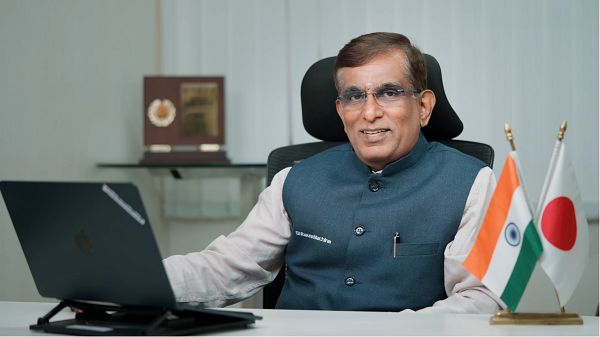
Bio-Based Plastics Get a Green Upgrade as Praj Industries and Thyssenkrupp Uhde Unite on PLA Solutions

Bio-Based Plastics Get a Green Upgrade as Praj Industries and Thyssenkrupp Uhde Unite on PLA Solutions

ThyssenKrupp Uhde’s polymer specialists Uhde Inventa-Fischer (UIF), a subsidiary of the global leader in chemical engineering and construction, and Praj Industries Limited (PIL), a global leader in industrial biotechnology solutions, announced a strategic partnership to jointly offer an end-to-end integrated technology for the production of Polylactic Acid (PLA). This strategic partnership offers a unique, seamless solution that sets them apart in the arena of bioplastics.

The indiscriminate use of fossil-based plastics and the often-irresponsible disposal, especially of single-use plastics (SUPs), call for urgent, innovative, and sustainable solutions. Polylactic acid (PLA), as a sustainable alternative to conventional plastics holds significant potential in advancing a circular bioeconomy. To meet this global need, PIL and UIF are leveraging their combined expertise in industrial biotechnology and chemical engineering to enhance PLA technology, ensuring efficient, cost-effective and sustainable production processes.

Nadja Håkansson, CEO thyssenkrupp Uhde: “We see a perfect match of two world-leading technologies: Uhde’s PLAneo process can now be offered as an integrated solution with Praj Industries’ lactic acid production. Together, we can design and deliver complete PLA plants. Our joint vision is a competitive solution to replace conventional plastics with sustainable alternatives.”

Dr. Pramod Chaudhari, Founder Chairman, at Praj Industries: “Praj’s Bioprism portfolio for renewable chemicals and materials, with a focus on bioplastics, underscores our commitment to a sustainable future. Our strategic partnership with Uhde marks a significant step in driving the global shift toward a circular economy by enabling cost-effective biomanufacturing and the establishment of biorefineries. With our award-winning proprietary PLANERA-technology and this collaboration, we aim to tackle the challenges posed by fossil-based plastics and contribute to a more sustainable planet with innovative, bio-based solutions.”

The partnership will be able to offer an end-to-end integrated technology, covering the entire PLA production process from feedstock conversion to polymer production. Different grades of Lactic acid can be produced from this technology which find applications in food and industrial sectors. A broad range of PLA grades can be produced, addressing the diverse requirements of various industries such as packaging, textiles, and hygiene supplies. Both companies have a strong global presence, enabling them to deliver innovative solutions to customers worldwide and adapt to practically any agricultural feedstock containing either starch or sugar, including second generation feedstocks based on non-food raw materials.

A shared commitment to sustainability drives the partnership, focusing on developing environmentally friendly and socially responsible solutions. Praj recently inaugurated India’s first-of-its-kind ‘Demonstration Facility for Biopolymers’ near Pune, India, where it is producing lactic acid and lactide. This facility will serve as a crucial platform for testing and validating the joint offering, enabling the partners to showcase the potential of PLA and accelerate its commercialization.

https://www.thyssenkrupp-uhde.com/

#thyssenkrupp-uhde #Modernplasticsindia #Pasticsnews #ModernPlasticsIndiaMagazine
#PrintPublication #Modernplasticsbangladesh

COM4PHA Pushes the Boundaries of Sustainability with Plant-Based Bioplastics

COM4PHA Pushes the Boundaries of Sustainability with Plant-Based Bioplastics

Polyhydroxyalkanoates (PHA) are biocompatible and biodegradable plastics in soil and marine environments synthesized by a wide variety of microorganisms, which share very similar characteristics with plastics of petrochemical origin. The most recent studies focus on the search for cheaper alternative substrates, such as agro-industrial waste or industrial by-products, and on extraction strategies to reduce product costs. In this way, the aim is to facilitate their incorporation into a market dominated by petroleum-based plastics. The most commercialized PHAs have certain limitations to be processed by conventional technologies, so one of the objectives is to optimize them so that they can be used in different applications within the plastics industry, as well as to scale up their production and supply companies in the sector.

In this sense, the COM4PHA project is dedicated to creating novel bioplastic formulations based on the PHAs group in order to support new product development avenues utilizing these biodegradable materials. Using cutting-edge processing processes for this kind of polymer, the project is specifically developing formulations based on the PHBV copolymer for use in the packaging and agricultural industries. These technologies involve covering paper substrates and agricultural mulch films with the copolymer and hollow-body blown extrusion for bottles.

The overall objective of the project is also to optimize the synthesis of the material and favor the scaling up of larger quantities to be able to offer PHBV at an industrial level and reach certain applications that are currently occupied by conventional materials.

The biotechnology company Venvirotech, which specializes in the transformation of organic waste through a proprietary technology that uses bacteria to produce PHA bioplastics, is coordinating this project. The company Enplast a specialist in the creation and manufacture of all types of plastic packaging, is also participating in the project and will be responsible for validating the materials developed. As a link between the two companies, Aimplas, the Plastics Technology Centre, is in charge of the new PHA formulations, both for the production of packaging and for the formulation of coatings.

The new formulations for cosmetic packaging will be biodegradable and compostable and will comply with the established requirements, which will reduce their environmental impact and allow a better acceptance of the product by the market. This innovation may also be of interest to other processors and end-users in the food and beverage sector, in addition to cosmetics.

For coating formulations in the paper and agricultural sectors, developments will improve product quality and extend shelf life. The results can be exploited in the packaging sector, and applied to those where barrier properties are required, such as the food and cosmetics sectors. In the agricultural sector, they will be applied in mulch films to maintain crop quality based on the barrier and antimicrobial properties of the coating.

The Ministry of Science, Innovation and Universities and the Next Generation funds of the European Union are financing this action.

https://www.aimplas.net/

#aimplas #Modernplasticsindia #Pasticsnews #ModernPlasticsIndiaMagazine
#PrintPublication #Modernplasticsbangladesh

Plastics Pipe Institute Promotes Technical Innovation with New Board Chair

Plastics Pipe Institute Promotes Technical Innovation with New Board Chair

The Plastics Pipe Institute, (PPI), today announced Mike Casavant has become the new Chair of the Hydrostatic Stress Board (HSB), a technical-based group of volunteer industry experts. Established almost 70 years ago, the HSB creates, authors and offers the policies and guidelines for minimum strength properties for plastic piping used in North America for gas, municipal water, wastewater, sewer industrial water as well as building and construction system projects. PPI membership is not necessary to list a product in the HSB program since the program is a service to the plastics industry that is hosted and administered by PPI.

“Mike brings more than two decades of technical leadership and innovation to his new role with us,” stated David M. Fink, president PPI. “His background is in product and process optimization, data acquisition systems, and PEX piping technology as well as direct involvement with the PPI HSB, serving on numerous committees and task groups. His knowledge coupled with already being part of PPI for many years will well serve our association and the industry.”

From 2019 to 2024, Casavant played a leadership role within PPI, serving as the chair of both the Technical Committee and the Technical Steering Committee.

“I see the HSB as playing a pivotal role in protecting consumers and manufacturers, which is more and more important as globalization of pipe continues to increase,” Casavant stated.

“We want to make sure that the end users, the specifying engineers, the municipalities — anyone using these products knows that there is an industry-wide, peer-reviewed standard to be met, and that they can feel comfortable that the products they are purchasing have gone through the rigorous process that the HSB provides.”

Casavant is a certified Six Sigma Black Belt, holds several patents and has a Bachelor of Science Degree in Chemistry from the University of Alberta.

Founded in 1950 and now with nearly 200 members, PPI has five divisions: Building & Construction, Energy Piping Systems, Drainage, Municipal & Industrial, plus Power & Construction.

www.plasticpipe.org

#plasticpipe #Modernplasticsindia #Pasticsnews #ModernPlasticsIndiaMagazine
#PrintPublication #Modernplasticsbangladesh