Home Blog Page 48

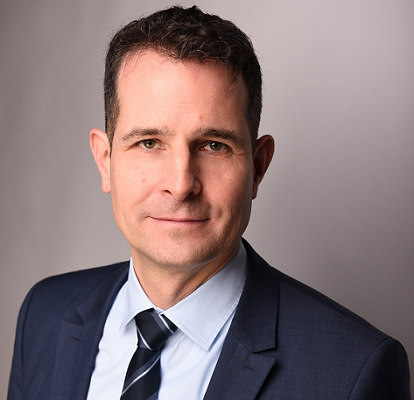
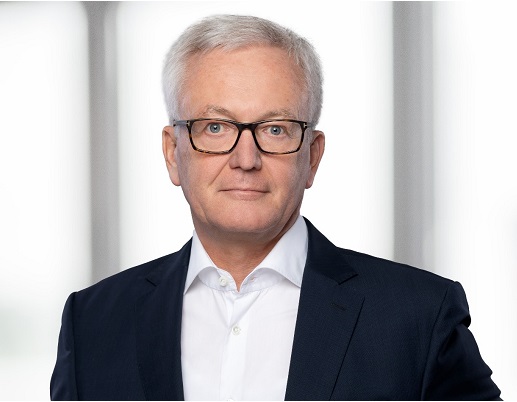
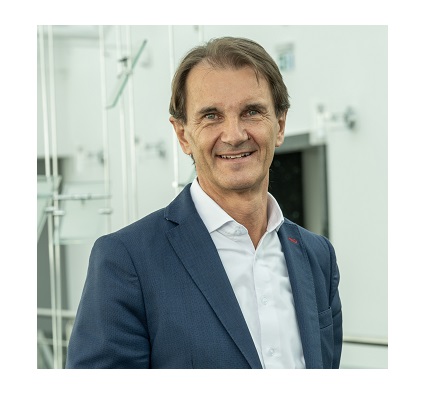
An Exclusive Interview K 2025 with Dr. Stephan Gneuss, Managing Director of Gneuss Kunststofftechnik GmbH, Design For Recycling Is The Key

0

An Exclusive Interview K 2025 with Dr. Stephan Gneuss, Managing Director of Gneuss Kunststofftechnik GmbH, Design For Recycling Is The Key

Dr. Gneuss, how has recycling developed in recent years?

Many distributors of plastic products have now recognised that they also need to identify recycling routes for products. For this reason, recycling processes have been developed in recent years that did not previously exist. The aim is to show that products can be recycled or at least made recyclable in the first place. Many new applications have been supplemented with recycling concepts that at least work on a technical level. Whether they will work in practice remains to be seen. The collection channels need to be improved, as they are still far from perfect.

Has food suitability of recycled material already been achieved?

There have been some successes here, driven by the Americans. The admission board FDA in that nation is much more flexible in its approach than its EU counterpart, EFSA. In the US, the range of authorised plastic materials has now grown significantly. A lot has also happened in Europe; however, the solutions have so far been very unsatisfactory. In principle, food suitability can be realised for the vast majority of recycled plastic materials.

 Has the use of recyclates meanwhile become economical?

There are phases in which virgin material is more expensive, but there are also phases in which recyclates are more expensive. The big boom in the recycling of PET bottle flakes came about because they were not more expensive; the situation has currently changed again, however. Virgin material is very cheap at present, and this is putting recyclates under extreme pressure. This is because their production costs are very high due to high energy costs and high costs for collecting, sorting and cleaning. This situation is particularly worrying for recyclers, and naturally also reduces the incentive for companies to use recyclates in the first place. Basically, those parties who use recyclates today do so because they have to, either because there are legal requirements, or because their customers demand it, but if you don’t have to do it for one of these reasons, nobody will, as it is simply more expensive.

What would have to happen for this situation to change?

There has long been talk of introducing binding quotas in Europe. Of course, these only make sense if the legal framework is in place. There are still a lot of problems to overcome. The quota provisions are expected to come into force very soon, but the legal framework has not materialised. For example, it would have to be determined which processes are approved so that recyclate can be used in the food sector. The EU has now found a kind of interim solution, granting the corresponding approvals subject to reservations. However, this is simply disastrous for machine manufacturers like Gneuss. Who is going to invest in a new machine with reservations that mean that they might not be allowed to use it later?

What do you think of quotas?

My take on them is a positive one. Quota specifications as content specifications, where it makes sense, and otherwise as usage specifications, because then design for recycling would win acceptance; that is the key. At the moment, design is mostly about visual or cost optimisation, which does not usually improve the recycling capabilities. I believe that there is still great potential to achieve simpler and more cost-effective recycling processes. Closed-loop recycling does not make economic and ecological sense for all products; in my view, the decisive factor is for as much plastic as possible to be recycled in the first place.

What is the situation of recycling elsewhere in the world?

We see some promising regions such as India, for example. There are already statutory quotas and corresponding regulations. This is currently triggering a boom in demand for recycling machines in the plastics sector. If other Asian countries take India as a model, the market can become huge. North and South America are also fuelling demand. There is still little legal pressure in the US, but in principle, we believe that the recycling segment has not yet exhausted its full potential in the US. By contrast, the economic situation in Europe is not good, and is particularly bad in Germany.

Are there nevertheless new competitors for Gneuss?

Yes, there are, and most of them come from China. It’s a large, dynamic market. China has also taken a few regulatory measures to support recycling, which is why there are many new machine manufacturers in this area. Sooner or later, they will also want to serve other markets; initially perhaps the Asian markets, but eventually also those in Europe and the USA. However, we will find solutions that will allow us to continue to set ourselves apart technologically. It is simply our job to always be one step ahead.

Do you still see location advantages in Germany?

Germany traditionally has a competitive advantage in the area of vocational training. Thanks to the dual system, which does not exist in a comparable form in many countries, we still have relatively well-trained skilled workers. The US, for example, is a more attractive location from a tax perspective, but the shortage of skilled labour there is much worse than here. Here in Germany however, the situation is also getting worse, due to demographic changes, as well as a growing hostility towards technology.

What do you want to convey at the K?

We want to emphasis that plastic is something positive and powerful and has considerable ecological potential. Of course it should be recycled. We are working on that. In this respect, I think the K motto “The Power of Plastics – Green – Smart – Responsible” is a good choice. The Gneuss slogan for K has not yet been finalized, but it will be something in a very similar vein.

https://www.vdma.org/

#Vdma #Modernplasticsindia #Pasticsnews #ModernPlasticsIndiaMagazine
#Modernplasticsbangladesh
Motan Expands In India To Support Growing Plastics Industry Demands

Motan Expands In India To Support Growing Plastics Industry Demands

Motan invests €2 million to bring German engineering together with Indian passion in its new Chennai factory

Motan, a global leader in raw materials management solutions for the plastics processing industry, is strengthening its presence in India with the inauguration of a new, state-of-the-art facility in Chennai.

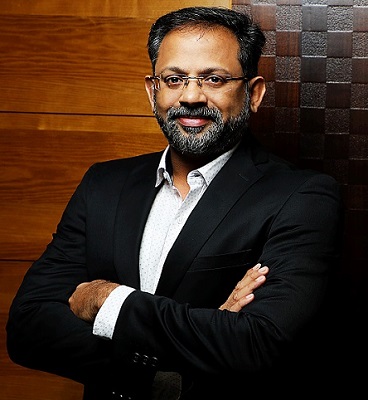
“India has been a vital market for us for over two decades, and now is the perfect time to embark on our next phase of growth,” said Carl Litherland, CMO of motan group. “The opening of this state-of-the-art facility marks a significant milestone in our journey, enabling us to better serve our customers and drive innovation in the growing plastics industry.”

Mr Carl Litherland – CMO, motan holding gmbh

According to Mr Anandakumar Ramachandran, Sales Director of motan India, this new facility marks a major milestone in motan’s expansion strategy and reaffirms the company’s deep commitment to the Indian market. “This investment of €2 million (approximately INR 17 crores) reflects our dedication to enhancing our footprint in India,” he said.

Spanning over three acres, the facility features a 20,000-square-foot production and operations area. It will serve as a hub for product development, production and distribution, as well as sales and service enabling motan to better meet the increasing demand for high-quality products and services in India’s rapidly growing plastics processing sector.

Motan’s philosophy in India – “German Engineering Meets Indian Passion” – embodies the company’s vision of merging cutting-edge German technology with the dynamic growth and expertise of the Indian plastics industry. This expansion reinforces motan’s long-term commitment to innovation, sustainability, and excellence in one of the world’s most promising markets.

www.motan.com

#Motan #Modernplasticsindia #Pasticsnews #ModernPlasticsIndiaMagazine
#Modernplasticsbangladesh

Tech Disruptors Bring Smart Solutions to Plastics and Rubber

0

Tech Disruptors Bring Smart Solutions to Plastics and Rubber

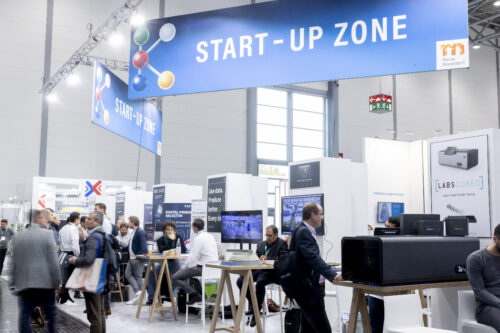
After its successful debut at the previous K the Start-up Zone will also form an integral part of the trade fair again in 2025 – this time located in the direct proximity of the Science Campus. Celebrating a premiere will be the Start-up Pitch as part of the Special Plastics Shape the Future.

Start-up Zone

Organizing the KA startup zone in Dusseldorf, the leading world fair for plastics and the rubber industry, intends to again offer young companies a special stage from October 8 to 15, 2025. In the end, these are especially novice companies that play a decisive role for plastic and rubber industry, since they introduce innovation and fresh ideas into the industry, which everyone encounters such challenges as stability and digital and digital.  In particular, start-ups are characterized by a great pioneering spirit, a affinity of risks and great flexibility.

At K 2025 the Start-up Zone will be situated in Hall 7.0 and, hence, in the immediate vicinity of the Science Campus. At the Science Campus universities (of applied sciences) and institutes will present the latest results of their plastics research. Both K Specials ideally complement each other. The immediate vicinity of the Start-up Zone and Science Campus will make Hall 7.0 a unique science and innovation hub.

Young businesses still may register in the starting zone, and have the opportunity to present developments at the world’s most relevant trade fairs and establish valuable international commercial contacts. Special participation ensembles have been prepared to minimize the obstacles and organizational costs associated with participation in such large fairs.

Participation criteria:

  • The company is younger than 10 years
  • It employs less than 100 employees
  • Annual sales do not exceed € 10 million

The contact person for the Start-up Zone is Katharina Kolissnyk, Kolissnyk  messe-duesseldorf.de

Startup-Pitch Towards Zero

In line with the Start-up Zone the official Special Plastics Shape the Future, organised by Plastics Europe, will also offer the newcomers in the industry a dedicated forum at K for the first time – the Startup-Pitch Towards Zero. Here, start-ups whose innovations and technologies, solutions or new business models for a circular economy with plastics, for the decarbonization of the plastics industry or the reduction of so-called Scope-3 emissions, are given the opportunity to showcase their pioneering technology projects and network with partners worldwide.

The Startup-Pitch Towards Zero will take place at K 2025 on Monday, 13 October, as part of the Special Plastics Shape the Future in Hall 6 of the Düsseldorf Exhibition Centre. The deadline for applications is 1 March 2025: TOWARDS ZERO – Startup Pitch at K 2025.

www.k-online.com

#k-online #Modernplasticsindia #Pasticsnews #ModernPlasticsIndiaMagazine
#Modernplasticsbangladesh

Corporate Transition: NORMA Group Announces Interim CEO Appointment

0

Corporate Transition: NORMA Group Announces Interim CEO Appointment

Guido Grandi

The chairman of the management board of NORMA Group SE, Mr. Guido Grandi, resigned from his office because of differences on the strategy for the Company with effect as of the end of 17 February 2025.

The supervisory board will conduct a structured search for a new chairman of the management board. For the interim period of max. one year, the current chairman of the supervisory board, Mr. Mark Wilhelms, has been appointed as new chairman of the management board of NORMA Group.

Ms. Kerstin Müller-Kirchhofs has been appointed for the interim period as new chairperson of the supervisory board of NORMA Group. Mr. Wilhelms and Ms. Müller-Kirchhofs will start in their respective new positions with effect of 18 February 2025.

www.normagroup.com.

#Normagroup #Modernplasticsindia #Pasticsnews #ModernPlasticsIndiaMagazine
#Modernplasticsbangladesh

An Exclusive Interview K 2025 with Markus Gschwandtner, Managing Director and Chief Sales Officer (CSO) at Brückner Maschinenbau, Rising Demand for Mono-Material Structures.

0

An Exclusive Interview K 2025 with Markus Gschwandtner, Managing Director and Chief Sales Officer (CSO) at Brückner Maschinenbau, Rising Demand for Mono-Material Structures.

Mr Gschwandtner, how does Brückner stand its ground in the face of increasing international competition?

We achieve this through innovation. Our aim is to always be one step ahead in terms of technology. Competition has indeed become more intense, with new providers in our industry segment coming primarily from Asian countries, which is why we have to counter this with innovation, focusing on our research and development department. It is a relatively large department within our company, which has been expanded even further recently. Our technical center plays a key role in this regard, as it is the technology centre par excellence within our sector. This technical center brings together all the well-known partners in our value chain, from raw material manufacturers to users, from Dow and Total to PepsiCo; they all try out their innovations with us, testing to see what works and what doesn’t.

Can you provide an example?

In our technical centre for example, we test structures that we need as part of the transition to a circular economy. We are carrying out tests with packaging mono-materials that usually consists of different materials, for example, a bowl with a lid on top. The development is shifting towards manufacturing this product from one single material, so that it can be recycled later. These mono-material structures are increasingly in demand these days. The circular economy is clearly the driver here. Just a few years ago, functionality was the most important goal. Packaging had to be easy to print on, it had to have good barrier functions, and it had to be easy to seal for reasons of hygiene. All this was achieved with different materials, different plastics, but also paper or aluminum. The trend towards reducing this mix of materials was clearly fueled by EU regulations, aimed at boosting the circular economy. At our technical center, we can show that we are able to manufacture a product from mono-material that previously consisted of five or more materials.

 If the mono-material products are easily recyclable, are the recyclates also suitable for use in food packaging?

So far only to a very limited extent. It requires authorization from the food control authorities in the individual countries, such as food approval from the American FDA, for example. In addition to collecting the plastics, it is very important to sort them, in order to keep them as pure as possible. During mechanical recycling, the plastics are shredded, melted, filtered and processed back into raw materials. In this process, it is not very easy to get the same food approval again. This is certainly the case with chemical recycling; it can actually go back into the same application.

How do you recruit the technical staff needed for your innovations?

Young talent plays a very important role for us. Employees who have been with us for a long time naturally contribute their experience, but the new employees bring new technologies with them, and they can also handle them, for example, with artificial intelligence. We have entered into partnerships with universities and colleges so that we can attract these new talents. Today, talented young people do their internships, and write their Bachelor’s and Master’s theses at our company. These well-trained individuals are very familiar with all the new technology. Once they join us, we introduce them to our business. We also attract young people on dual training programmers, always with the aim of utilizing their knowledge in other areas at Brückner.

What is the situation like in your international subsidiaries?

We now also have excellent junior staff there, especially in India and China. The young people who join us there are very well trained. They hone their technological skills at Brückner on our customers’ construction sites. They show a lot of initiative and are prepared to adapt to cultural differences. At the same time, their country-specific perspective helps us to better understand and serve the different customs and needs of our customers in those countries. The new employees at home and abroad, together with our technical center, ensure that we remain innovative.

Do collaborations also play a role in this regard?

We have always worked with partners over the last 50 years. The early innovations came from collaborating with those manufacturing partners, and they are partnerships that we have expanded. Today, we also carry out joint projects with research institutes such as Fraunhofer, or the universities in Rosenheim and Aachen, which conduct important plastics research. Again, our technical centre is the linchpin. In addition to the circular economy, organic raw materials, both biodegradable ones, and those made from renewable raw materials, are currently a major topic in this field.

Where is the plastics machinery industry heading?

Plastic has a bright future. The material has undeniably great advantages. It is light, easy to mould, inexpensive and is the material with the lowest carbon footprint in production compared to other materials such as metal or glass. If it can then be recycled as well, then that would make it the most sustainable of all. Achieving this is largely the task of plastics engineering, which therefore also has a bright future

https://www.vdma.org/

#vdma#Modernplasticsindia #Pasticsnews #ModernPlasticsIndiaMagazine 
#modernplasticsbangladesh

Unlocking The Power Of Industry Innovation CHINAPLAS 2025 Concurrent Event Preview

Unlocking The Power Of Industry Innovation CHINAPLAS 2025 Concurrent Event Preview

Amid rapid technological advancements and sustainable transformation, CHINAPLAS 2025 is set to deliver an unparalleled lineup of concurrent events, highlighting the latest breakthroughs and emerging trends in the plastics and rubber industries. CHINAPLAS 2025 will be grandly held at Shenzhen World Exhibition & Convention Center, PR China, on April 15-18, 2025. From cutting-edge material innovations to smart manufacturing solutions, this year’s program will spotlight industry pioneers, top scientists, and global brands, providing a premier technology platform for knowledge exchange and business collaboration. With “Transformation Collaboration Sustainability” at its theme, CHINAPLAS 2025’s concurrent events will inspire breakthroughs, foster partnerships, and shape the future of the plastics and rubber industries.

Tech Talk: A gathering of innovative pioneers in plastics and rubber industries

With the in-depth advancement of new-generation technologies and industrial transformations, global technological innovation has entered a highly active phase. As the official technologies release platform of CHINAPLAS, Tech Talk has witnessed the debut of over 300 innovative technologies since its inception, becoming an indispensable technological highlight of the exhibition.

After carefully selected, there will be over 40 of the latest cutting-edge technological achievements at CHINAPLAS 2025 Tech Talk. Presented in an open forum format, Tech Talk offers buyers an unparalleled opportunity to quickly gather technology trends in plastics and rubber industries efficiently and network with top-tier suppliers.

CHINAPLAS 2025 Tech Talk will center on six themes: Efficient Packaging Solutions, Green Low-carbon Solutions, Automotive Light weighting Solutions, Rubber & TPE Technologies, 2025 New Materials, and 3D Printing.

Global innovation leaders in plastics and rubber industries, including Dow, BASF, SABIC, and AVIENT Corporation, etc., will take the stage to share their latest achievements across various domains. A special “New Tech Display Zone” area will also be featured, providing a dynamic and in-depth platform for interaction and collaboration between visitors and leading exhibitors.

Product Innovation Gallery: Featuring close-up products and industry giants

Product Innovation Gallery”, an interactive landmark of the exhibition, is a set of stunning exhibition walls to be prominently located in the bustling Central Corridor on level 1. Themed “From Products to Technology. From Technology to Products.”, the gallery showcases hundreds of unique finished or semi-finished products, unveiling the innovative manufacturing technologies behind them. Visitors will not only enjoy a close-up experience but can also find their ideal suppliers. Be sure to check out the newly introduced Premium Display, featuring industry giants ExxonMobil, HRHB and SABIC, that will inspire innovations.

The 3rd SciXplore Forum: Connecting Polymer Science with Applications

The 3rd SciXplore Forum, to be held on April 16 (2 Nd show day), will bring together well-known scientists and academicians in the industry to share the latest development trends and breakthrough achievements in the field of polymers and applications.

The Keynote Speeches will feature esteemed speakers, including Academician Zhengdi CHENG, Academician Benzhong TANG, Academician Seeram RAMAKRISHNA, Academician Liqun ZHANG, Professor Kohzo ITO and Professor Ping GAO, who will explore the cutting-edge technology and applications, such as polymer physics, aggregation-induced luminescence, electrospinning technology and nanofibers, silica gel and elastomer, slip ring materials, ultra-high molecular weight polyethylene nanomemes. The Panel Discussion will convene industry leaders and top scientists for an insightful “brainstorming” session on the convergence of polymer science × artificial intelligence. In the Meet the Stars session, technical experts from brand enterprises will have the exclusive opportunity to engage closely with renowned scientists , fostering connections between academic research and industrial applications. The Keynote Speeches, the Panel Discussion, and the Meet the Stars link up polymer science and applications, and jointly shape the future trend.

Applications in Focus: Plastics & Rubber Technology Applications at a Glance

A diverse array of brands from end-user markets, universities and research centres shall gather at the event, showcasing high-performance applications. A series of thematic forums will feature over 40 hot topics, such as recyclable medical packaging, cost reduction strategies and efficiency improvements in electronic and electrical industries, and emerging trends in packaging for chain restaurants, and antibacterial technology for microbial odor control in plastic and rubber products, etc.

With a total of 6 thematic seminars, this event provides invaluable insights into industry trends, technological advancements, and real-world applications. Here are some key highlights:

  • “Materials’ Innovation and Sustainable Development: New Energy Vehicle Industry Development Forum”, organized by CP Business Services (Yantai) Co., Ltd., will explore how new materials and innovative technologies can drive the green transformation and upgrading of the automotive industry.
  • China Association for Medical Devices Industry Medical Devices Packaging Committee and Shenzhen Medical Device Quality Promotion Association will co-organize respectively “Frontier Forum on Green and Low-Carbon Healthcare Recyclable Medical Packaging” and “Medical Device Polyme  Material Technology Seminar and Quality Improvement Forum”.
  • Chinese Industry Association for Antimicrobial Materials & Products will hold “Microbial Odor Control in Plastics and Rubber: Summit on Plastics and Rubber Antimicrobial Technology Innovation and Release of Innovative Application Cases”, providing technical pathways and solutions that aligned with consumer and market demands for the transformation and upgrading of the plastics and rubber industries in the context of the “Great Health” era.
  • China Catering Brand Alliance and Zhongjiang (Shanghai) Consulting Co., Ltd. will respectively hold a seminar on “New Trends in Chain Restaurant Packaging 2025” and “Optimization of Electronics and Electrical Appliances Mechanical Design: Strategies and Practices for Cost Reduction and Efficiency Enhancement”.

Market Insights Hub: Discover the Key to Going Global, ESG and New Productive Forces

To seize new market opportunities and foster valuable insights, Market Insights Hub will hold 3 thematic forums on Day 4 (Apr 18) to explore hot topics covering RCEP and overseas market exploring strategy, ESG and sustainable supply chain and insights report of new productive forces.

The first forum will discuss the latest policies related to going global, share practical experiences, explore investment opportunities and risk strategies, helping companies expand overseas markets. The second forum will address ESG practices, global trends, and innovative supply chain management, aiming to empower companies and jointly build a green ecological chain. The third forum will gather industry leaders, experts and scholars to discuss cutting-edge trends and innovative applications of new productive forces in the plastics and rubber industry, helping the industry move towards a new stage of high-quality development, providing substantial support and inspiration for the future growth of plastics and rubber industries. The three parallel forums will surely generate new ideas. Participants will find breakthroughs and help advance the plastics and rubber industries towards high-end and global markets.

Exclusive VIP Factory Tour: A Complete Industrial Chain Perspective

On Day 4, the organizer, in collaboration with Federation of Shenzhen Industry, will launch an Exclusive VIP Factory Tour for the first time. This tour offers a unique opportunity to visit exhibitors’ factories and end-user sector facilities across industries such as electronics, packaging, medical, automotive, and building materials, providing a comprehensive view of the industrial chain from raw materials to end products.

The route covers facilities specializing in food packaging, green building, medical device, electronics and electric, automotive mold, molded plastic technology, cast equipment, blow mold, rubber-silicon machinery and blowing machine.

Each route is guided by industry experts (select routes will offer English interpretation). Through visits to intelligent workshops, participants will have the unique opportunity to connect with technical executives and gain valuable insight into factory ESG, smart workshop and innovative product manufacturing, fostering continuous innovation.

To learn more and enroll for the concurrent events at CHINAPLAS 2025, please click HERE and stay tuned for the latest information on the official website.

www.ChinaplasOnline.com

#ChinaplasOnline #Modernplasticsindia #Pasticsnews #ModernPlasticsIndiaMagazine
#Modernplasticsbangladesh
Engineering Ultra-Thin Hygiene Films with Green Benefits and Superior Functionality

Engineering Ultra-Thin Hygiene Films with Green Benefits and Superior Functionality

Challenge

To create a hygiene compression package incorporating recycled content without compromising the film processability or the overall performance of the package In response to consumer preferences and brand owner commitments, many converters are facing the challenge of developing hygiene compression packaging films with sustainability benefits such as downgauging, incorporation of recycled content, and design for recyclability. Examples of these benefits can be demonstrated with monomaterial polyethylene (PE) solutions that can be recycled and that require a reduced amount of virgin PE material because of a reduction in film thickness and/or the incorporation of recycled content. The challenge lies in achieving these goals while maintaining the film machinability and package performance.

The films were then converted on Hudson-Sharp’s Apollo wicket machine. The wicketer is ideally suited for monomaterial PE films, which may or may not incorporate recycled content, even at very thin gauges. Thanks to the excellent sealability and easy side cutting/punching provided by ExxonMobil’s two PE film formulations, high machine output can be achieved. Customers can continue to benefit from fast changeovers, while achieving high output speeds.

Solution

Design of two recyclable solutions with reduced film thickness and/or the incorporation of up to 35% recycled content A thorough collaboration throughout the full value chain has led to the development of two monomaterial PE film solutions, using Exceed Tough+ m 0518 metallocene polyethylene. In ExxonMobil’s formulation, the use of Exceed Tough+ m 0518 helps enhance the production of films with remarkable toughness and puncture resistance. When combined with ExxonMobil HD 6107FL polymers, it results in high stiffness and excellent creep resistance, ensuring that the package maintains its dimensional stability throughout and after the packaging process. Minor additions of ExxonMobil LD 07523 polymers can be employed to adjust processability and optical features. By leveraging just three PE grades, it is possible to reduce the film thickness and/or incorporate up to 35% recycled content while still meeting performance and processability requirements. The films were made on lines located in an ExxonMobil facility.

The package was subsequently formed and sealed using Optima’s machinery, which is specifically calibrated to handle these materials while ensuring optimal performance and quality. The two PE films produced by ExxonMobil demonstrated easy machinability on Optima’s equipment, exhibiting sufficient stiffness to prevent film elongation during handling and a good coefficient of friction for the grippers. These attributes are essential for maintaining the shape and functionality of the package, helping the products to be securely contained.

https://www.exxonmobilchemical.com/en

#exxonmobilchemical #Modernplasticsindia#Pasticsnews #ModernPlasticsIndiaMagazine 
#Modernplasticsbangladesh
STADLER’s Advanced Technologies for a Smarter Recycling Industry

STADLER’s Advanced Technologies for a Smarter Recycling Industry

There has never been a greater need for environmentally friendly packaging options, especially in the food sector where customers are gravitating toward goods that make environmental commitments. Due to both commercial forces and regulatory requirements, this tendency has caused a notable shift towards packaging made of paper. The market for paper packaging is estimated to increase at compound annual growth rates (CAGRs) of 4.8% and 3.9%, respectively, by 2030, reaching USD 97.6 billion in Europe and USD 75.64 billion in North America in 2025. Due to customer preferences and sustainability objectives, the food industry is leading this change, with liquid cartons emerging as one of the package options with the quickest rate of growth.

Even though paper solutions are being adopted quickly, a significant volume of paper is still not recycled, particularly from mixed waste streams. According to studies, Germany’s lightweight packaging trash alone has the potential to produce over 100,000 tons of high-quality paper a year. However, this resource is mostly unrealized because of a number of enduring issues. The technical viability of recycling paper from mixed trash has advanced significantly thanks to the EnEWA project, a joint venture between STADLER Anlagenbau GmbH, academic institutions, and other industry experts. However, there are regulatory barriers that need to be removed in order to fully realize this potential.

The Rising Challenge of Paper-based Packaging

Paper packaging is becoming increasingly popular in the food business due to consumer demand and environmental concerns. Businesses are making significant investments in environmentally friendly paper solutions, and innovations like Pulpex’s paper bottles created from wood pulp that is supplied sustainably demonstrate the industry’s dedication to minimizing its environmental impact. Even with these developments, recycling paper is still a challenging problem, especially when it comes to composite packaging.

Multiple layers of materials, such as paper, plastic, and aluminum, are combined to create composite packaging, which is frequently used in food goods. Because these layers are challenging to separate, recycling is a labor-intensive and potentially contaminated procedure. Additionally, consumers may find some of the new composite packages puzzling since they may look like they are made entirely of paper, but they actually comprise layers of other materials. Even while technology developments have showed promise, there are still many obstacles because of the regulatory framework.

The Regulatory Hurdle

The regulatory landscape is designed to ensure the safety and quality of recycled materials used in food contact applications, though approaches vary. EU regulations are prescriptive, requiring detailed testing, documentation, and often pre-market authorisation, reflecting a precautionary approach to ensure consumer safety. Germany’s BfR Recommendation XXXVI, although officially a guideline, imposes strict criteria to minimise contamination risks, effectively restricting the use of recycling paper from mixed streams for food applications, influencing industry practices and contractual agreements.

Regulations in other EU countries, such as Italy and Spain, are less prescriptive but still demand a high level of scrutiny on the sources of recycled fibres, posing challenges for using mixed waste paper in food packaging, reflecting a broader European commitment to maintaining safety in recycled materials. Scandinavian nations comply with EU regulations while adding national guidelines to address specific regional concerns, ensuring high consumer safety. North American regulations, on the other hand, focus more on general safety and good manufacturing practices, allowing more flexibility but placing greater responsibility on manufacturers to ensure compliance.

“The EnEWA project has shown that with the right technological adjustments, such as improved sorting and sanitisation processes, high-quality paper can be recycled from mixed waste streams,” explains Annika Ludes, Product Engineer at STADLER. “However, to fully realize this potential, changes in the regulatory landscape are essential. Amendments to guidelines like the BfR Recommendation XXXVI could pave the way for more sustainable use of recycled paper in the food industry.”

The EnEWA Project’s Contributions

The EnEWA project has provided compelling evidence that recycling paper from mixed waste is technically feasible. The project demonstrated that through innovative sorting technologies and adapted processes with dry-mechanical sorting, wet processing, and sanitization, secondary fibres could be obtained and used in paper production without significant contamination issues. Special sorting technologies, like Near-Infrared (NIR) sensors, were optimised to identify and separate composites. Additionally, processes like hot dispersion under overpressure proved successful in reducing microbiological contamination.

Beyond technological advancements, the EnEWA project has engaged with regulatory authorities, advocating for updates to waste management guidelines and amendments to restrictive regulations. It has developed recommendations towards a more flexible regulatory approach, especially for applications outside the food sector or for dry food packaging, backed by scientific data from worst-case scenario experiments. The project has also held workshops involving representatives from stakeholders including the packaging industry, sorting facility operators and paper recyclers.

The Future of Paper Recycling

While the EnEWA project has concluded, its legacy continues. STADLER, now an associated partner in the SPaRe project, is working to further enhance the energy efficiency of the paper recycling cycle. This initiative aims to optimise the utilisation of residual materials in paper production, potentially saving 1 TWh of energy annually – equivalent to 1.6% of the annual energy consumption of the paper industry – and reducing greenhouse gas emissions by approximately 350,000 tons of CO2 equivalents per year.

By demonstrating that there is technology to recycle large quantities of paper from mixed waste, the EnEWA project has brought attention to the unrealized potential of paper recycling. To fully realize this potential, though, a determined effort is needed to remove legal restrictions and enhance waste management procedures. By tackling these issues, we can transform what is presently a wasted resource into a vital component of sustainable packaging, propelling the sector toward a more ecologically friendly and circular future.

http://www.w-stadler.de

#w-stadler#Modernplasticsindia #Pasticsnews #ModernPlasticsIndiaMagazine
#modernplasticsbangladesh

Redefining Rigid PVC Processing Efficiency and Safety with Farrel Pomini

Redefining Rigid PVC Processing Efficiency and Safety with Farrel Pomini

The FCM, Farrel Continuous Mixer and newly designed Dry Face Pelletizer combine to eliminate traditional finishing steps

Farrele Domini, the leader in the field of continuous connection systems for polymer processing, offers an economically effective and safe method for processing a virgin or processed hard PVC, which eliminates traditional references using its recently designed dry person sediment (DFP).

The process begins with the strengthening of the hard PVC with a continuous Farrel mixer (FCM) to a single circuit extruder with a hot power supply (compact processor). The PVC is cooled when it goes through the extruder and moves to the patented DFP, which minimizes the pressure and the increase in the potential temperature with an effective cut of granules. After cultivation, the air transfer system completes the cooling process with pants and dust classification and fine removal of particles.

This cost-effective concept eliminates the need for finishing the rigid PVC with a two-roll mill, water bath and dicer – allowing for a smaller capital investment and equipment footprint as well as expedited return on investment and enhanced safety.  The compact DFP is easy to operate and can be fully integrated into the user-friendly FARREL POMINI SYNERGY Control System. The entire line can be completely automated with minimal operator involvement.

Meanwhile, the standard 6 L/D rotor of the energy efficient FCM provides a short residence time and low heat history, especially important for processing temperature-sensitive PVC. Continuous mixing technology also features:

  • Adjustable mixing intensity achieved by changing rotor speed and orifice position.
  • Excellent temperature control throughout the mixing chamber, rotors and extruder barrel.

https://www.farrel-pomini.com/

#farrel-pomini #Modernplasticsindia #Pasticsnews #ModernPlasticsIndiaMagazine
#Modernplasticsbangladesh
Overcoming Quality Challenges in Micro Molding

Overcoming Quality Challenges in Micro Molding

Micro molding is one of the most advanced and challenging disciplines within precision manufacturing. As industries such as medical, electronics, automotive, and optics demand increasingly smaller, more intricate components, the pressure on micro molders to deliver high-precision, high-quality parts has never been greater. Quality is not just a desirable attribute in micro molding, it is an absolute necessity. This article explores the fundamental need for an unwavering focus on quality in micro molding and highlights key perspectives from Accumold, a leader in micro molding innovation. The article aims to show manufacturers, engineers, and procurement professionals the importance of prioritizing quality when selecting a micro molding specialist.
The Challenge of Miniaturization
As micro molding technology advances, parts are becoming increasingly smaller, often with features that are difficult to see with the naked eye. According to Cara Bloom, Senior Quality Engineer at Accumold, “as parts get smaller, generally the tolerances get smaller as well.” This presents a unique challenge, as maintaining consistent quality at such minuscule scales requires extreme precision. The margin for error is practically non-existent.
Micro molded components are used in applications where failure is not an option. Whether it is a microfluidic medical device, a micro-optical lens, or a high-frequency RF component, even the slightest deviation from the intended design can compromise performance, functionality, or even safety. This means manufacturers must invest in sophisticated metrology and validation processes to ensure that every part meets exact specifications.
Quality as an Integral Part of the Process
At Accumold, quality is not an afterthought, it is embedded into every stage of production. The company’s vertically integrated approach ensures that validation, metrology, and quality control are seamlessly integrated from the initial design phase through to final production. A key aspect of maintaining quality in micro molding is having the right metrology tools. “We need to have equipment that can handle the precision and accuracy
needed by these challenging projects,” says Bloom.
They use Zygo’s NewView 8300 Optical Profiler, a sub-nanometer precision non-contact white light interferometry instrument, for demanding applications. Critical parameters like lens prescriptions and flatness values, some of which have tolerances as small as tenths of a micron, may be measured thanks to this technology. In addition to optical metrology, they use a variety of cutting-edge instruments, such as Zone3 software, which enables CAD model-based part evaluation, Optical Gaging Products‘ (OGP) multi-sensor equipment with rotational, touch trigger, and laser interferometry. To further improve accuracy and efficiency, Keyence devices with pattern recognition software enable the inspection of microparts with little fixturing.
Measurement: A Necessary but Often Overlooked Consideration
One of the biggest mistakes companies make when selecting a micro molder is assuming that if a manufacturer can mold a part, they can also measure it effectively. However, micro metrology presents its own unique challenges, if you cannot measure it, you cannot make it. This highlights the importance of integrating measurement development into the early stages of product development. Accurate and repeatable measurements are essential for process validation, ensuring that molded parts consistently meet design intent. At Accumold, measurement development and Gage Repeatability and Reproducibility (Gage R&R) studies are key components of the company’s quality assurance process. By working closely with customers on design for manufacturability (DFM) and design for micro molding (DfMM), they helps optimize part designs for both moldability and metrology.
Compared to conventional injection molding, micro molding requires much more work to achieve quality.
Part size and tolerances present a significant obstacle. Micromolded components include characteristics that need to be magnified 10 times or more to be seen, and they can be sized in microns.
Non-contact techniques like laser scanning, white light interferometry, or high-resolution vision systems are necessary for measuring such tiny components. Part fixturing presents another difficulty. Accurate fixturing is necessary to guarantee repeatable and reproducible measurements. They have in-house-designed fixtures made of custom steel or 3D-printed plastic that securely hold items while they are being measured, guaranteeing precision and consistency.
Another problem is surface roughness, particularly in fields where surface polish is crucial, including optics and medical equipment. Delicate microparts’ surfaces can be altered or damaged by conventional tactile measurement instruments, hence non-contact metrology is the recommended approach. As was previously mentioned, They can assess surface roughness using white light interferometry without sacrificing part integrity.
Additionally, there is an ongoing discussion regarding in-lab versus in-process metrology. While traditional metrology was often confined to lab environments, modern micro molders increasingly integrate in-process metrology for real-time quality control. Accumold strategically assesses metrology requirements based on part complexity, volume, and tolerance levels to determine whether in-process or lab-based measurement is most
appropriate.
Continuous Improvement and the Future of Micro Molding Quality Assurance
Ensuring consistent quality in micro molding is an ongoing effort. As new metrology technologies emerge, micro molders must continually evaluate and adopt new equipment and methodologies to stay ahead. “We continually evaluate new equipment that may help us improve our measurements, either in efficiency or accuracy, as new metrology equipment enters the market,”Bloom explains. This commitment to continuous improvement ensures that they remain at the forefront of micro molding quality assurance. Additionally, automation is playing an increasingly vital role in micro metrology. Automated vision inspection (AVI) systems, integrated into molding processes, allow for rapid, repeatable inspections without human intervention. This reduces variability and increases throughput, ensuring that quality control keeps pace with high-volume production
demands.
For companies looking to leverage micro molding, the emphasis must always be on quality. It is not enough to select a manufacturer based solely on cost or turnaround time — quality must be the defining factor. When evaluating a potential micro molding partner, it is crucial to assess their metrology capabilities, ensuring they have the necessary equipment and expertise to measure parts accurately. Process validation should also be a key consideration, with quality control integrated throughout the entire manufacturing process.
Collaborating with a micro molder that prioritizes design for manufacturability and metrology optimization ensures that the final components will be both functional and precise. Furthermore, a commitment to continuous improvement and investment in advanced quality control methods are indicators of a reliable and forward-thinking micro molding specialist.
www.accu-mold.com

#accu-mold#Modernplasticsindia #Pasticsnews #ModernPlasticsIndiaMagazine
#modernplasticsbangladesh