GreenPlast 2025: Advancing Circularity Through Innovation and Inspiration
GreenPlast 2025 is gearing up to welcome a global audience with an edition that is set to be even more expansive and future-oriented. Taking place at Fiera Milano from May 27 to 30, 2025, the event continues to solidify its position as a major hub for the plastics and rubber technology sectors. With a clear mission, it aims to highlight the synergy between innovation and sustainability, demonstrating how both can drive value in an ever-evolving supply chain.
An Expanding Showcase of Exhibitions
With around 200 exhibitors, both direct and represented, spread over 5,500 square meters, GreenPlast offers an increasingly comprehensive overview of cutting-edge technologies for the processing, recycling and reuse of plastics materials.
It’s a vision focused on the future, reinforced by the presence of official delegations of buyers from around twenty countries across Europe, the Mediterranean basin and the Middle East, coordinated by ICE-Agency and the leading industry associations.
One hundred highly qualified professionals from established companies involved in manufacturing and recycling will be in search of solutions to enhance the competitiveness of their production processes, with a growing focus on energy efficiency and the reduction of environmental impact.
Thanks to an online matchmaking platform, buyers will be able to schedule targeted meetings with Italian exhibitors in advance, making their visit even more effective and strategic.
Beyond the Exhibition: Moments for Dialogue and Inspiration GreenPlast will also be a platform for discussion and in-depth analysis of the major challenges facing the sector. The international conference “Shaping a Sustainable Future for Plastics“, coordinated by AMI – Applied Market Information and Promaplast, organizer of GreenPlast, will feature leading experts and industry players reflecting on the opportunities presented by the ecological transition.
In addition, the Tech Talks – short presentations led by exhibitors – will provide a direct look at the most advanced technological solutions, combining performance with sustainability.
Sustainability as Art At GreenPlast, sustainability isn’t only a technical matter. This is demonstrated by the eagerly anticipated Art&Plastics exhibition, which this year will feature original projects such as LadyBe’s creations, Plastica d’Artista (curated by Pina Inferrera), Arte da mangiare mangiare Arte and Museo Acqua Franca (projects by topylabrys), joined in 2025 by the MAP – Museo Arte Plastica of Castiglione Olona. Through art, polymers become secondary raw materials capable of telling stories, evoking emotions and presenting new visions of circularity.
Educating the Next Generation Education will also play a central role. Around fifteen universities and technical institutes have already expressed interest in attending the fair. Guided tours and educational sessions will be organized for them, with the aim of fostering a more conscious culture around the use of plastics, their potential, and above all, their recyclability.
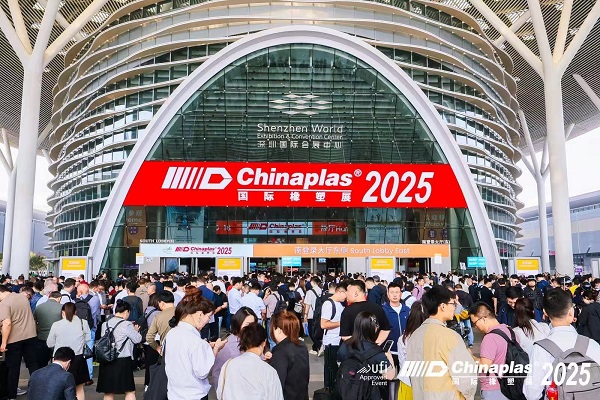
Global Plastics and Rubber Experts Gather at CHINAPLAS 2025 with 280,000+ Attendance
CHINAPLAS 2025 successfully wrapped up on April 18 with 281,206 visitors (an increment of 13.29% compared to CHINAPLAS 2023 in Shenzhen) in 4 days. Among them, visitors from overseas countries and Hong Kong, Macau and Taiwan region of China rocketed to 68,542, accounting for over 24% of total visitors, a remarkable 141.1% increase compared to CHINAPLAS 2023 held in Shenzhen.
This premier trade fair saw over 4,500 superior plastics and rubber suppliers from 39 countries and regions, more than 3,800 cutting-edge machine exhibits, and over 1,600 raw material suppliers. Numerous trade deals were concluded between distinguished exhibitors and global buyers, proving CHINAPLAS 2025 an effective sourcing platform that cultivated new partnerships and paved the way for industry growth and success.
Over 4,500 plastics and rubber suppliers shined on the stage of innovation with cutting-edge technologies.
Showcasing of Full Industry Chain Drew Prosperous Picture for Quality Global Buyers
Innovation in the plastics and rubber industries plays a pivotal role in booming development of new fields. The exhibition not only released industry breakthroughs of more than 120 global/Asian debut technology projects, but also brought a large number of groundbreaking, effective and cost-effective landing solutions for plastics and rubber production. A fascinating industry chain in full scope was exhibited – from advanced material innovations, intelligent manufacturing solutions to tried-and-true products, covering automotive, electronics and electric, packaging, medical and healthcare, building materials, new energy, sports and leisure, as well as other downstream applications, catering to diverse needs from various industries and sectors.
With stellar solutions and products, the trade show attracted buyers from about 150 countries and regions. They connected with a substantial number of professional suppliers who provide high-quality products and solutions that meet their business needs, and immersed themselves in varied international business opportunities, greatly expanding the breadth and depth of their global network.
Sparks of Inspiration Blossomed in Fruitful Concurrent Events
A series of concurrent events surrounding circular economy were organized and received participants’ overwhelming support.
Innovative plastics and rubber solutions at the show caught visitors’ eyeballs.
Over 800 industry elites joined “Plastics Recycling & Circular Economy Conference and Showcase”, where over 60 international experts and leaders of renowned enterprises shared insights on plastics recycling market and technologies contributing to sustainable plastics development. In “Sustainable Plastic Packaging Forum“, experts from prominent packaging institutions and companies addressed the latest solutions and sustainability blueprint from an international perspective, while representatives from renowned brands shared difficulties they faced in daily operations of innovative packaging, realizing efficient docking between upstream and downstream of the industry chain. PET Food-grade and PE high-quality recycling production lines were demonstrated at “The Plastics Circularity Journey” Production Line Live Demo, showcasing high-value utilization of plastics recycling.
Other concurrent talks and interactive activities were also well received. In the 3rd “SciXplore Forum”, visitors acquired insights on future development and breakthrough achievements of polymer industry from renowned scientists and experts. Thematic forums were hosted at “Applications in Focus”, covering over 40 hot topics including recyclable medical packaging, cost reduction strategies, and improvements in manufacturing efficiency in electronic and electrical industries.
The trade show fostered cultivation of network between global buyers and exhibitors.
At “Market Insights Hub“, visitors explored innovative solutions facilitating business development with industry experts in 3 thematic forums, covering RCEP (Regional Comprehensive Economic Partnership) and overseas market exploring strategy, ESG and sustainable supply chain, as well as insights report of new quality productive forces. Over 40 game-changing technologies were launched at Tech Talk, covering 6 themes including 3D Printing, Automotive Lightweighting Solutions, Green Low-carbon Solutions, Efficient Packaging Solutions, Rubber & TPE Technologies and 2025 New Materials.
Debuting this year, “innoGreen Hub” and “SportsTech Chic + Green” focused on cutting-edge technologies, materials, designs and applications in automotive, electronics and electric, medical, packaging plus sportswear and sporting goods respectively. Together they presented how inventive and sustainable solutions foster the trend of “green+smart manufacturing” and sporty chic. In “Product Innovation Gallery”, over 200 unique products were showcased, providing the opportunity for visitors to quickly grasp technologies behind plus connect with ideal suppliers.
Plastics Recycling & Circular Economy Conference and Showcase successfully wrapped up, attracting more than 800 industry elites.
As never before, visitors had the opportunity to visit factories in “Exclusive VIP Factory Tour”. Through exchanging with technical executives face-to-face on the factory floors, they gained valuable insights on ESG and innovative product manufacturing from the factories.
Dedicated to construct a cooperative platform between exhibitors and renowned institutions, CHINAPLAS 2025 brought traditional campus recruitment onsite at “Development Day for Campus Elites”, facilitating efficient and precise matching between plastics and rubber enterprises and top graduates.
While CHINAPLAS 2025 has come to a successful conclusion, those who missed the trade show can replay any exciting moments on our dynamic livestream video platform, CHINAPLAS LIVE, for exclusive leader interviews, event highlights, and comprehensive coverage of the latest industry innovations and trends anytime, anywhere.
Thank you to all who visited the trade show and participated in the concurrent events. Together we created delightful memories that will never be forgotten. CHINAPLAS 2026 will be held at National Exhibition & Convention Center (NECC), Hongqiao, Shanghai, PR China on April 21-24, 2026. We look forward to seeing you again!
Chinaplas 2025: Reifenhäuser’s MDO Film Innovation Supports Circular Economy
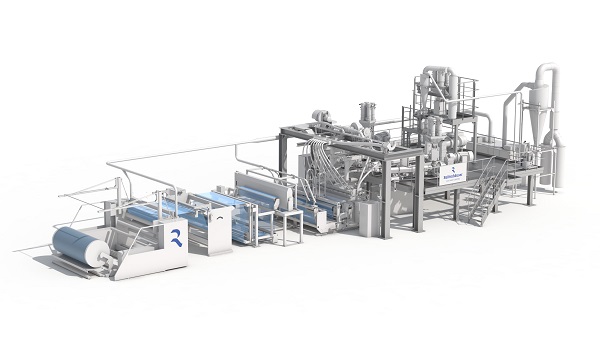
Reifenhäuser EVO Ultra Stretch blown film lines enable the production of mono-material composites (all-PE film) for fully recyclable flexible packaging.
The Reifenhäuser Group will showcase its most recent technological advancements for producing plastic films in an environmentally friendly and effective manner. From April 15 to 18, the extrusion experts will present solutions at the Shenzhen World Exhibition & Convention Center (Booth 10G21) that tackle the three main issues facing the plastics industry today: lowering resource consumption, boosting recyclability, and enhancing production autonomy and efficiency. Advanced production technology, which Reifenhäuser already provides, are necessary to meet these needs.
A central focus at the show will be the use of Machine Direction Orientation (MDO) technologies for producing fully recyclable mono-material films with performance and cost-effectiveness equivalent to conventional multi- material structures.
Marcel Perrevort, CSO of the Reifenhäuser Group, explains: “In the flexible packaging sector, we are currently seeing a huge trend away from conventional and non-recyclable mixed material laminates towards fully recyclable mono-material composites, both for blown and cast films. Our state-of-the-art MDO stretching units enable enhanced mechanical properties for all-PE or all-PP films. Thus, PET films commonly used in material composites can be replaced. By downgauging, we also reduce production costs to a competitive level, making recyclable films a profitable choice.”
KARAT cooling rings from Kdesign are known for their high performance, minimal film tolerances and easy handling.
It’s all about MDO
With the EVO Ultra Stretch MDO unit for Reifenhäuser’s blown film lines manufacturers produce all-PE mono films for applications such as high-barrier food pouches. Due to the stretch process film thicknesses of 18μm (with properties of a 25μm product) and less can be achieved, keeping production costs within the range of conventional films. With the patented integration of the MDO unit directly into the haul-off, the film is stretched in the ideal phase of the process – using the first heat – for maximum efficiency and film stability. Furthermore, the all-PE film achieves the required barrier effect with an EVOH content of less than five percent, fully meeting the criteria for recyclability. At the same time, Ultra Stretch enhances the performance of the EVOH barrier layer while reducing material usage, delivering cost and sustainability benefits.
The Reifenhäuser PAM automation option simplifies the operation of coextrusion adapters and dies. The high degree of automation makes producers independent of the shortage of skilled workers.
The same applies to MDO technology in the flat film sector. With its CPP/CPE cast film line they provide best transparency, printability, easy-tear properties, and sealing. The line features an MDO stretching unit that enhances the film properties, enabling recyclable all-PP mono films with barrier functions for food and medical packaging. Here too, stretching the EVOH layer improves the barrier effect while preserving recyclability. In addition, customers can opt for their unique automation system PAM (precise, autonomous, mechatronic) bringing cast lines to a whole new level. PAM automatically adjusts coextrusion adapters and dies via high- precision actuators for optimum convenience, quality and productivity. Once recipes have been set, they can be saved and called up immediately at the touch of a button – even by inexperienced system operators. The high degree of automation makes producers independent of the shortage of skilled workers. Energy consumption is 99% lower compared to a thermal expansion bolt system, as the actuators only need to be supplied with power during the adjustment process and not permanently.
Kdesign: Market leading blown film cooling technologies
Kdesign, Reifenhäuser’s subsidiary and leading specialist in cooling, measuring, and calibration systems for blown film lines, will also be showcasing at the ReifenhäuserChinaplas booth. With the famous KARAT cooling ring, Kdesign regularly sets benchmarks for maximum cooling performance, ultra-low film tolerances, and user-friendly operation. Processors all around the world rely on Kdesign solutions to improve blown film production in terms of quality and productivity. With an output capacity that is up to 50 percent higher than mid-range products and 25 percent higher than high-end competitors, the KARAT cooling ring enables a significant increase in productivity, while at the same time maintaining excellent profile tolerances and top film quality.
In addition, Kdesign offers sophisticated secondary cooling units: With the CENTRO-Freeze, producers avoid film blocking in the haul-off by additionally cooling the bubble before it enters the flattening process. By using the CENTRO-Freeze, the output is therefore further increased, whiles producers save on anti-block additives and improve the film properties. All Kdesign components reflect over 20 years of experience in retrofitting existing blown film lines and equipping new OEM lines.
3D People Launches PartsVault for Next-Gen Digital Manufacturing
3D People, the UK-based 3D printing specialist, has officially launched PartsVault, a secure, cloud-based digital inventory platform that empowers customers to manage, store, and produce parts on demand — wherever and whenever needed.
Developed for the needs of contemporary industry and based on the lessons learned from a disrupted global supply chain, PartsVault provides engineers, buyers, and production teams with a centralized, browser-based hub to manage 3D-printed components throughout their product lifecycle. PartsVault expedites the process and provides production-grade components with the speed and flexibility that additive printing can provide, whether it is for emergency replacements or reordering repeat parts.
“PartsVault will transform the way our customers interact with us,” says Felix Manley, Co- Founder of 3D People. “It eliminates guesswork and waste. You know what parts you need, and we make them — on demand, with precision and speed.”
With PartsVault users can store the latest revision in each product to ensure they are never producing outdated parts, while saved production settings guarantee repeatable quality every time. PartsVault simplifies reordering, ensures consistency, and supports Just-in-Time manufacturing. It’s especially valuable for businesses seeking to reduce capita tied up in inventory or struggling with fluctuating demand.
But PartsVault isn’t just a solution for existing clients. It also represents a powerful opportunity for non-UK based companies to tap into the UK’s advanced 3D printing infrastructure — without needing local warehousing or logistics networks. “Many manufacturers overseas are looking for ways to reduce reliance on fragile international supply chains,” said Sasha Bruml, Co-Founder. “With PartsVault, they can securely store part designs digitally and trigger local UK-based production whenever needed. No stockpiles. No customs. No delays.”
The platform offers a timely solution to today’s turbulent economic landscape, marked by pandemic aftershocks and potential trade tensions spurred by tariff escalations. PartsVault enables companies to sidestep the volatility of international logistics and control their production destiny. Manley concludes, “The digital inventory revolution is here, and 3D People is at the forefront. With ISO 9001 quality, a market-leading online portal, and in-house finishing services, 3D People is perfectly positioned to deliver localized, responsive manufacturing for customers worldwide.”
Revolutionizing Flight: KraussMaffei FiberForm Accelerates eVTOL Build Times
Renowned NIAR Institute relies on thermoplastic composite technology for highly complex rib structures
3,000 times faster production compared to metal
Greater design freedom and higher cost efficiency
In the aerospace sector, KraussMaffei is spearheading the development of thermoplastic lightweight construction in collaboration with the National Institute for Aviation Research (NIAR) at Wichita State University, USA. The intricate rib structure of the recently created structural element was created especially for eVTOL aircraft, including air taxis. It is made using KraussMaffei’s FiberForm technology. As a result, without sacrificing strength or safety, manufacturing time is lowered from more than 100 hours to just two minutes when compared to the metal version.
The FiberForm process involves placing an organo sheet – thermoplastic impregnated continuous fibers – into the mold, forming it, and overmolding it. Compared to conventional metal part manufacturing, this fully automated combination of thermoforming and thermoplastic overmolding offers significant advantages, including lower costs, reduced weight, and a fraction of the production time – all while ensuring the same mechanical strength and safety. At the same time, the FiberForm process allows for significantly greater design freedom.
At NIAR’s Advanced Technologies Lab for Aerospace Systems (ATLAS), this process takes place on a GXW 450-2000/1400 from KraussMaffei with a clamping force of 4,500 kN, a rotary table, and an integrated automation solution featuring two IR industrial robots.
3,000 times faster production compared to metal
The advantages of shorter cycle times become particularly evident with the newly developed rib structure. Traditionally, components of this kind are milled from a solid metal block – a process that removes more than 80% of the material and requires over 100 hours of processing time. “In contrast, the thermoplastic component was formed and overmolded from a flat organo sheet in less than two minutes. The outstanding expertise of the partners involved was crucial to this success,” explains Dr. Waruna Seneviratne, Director of NIAR ATLAS.
In addition to KraussMaffei, the companies Joby Aviation, Toyota, Victrex, and Prospect were also involved in the development. The project is part of the ‘Manufacturing for Affordable Sustainable Composites Program’ by the Air Force Research Laboratory.
Benefiting from automotive mass production
“The results highlight the potential of FiberForm technology, which originates from the automotive industry, for the mass production of primary and secondary structures in aerospace,” Seneviratne continues. Eugen Schubert, Sales and Applications Manager, IMM & Automation at KraussMaffei, emphasizes the importance of the NIAR ATLAS laboratory as an innovation platform: “The NIAR ATLAS Institute provides an ideal environment where machine manufacturers, material suppliers, and tooling developers can collaborate with aircraft manufacturers to test new materials and processes for demanding aerospace applications and develop them for series production.”
Continuing the success story of ‘preighter’
NIAR ATLAS and KraussMaffei have previously worked together successfully in 2024. Back then, the focus was on FiberForm-manufactured window plugs used in the conversion of passenger aircraft into freighters, known as ‘preighter.’ The window plugs were produced in just 90 seconds, were 20 – 30% lighter, and cost half as much as their metal counterparts.
With the new complex rib structure, the development partners are now demonstrating FiberForm technology on a demanding structuralcomponent, paving the way for further applications and successful certification in the aerospace industry.
Platinum Industries Unveils UniPack: The Future of CPVC Compounding
At the recently concluded Vinyl India Summit 2025—one of the world’s largest vinyl-focused gatherings—Platinum Industries Ltd. unveiled its latest innovation: UniPack, a next-generation, all-in-one additive pack engineered specifically for CPVC pipe and fitting manufacturers. With this launch, Platinum reinforces its position as one of the most forward-thinking companies in the global PVC and CPVC additives space.
The Need for Simplicity in a Complex Process
CPVC compounding is inherently intricate, often requiring manufacturers to source, weigh, mix, and manage multiple ingredients—ranging from impact modifiers and waxes to stabilizers and processing aids. This traditional approach, though effective, brings along its fair share of challenges: procurement complexity, inventory management, batch inconsistencies, and loss of production time due to trial-and-error adjustments.
UniPack was conceived to address these very challenges. As an all-in-one, ready-to-use formulation, it combines every essential additive required for CPVC compounding into a single, precisely engineered solution. The outcome? Reduced operational overheads, enhanced product consistency, and significantly improved productivity.
Key Advantages of UniPack
Simplified Manufacturing: UniPack eliminates the need for multiple raw material inputs and manual mixing, drastically reducing production preparation time.
Cost Efficiency: By streamlining the compounding process, manufacturers can reduce wastage, material handling costs, and reliance on extensive storage infrastructure.
Enhanced Consistency: The uniform composition ensures repeatable performance, batch after batch—eliminating issues linked to inconsistent additive dispersion.
Time Savings: Manufacturers benefit from a plug-and-play model—just add, mix, and go—without the need for trial runs or formulation tweaks.
Superior Productivity: Optimized for a wide range of CPVC machinery and applications, UniPack helps deliver smoother extrusion, fewer defects, and higher throughput.
Backed by Technical Expertise & Industry Standards
UniPack has been formulated in alignment with key Indian standards including IS 15225:2002 for CPVC compound, IS 15778 for pipes, and IS 17546:2021 for fittings. It meets the D.P. 110-2-3-2 cell classification, ensuring structural integrity, heat resistance, and long-term performance.
Its robust formulation incorporates:
Impact Modifiers
Waxes
Heat and UV Stabilizers
Processing Aids
Each batch is produced through a fully automated process, ensuring precision, consistency, and the highest quality standards at every stage of manufacturing.
Innovation Rooted in R&D Excellence
Platinum Industries has built a strong reputation for quality and innovation, powered by its state-of-the-art R&D facility, a highly experienced technical team, and global sourcing of premium raw materials. The company’s customer-centric approach ensures that UniPack is also available in customizable variants, tailored to suit different machinery setups and production goals.
As a proud member of theIndian Vinyl Council, Platinum Industries continues to pioneer sustainable and scalable solutions in the specialty chemicals industry.
The Future of CPVC Compounding Starts Here
In a market that increasingly demands efficiency, reliability, and sustainability, UniPack represents a significant leap forward. It’s more than a product—it’s a paradigm shift in how CPVC compounding is approached.
With UniPack, Platinum Industries Ltd. empowers manufacturers to work smarter, faster, and with greater confidence.
Expanding on this innovation, Platinum will be adding new product range to Uni pack series for PVC applications. UniPack series — UPVC Pipe and Fitting Uni Packs (Agri, SWR, ASTM), a Calcium Organic Stabilizer for OPVC pipes, and a CPVC UniPack aligned with NSF-533 certification standards (currently under approval). These offerings further reinforce Platinum’s commitment to performance-driven, future-ready solutions.
Lossburg Hosts 32nd VDWF AGM as Toolmakers Explore Arburg Facilities
32nd Annual General Meeting: Association of German Tool and Mould Makers (VDWF) meets at Arburg
Event in Lossburg: More than 230 VDWF members from all over Germany visit the northern Black Forest
Networking: Lively exchange and company tours round off the programme
The Association of German Tool and Mould Makers (VDWF) held its 32nd Annual General Meeting on April 10, 2025, at member and host Arburg. The majority of the about 230 people got together in Lossburg the previous evening to network. During company tours, the participants also took advantage of the chance to learn more about the manufacturing, assembly, and logistics of injection molding machines as well as the creative family business’s sustainability and digitalization initiatives.
“I am extremely pleased to be at Arburg today and to experience such wonderful hospitality here. With this, Arburg is also sending a clear signal that it stands behind our important tool and mould making industry,” said Prof. Dr Thomas Seul, President of the German Tool and Mould Making Association, opening the VDWF Annual General Meeting.
Exchange: Tool and mould makers at Arburg
“We are very proud that you are here with us and that you are bringing this exciting industry together”, emphasised Dr Christoph Schumacher, Head of Global Marketing at Arburg, as he welcomed the guests on behalf of the shareholders, managing directors and the entire company. “You were able to experience the importance of a strong network and what Arburg is all about at our company last night. Valuable events like this take place for good reason, especially in times like these.”
Successful: 32nd Annual General Meeting of the VDWF
The agenda on 10 April 2025 included the introduction of new members, the obligatory reports from the President, the Managing Director, the Executive Board and the auditors, as well as elections and honours. In addition to traditional representatives from the tool and mould making industry, the VDWF Annual General Meeting was also attended by manufacturers of machines, components, accessories and software as well as contract manufacturers, service providers, educational partners and industry-related research institutions. They all made intensive use of the meeting to share their experiences and look beyond their own horizons. “Our industry’s interest in sharing ideas is higher than ever. In this context, the insights we gained here at Arburg were also very valuable for our members and for me personally”, said VDWF Managing Director Ralf Dürrwächter, summarising the event at the host company.
Micrometal Group Accelerates the Evolution of Miniaturized Components
As industries double down on miniaturization to stay competitive, the pressure on manufacturers to deliver smaller, more precise, and more complex components has never been greater.
From ultra-compact electronics to next-generation medical gadgets, the competition to go smaller is tremendous, but so are the obstacles. By assisting clients in overcoming the hidden challenges of micro-manufacturing, micrometal Group, a pioneer in photo-chemical etching (PCE), is establishing a new benchmark for precise manufacture in this environment.
While traditional machining methods struggle with tight tolerances, mechanical stress, and design limitations, PCE offers a stress-free, burr-free, and highly scalable alternative. And in today’s manufacturing landscape, where timelines are tight and failure is not an option, that’s a game-changer.
“Micro-manufacturing is no longer a niche — it’s the future,” says Jochen Kern, Head of Sales & Marketing at micrometal Group. “But the truth is, most conventional manufacturing methods simply aren’t built for the scale and precision modern applications demand. That’s where PCE gives our customers a critical edge.”
The company’s advanced PCE technology enables the production of components with micron-level precision and complex geometries that would be either impossible or cost- prohibitive using stamping, laser cutting, or CNC machining. Better still, micrometal Group’s process supports rapid prototyping and high-volume production on the same platform — eliminating the bottlenecks caused by tooling delays or rework.
“In industries like medical, automotive, and semiconductors, there’s zero tolerance for error — literally,” Kern adds. “What we do at micrometal Group is offer peace of mind. If your application relies on reliability, repeatability, and extreme precision, we make it happen Fast.”
With sustainability, cost-efficiency, and agility now baked into manufacturing strategies, micrometal Group’s PCE solutions align perfectly with the evolving priorities of forward- thinking companies. The firm’s recent expansion into even finer feature sizes and ultra-thin metals continues to push boundaries — helping customers design with freedom, not constraints.
As micro-manufacturing transitions from trend to baseline expectation, the market is demanding more than promises. It’s demanding precision, speed, and flexibility and micrometal Group is leading the way in delivering all three.
MAAG Enhances Its India-Based Operations with Expanded Services and Customer Access
The globally operating MAAG Group, which has its headquarters in Oberglatt, Switzerland, will keep establishing itself as a major regional force in the Indian market. Its Vadodara subsidiary focuses on providing native machinery and services.
With a growing number of customers in the polymer, chemical and petrochemical industries, India has developed into an important market for them. Present through regional partners since 1980, the company has been underlining the strategic importance of the Indian market with its own branch in Vadodara in western India since 2016. It currently employs more than a dozen local specialists.
Localized product and service offering
As a provider of customer-specific systems and integrated solutions for the polymer industry, they focus on localized products such as strand pelletizers. Customers in India thus benefit from machines that are precisely tailored to their regional requirements and at the same time meet the highest quality standards from German production.
This localized portfolio is complemented by a comprehensive on-site service: Native-speaking technicians from their team provide maintenance and consulting services throughout the country to ensure reliable and long-term use of the machines.
The world’s largest service network in the polymer industry
They also operate their own grinding center in India for cutting rotors on pelletizing systems. The site is therefore part of the world’s largest service network in the polymer industry, which includes a total of eight grinding centers across the globe. They pass on their manufacturing expertise to local specialists. Equipped with state-of-the-art machinery, MAAG India specialists are able to provide a quick, reliable and professional grinding service for cutting rotors, including those from other manufacturers. The precision of the regrinding on the entire tooth profile ensures long-lasting granulation results and optimized cutting rotor lifetime.
Hub for international companies
Vadodara, located about 400 km from Mumbai, has become an attractive hub for international companies in recent years and a first-choice location for MAAG India. The city has a population of around 2.1 million and is centrally located in the state of Gujarat. A location which enables MAAG to be close to its customers as many companies from the polymer and compounding industry are also established nearby.
HASCO Expands Gear Offering for Next-Level Tooling Flexibility
Threaded cores are mechanically unscrewed by unscrewing tools using spindle gear components. The unscrewing tool’s concept and design have been significantly simplified, and the HASCO gear components provide exceptional flexibility for moldmaking.
The extensive HASCO gear range Z1500/… contains a broad product spectrum of helical spindles, gear racks, thread cores, cogwheels and bearing and gear accessories that were developed specifically for use in unscrewing tools. All components are noted for their outstanding precision, proven quality and reliability.
The spindle gear components enable the mechanical unscrewing of thread cores and thus ensure efficient and smooth production. The drive comes from the mould opening, whereby simple handling and integration into existing systems are guaranteed. The innovative and high-quality solutions offer an optimisation of the production processes and increase competitiveness.
Various sizes of the intermediate wheels allow a variety of individual applications and solutions. With the gear shafts, steps between the individual modules can be readily implemented. Via the adjusting washers, width tolerances in the boring boss can be offset without problem. Cylindrical roller bearings and needle bearings, which are specifically coordinated to the diameters of the thread cores, allow high load capacity and life expectancy, despite their low installation height.
As a pioneer for mouldmaking and a leading international supplier of standard mould units and accessories they offer, with a product portfolio of more than 100,000 individual components, innovative solutions to optimise production processes and increase efficiency in mould and toolmaking. With a comprehensive range of services, starting with the initial consultation through to the final delivery, their technical service department helps customers throughout the world with the design and final testing of their projects.