Home Blog Page 37

Revolutionizing Medical Device Fabrication with High-Precision PCE Techniques

Revolutionizing Medical Device Fabrication with High-Precision PCE Techniques

Precision in medical device making isn’t simply a nice thing to have — it’s absolutely essential. If it’s a surgical instrument, an implant, or a microfluidic feature, the latitude for error is zero. Any dimension counts. Any edge, channel, and contour must be manufactured with integrity and precision. In this precision-crafted game of life or death, where device performance drives patient outcomes, photo- chemical etching (PCE) has become an industry game-changer.

At micrometal Group, we see the critical importance of precision every day. Medical OEMs are demanding more — smaller components, tighter tolerances, more complex geometries. And they’re demanding it faster, with fewer production bottlenecks and a higher standard of quality assurance. PCE delivers on all these fronts, not only meeting the precision challenge but redefining what’s possible in the manufacture of medical components.

ELIMINATING IMPERFECTIONS

Traditional machining methods like stamping, laser cutting, or CNC milling often introduce mechanical stress, burrs, and inconsistencies. These imperfections can be detrimental in a medical setting, where even microscopic flaws could lead to contamination, reduced device performance, or rejection during regulatory review. PCE eliminates these risks by producing burr-free, stress-free components with micron-level accuracy. Using light-sensitive photoresists and controlled chemical etchants, manufacturers can achieve intricate, repeatable patterns on thin metals — perfectly suited for medical devices where form and function must work in harmony.

APPLICATIONS

Take surgical instruments, for example. From endoscopic blades to cutting jaws in minimally invasive tools, the sharpness and precision of each feature is directly tied to patient safety and procedural success. PCE enables the production of ultra-thin blades and geometrically complex features without the need for grinding or post-processing. The result? Faster production cycles and instruments that meet or exceed quality and hygiene standards.

Implantable components also benefit from PCE’s unique capabilities. Components like battery contacts, mesh structures, and stents must not only meet strict biocompatibility standards but also maintain consistent dimensions across large production volumes. PCE allows for repeatable manufacturing with near-zero variation, helping to streamline validation and approval processes. And because PCE is a non-contact, non-thermal process, there’s no risk of metallurgical distortion — ensuring components retain their full material properties.

Another area where PCE shines is in microfluidics. As point-of-care diagnostic devices continue to shrink in size while expanding in complexity, designers face the challenge of integrating micro-channels, filters, and electrodes onto a single platform. PCE makes it possible to etch highly precise, miniature structures into metal substrates without the limitations of mechanical tooling. This opens the door for innovative diagnostic solutions with rapid fluid flow, accurate measurement, and robust chemical resistance — all key to reliability in clinical settings.

Precision isn’t just about geometry — it’s about reliability, repeatability, and responsiveness to customer needs. The PCE process has been engineered to allow quick iterations, enabling medical device designers to prototype, test, and refine concepts rapidly. Unlike traditional tooling, which requires time-intensive and costly modifications, PCE relies on digital photomasks. Need a new design iteration? Upload the file. No retooling, no delay.

This flexibility is crucial in a sector where time-to-market can directly impact lives. In emergency scenarios — such as the fast-tracked development of COVID-19 testing devices — manufacturers turned to technologies that could keep pace with demand without compromising on accuracy or safety. PCE offered a fast, scalable pathway from prototype to mass production, supporting innovation under pressure.

QUALITY ASSURANCE

But speed and flexibility are only part of the story. In medical manufacturing, quality assurance is the cornerstone of credibility. The industry is tightly regulated, and for good reason. To pass audits and gain certification, every component must meet rigorous specifications. This is where manufacturing experience becomes essential. A good process integrates in-line and offline quality inspection, real-time imaging, and statistical process control. Precision is not just promised — its proved, batch after batch.

Precision in the medical sector isn’t just about tolerances on paper — it’s about what those tolerances mean in the real world. A component that’s 10 microns out of spec might be acceptable in consumer electronics. In a medical implant, it could be catastrophic. That’s why the entire process should be engineered around absolute repeatability.

There’s another layer to this, and that is cleanliness. Because PCE is a clean, non-contact process, it avoids introducing contaminants or residues that could compromise sterile environments. Components exit the etching process burr-free, without oils, shavings, or thermal distortion — meaning they’re easier to clean, inspect, and qualify for medical use.

SUSTAINABILITY

Sustainability is also becoming a growing concern in medical manufacturing. Regulatory pressures and consumer expectations are pushing OEMs to seek out greener processes. PCE supports this shift. It produces less material waste than subtractive machining, requires no physical tooling, and minimizes energy consumption by removing the need for high-heat operations. It’s a precise process with a lower environmental footprint — helping manufacturers achieve both performance and sustainability goals.

www.micrometal.de

#micrometal #Modernplasticsindia #Pasticsnews #ModernPlasticsIndiaMagazine
#PrintPublication #Modernplasticsbangladesh

White Radel Launch Underscores Syensqo’s 35-Year Legacy in PPSU Technology

White Radel Launch Underscores Syensqo’s 35-Year Legacy in PPSU Technology

New white PPSU resin enables bright medical devices with outstanding mechanical performance, chemical resistance and biocompatibility

Syensqo, a leading global provider of high-performance materials and chemical solutions, has introduced White Radel, the latest innovation in its portfolio of Radel polyphenyl sulfone (PPSU) solutions for durable biopharma applications, surgical instruments and medical devices. The new product is considerably whiter than traditional medical grade Radel PPSU compounds.

“We are proud to celebrate 35 years of Radel PPSU,” states Floryan De Campo, Vice President, Head of Life Solutions at Syensqo ‘s Specialty Polymers global business unit. “With its high heat and chemical resistance as well as excellent mechanical strength and repeated sterilizability, the polymer has emerged as a cornerstone in our advanced materials offering for the healthcare industry, helping our customers push the boundaries for safer, more efficient and sustainable products.”

Radel has significantly influenced the medical industry by providing an innovative alternative to traditional materials like metals. Its high strength-to-weight ratio enhances ergonomics for medical professionals, facilitating the manipulation of tools. Moreover, medical and pharmaceutical Radel PPSU compounds meet the strictest industry guidelines and standards, including ISO 10993 biocompatibility and USP Class VI approval.

The novel White Radel product combines the PPSU resin’s outstanding mechanical properties, including high impact strength in compliance with ASTM D6394-21a, with the bright white aesthetic color often preferred for medical devices. It shows excellent stability in sterilization processes such as gamma irradiation and autoclaving, as well as durable chemical resistance against harsh disinfectants. Its lack of Bisphenol-A (BPA) makes it a safe and compliant alternative to other white medical polymers.

In addition, the proven design freedom and processing versatility of Radel have opened attractive opportunities for complex geometries, part integration and reduced manufacturing costs. As a high-flow material, White Radel is an ideal choice for the precise and efficient injection molding of medical devices. Other grades offer exceptional melt strength and adaptability in extrusion processes. Moreover, semi-finished components can be machined with ease, while Radel filaments have successfully expanded the wide application potential to 3D printing for rapid prototyping and small-scale production volumes.

Beyond the company’s diversified medical materials portfolio, Syensqo offers its customers a comprehensive training program in everything from basic polymer knowledge, design and processing to failure analysis, regulatory, safety and sustainability issues as well as market-specific considerations.

www.syensqo.com

#syensqo #Modernplasticsindia #Pasticsnews #ModernPlasticsIndiaMagazine
#PrintPublication #Modernplasticsbangladesh

Renolit Overcomes Recycling Challenges in PVC Production Using Gneuss SFneos Screen Changer

Renolit Overcomes Recycling Challenges in PVC Production Using Gneuss SFneos Screen Changer

At its factory in the Barcelona region, Renolit manufactures high quality flexible PVC films. Thanks to its innovative SFneos Filtration System from Gneuss – the latest addition to its range of process-constant, continuous screen changers, Renolit is now able to reuse a significant percentage of recycled material without any compromises regarding product quality or production efficiency.

Customized SFneos screen changer for Renolit

The flexible PVC films made by Renolit are coated on to polyester and in spite of separating processes, the scrap still contains a small amount of residual polyester. This is sufficient to cause problems with conventional slide plate screen changers – the frequent changes due to the contamination load result in production interruptions and flow disturbances which, with flexible PVC lead to frequent burn-ups.

The SFneos screen changer supplied to Renolit by Gneuss was extensively customised to exactly match the twin screw extruder, with extremely short and streamlined flow paths, designed with the help of flow simulation software.

The SFneos operates continuously and pressure-stable, even with high and varying contamination loads.

Thanks to these unique performance characteristics of the SFneos, Renolit was able to process a high percentage of recycling containing residual polyester without production interruptions and were therefore able to significantly increase the yield and efficiency of their existing extrusion line without compromising their product quality. At the same time, by using waste material (and this material is generally seen as difficult to recycle) Renolit is saving valuable resources.

On post industrial recycling applications, the Filtration Systems from Gneuss can play a decisive role in unlocking potential, making processes more cost-efficient and contributing toward sustainability.

www.gneuss.com

#gneuss #Modernplasticsindia #Pasticsnews #ModernPlasticsIndiaMagazine
#PrintPublication #Modernplasticsbangladesh
B.I.G. Yarns Advances European Operations with State-of-the-Art Expansion

B.I.G. Yarns Advances European Operations with State-of-the-Art Expansion

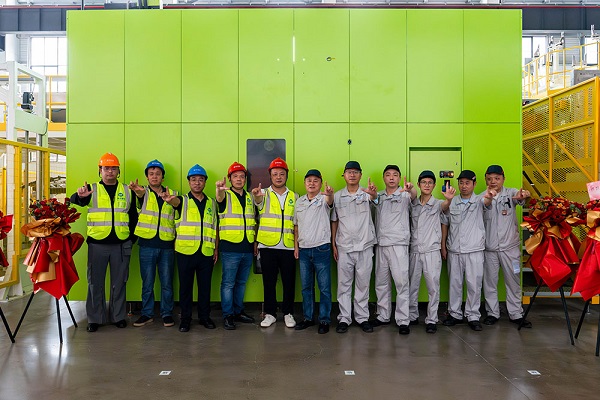
B.I.G. Yarns, a leading designer and producer of polyamide (PA), polypropylene (PP), and polyester (PET) commercial, automotive, residential, and technical carpet yarns, proudly announces a new 25 million investment in its French yarn plant. This is a reaffirmation of its dedication to innovation, sustainability, and local manufacturing in Europe. It involves the provision of state-of-the-art BCF lines, strengthening B.I.G. Yarns’ market leadership in one-step 3-ply yarns and further establishing its role as a market leader in the global market.

B.I.G. Yarns focuses on the development and production of 1-step 3-ply yarns using the latest technology to meet the need for flexibility and broader design possibilities in the carpet tile segment. The newly developed machine park represents a crucial step in B.I.G. Yarns’ growth strategy, ensuring a more energy-efficient, faster, and more flexible production system. By enabling smaller batch s and more adaptable production runs, B.I.G. Yarns will provide its contract customers with a highly competitive and sustainable product offering.

B.I.G. Yarns’ advanced yarn technology increases design, contrast, and color freedom for carpet tile manufacturers while improving flexibility and service level. “At B.I.G. Yarns, we believe in the power of innovation and operation expertise to offer our customers best in class solutions,” said Emmanuel Colchen, General Manager at B.I.G. Yarns. “This investment underscores our long-term commitment to the European market and our ability to deliver superior and sustainable yarn solutions that meet the evolving needs of our customers.”

By continuing to also invest in Europe, B.I.G. Yarns is making a strong statement about its dedication to local entrenchment in a highly competitive industry. While market pressure continues to grow from manufacturers in the Middle East and Asia, B.I.G. Yarns leverages its strategic location in Europe – within 500 km of its most important customers – to ensure faster delivery, closer collaboration, and an unparalleled service level.

This bold step not only strengthens B.I.G. Yarns’ market leadership in 1-step 3-ply yarns but also highlights its vision for a more sustainable and innovative future in yarn production.

https://www.bintg.com/

#bintg #Modernplasticsindia #Pasticsnews #ModernPlasticsIndiaMagazine
#PrintPublication #Modernplasticsbangladesh

Plastics Manufacturing Goes Green with Carbon-Storing Materials

Plastics Manufacturing Goes Green with Carbon-Storing Materials

Sustainability and innovative materials are two key topics in modern plastics processing. The collaboration between the mechanical engineering company Arburg and the industrial raw materials start-up carbonauten promises exactly that: CO₂-neutral and even CO₂-negative masterbatches and compounds for industrial applications.

In an interview with K-Mag, Torsten Becker from carbonauten and Manuel Witte from Arburg talk about the background to the cooperation, the technology behind the new materials, their processing in the injection moulding process and the prospects for the future.

Cooperation for more Climate Protection in the Plastics Industry

How did the collaboration between Arburg and carbonauten come about?

Torsten Becker: It started indirectly via LinkedIn. I came into contact with a natural charcoal burner in the Black Forest who produces gourmet barbecue charcoal. In the course of our discussions, an event was mentioned – the CarbonX week as part of the Freudenstadt Baiersbronn Garden Show – which is supported by Arburg. Finally, we met with Arburg representatives. Manuel Witte was already there at the time. And it quickly became clear that we had a shared vision. This led to the first tests and finally to the co-operation.

How did Arburg view the initial talks and the possibility of working together?

Manuel Witte: For us as a company, sustainability is an essential topic. We bundle all our activities in our ‘arburgGREENworld’ programme and are always on the lookout for new materials and technologies that can help conserve resources and reduce the CO2 footprint. That’s why the project was very exciting for us right from the start.

Our aim is to ensure that the materials can be processed safely and precisely on standard machines. Arburg’s decades of experience with sustainable materials is a huge help here.

Advantages of the CO₂- negative Masterbatches

Can you explain exactly how the material production process works?

Becker: Our masterbatches and compounds, which we develop in cooperation with Arburg, are CO₂-negative. This means that they store more CO₂ than they emit during their production and use. The basis of these materials is technical biocarbon, which is obtained from plant residues – in our case, lumpy wood residues. Pyrolysis converts these into a stable carbon form that is used as an additive in plastics. The result is a material that is not only measurably more sustainable, but also mechanically stable and versatile.

What makes this material special compared to conventional plastics?

Becker: The big advantage is not only the CO₂ storage, but also the improved material properties. It is harder, stronger, more temperature-resistant, more UV-resistant, more dimensionally stable, lighter, replaces carbon black and can optimise the processing of recycled plastics as an additive. In addition, 30-50% of the polymer is avoided, which has a significantly positive effect on Scope 3 and the overall ecological balance. The most important point is that it is no more expensive than conventional fossil-based materials – in some applications it is even cheaper.

Application Examples from the Industry

What specific applications already exist for this material?

Becker: Deutsche Bahn, for example, supplies us with waste wood from pallets and railway sleepers. These materials are no longer disposed of or incinerated, but integrated into our process. This results in new components that can then be reused in industry. Demand from the EU automotive sector is now increasing enormously.

How is the industry accepting this material? Is there any scepticism regarding the quality or processing?

Witte: It is true that processors often have reservations about new materials. However, we have specifically ensured that the compounds can be processed on standard injection moulding machines without the need for additional special equipment. This makes it easier for companies to process these materials and integrate them into their portfolio.

Production and Future Plans

What about production capacity? Are there already larger production facilities?

Becker: Our first production facility in Eberswalde is ready for operation, but has not yet been fully optimised. The capacity is currently around 3,000 to 3,500 tonnes of carbon per year, which results in around 6,000 to 9,000 tonnes of compound. However, we need further investment for the full ramp-up. We are currently in financing rounds to drive forward this optimisation and expansion.

Are there plans for international expansion?

Becker: Yes, especially in China. We want to build a large factory there that produces biocarbon from waste bamboo. The planned plant will have a capacity of 30,000 tonnes of carbon and 90,000 tonnes of compound per year. The project is currently in the financing phase.

The cooperation between Arburg and carbonauten shows what sustainable innovation in the plastics industry can look like. The use of biocarbon creates materials that are not only CO₂-neutral, but even CO₂-negative. The coming years will show how these new materials establish themselves in industry and what further developments will emerge from this collaboration.

https://www.k-online.com/e

#k-online #Modernplasticsindia #Pasticsnews #ModernPlasticsIndiaMagazine
#PrintPublication #Modernplasticsbangladesh

DePoly Expands Recycling Footprint with $23M Plant Focused on PET and Polyester Waste

DePoly Expands Recycling Footprint with $23M Plant Focused on PET and Polyester Waste

Millions of tons of PET and polyester waste are burned or dumped in landfills each year, yet there are still few sustainable recycling options. A major milestone in the company’s transition from laboratory innovation to industrial-scale deployment will be reached this summer with the opening of a 500-tonne-per-year showcase plant in Monthey, Switzerland, according to DePoly, the top sustainable PET-to-raw-material recycling company.

The facility will demonstrate DePoly’s proprietary process that converts PET and polyester waste into virgin-quality raw materials without fossil fuels. Imagine a world where discarded items – from polyester shirts to water bottles – are not wasted anymore but resources transformed back into the building blocks for new products. After all, revolutionizing an industry isn’t just about creating new technology – it’s about proving it works at scale.

DePoly’s technology has already demonstrated its commercial impact through collaborations with some of the world’s leading companies—not only in fashion, like Odlo, but also in cosmetics and the broader consumer goods industry, including innovators such as PTI. Through these partnerships, they have validated the quality of its recycled monomers by transforming PET waste into new bottles, high-performance textile fibers, and cosmetic packaging. This proves that their recycled materials can meet, and even exceed, the highest standards of purity and performance across a wide range of industries.

By delivering oil-equivalent monomers, their technology sets a new benchmark for circularity, offering a genuine alternative to virgin materials. “The upcoming showcase plant validates our roadmap to creating a truly circular plastics market. Following our pilot and showcase plant, our next goal is to scale our operations to industrial size with a first of a kind commercial plant based on our technology,” said Samantha Anderson, Co-founder & CEO of DePoly.

They are ramping up with world-class innovators, bold thinkers and cutting-edge know-how—taking their pilot victory to industrial scale demands nothing less than unstoppable ambition. The company is planning to build a commercial plant in 2027 that will process significantly larger volumes of PET and polyester waste – a major leap in redefining recycling and advancing the circular economy, as they strive to become the global leader in sustainable, circular plastics.

To further accelerate this expansion, they have secured a total of $23 million in seed funding with MassMutual Ventures joining a second closing of its round. The expanded investor base positions DePoly as one of the biggest recycling technology companies in Europe, with more than $30 million raised across two rounds and grants. MassMutual Ventures joins existing investors, including Founderful, ACE & Company, Angel Invest, Zürcher Kantonalbank, BASF Venture Capital, Beiersdorf Venture Capital, and Syensqo.

“DePoly’s proven technology is a game changer addressing a crucial industrial and societal challenge. This raise and the showcase plant opening are advancing DePoly’s position as a leader in plastics recycling,” said Alix Brunet, Europe Lead at MassMutual Ventures.

David Hanf, who joined DePoly in 2024 as CFO, brings extensive experience from European scale-ups including Smava and Thermondo—Germany’s largest B2C heat service company. Both an entrepreneur and an executive, he adds: “We are convinced our technology is one of the fastest to scale and will allow us to compete with virgin pricing at scale, a key factor for success. We are happy to have expanded our investor base to the US with MassMutual Ventures as we want to build a global champion.”

By transforming discarded plastics into high-quality raw materials, DePoly reduces reliance on fossil resources, minimizes waste, and paves the way for a circular materials industry. Recognized as a Technology Pioneer by the World Economic Forum and a winner of the 2024 Top 100 Swiss Startup Award, DePoly proves that sustainable innovation is not only possible – it’s happening now.

www.depoly.co

#depoly #Modernplasticsindia #Pasticsnews #ModernPlasticsIndiaMagazine
#PrintPublication #Modernplasticsbangladesh

Mondi Unveils New Recycled Containerboard Production Line at Italian Mill

Mondi Unveils New Recycled Containerboard Production Line at Italian Mill

Mondi, a global leader in sustainable packaging and paper, has officially begun operations at its Duino mill in Italy—a significant milestone that reinforces its position at the forefront of high-quality, environmentally responsible packaging production. This successful start-up marks another step forward in Mondi’s strategy to deliver long-term value while supporting a more circular, sustainable economy.

The Duino mill will focus on producing high-performance recycled containerboard made entirely from 100% recovered fiber. As the ramp-up phase continues, Mondi remains committed to ensuring consistent quality across production. These lightweight, durable grades of containerboard are especially well-suited for corrugated packaging used in eCommerce and consumer goods—two sectors with increasing demand for cost-efficient, fully recyclable packaging solutions.

“Starting up this machine on time is a fantastic achievement and a testament to the dedication and expertise of our team,” said Markus Gärtner, CEO of Mondi Corrugated Packaging. “With Mondi Duino now fully integrated into our production network, we’re in an even stronger position to meet customer needs across Europe and beyond with sustainable, high-quality solutions.”

This facility joins Mondi’s expanding network of containerboard mills, bringing the total to six globally. By adding Duino to its value chain, the company strengthens not only its production capacity but also its supply chain resilience—delivering greater reliability and flexibility to customers. The site is expected to play a key role in optimizing supply dynamics and ensuring consistent availability of recycled paper materials for corrugated applications.

In line with their sustainability commitments, the Duino mill aims to source raw materials locally whenever feasible. This approach supports regional economies and helps reduce the environmental impact associated with long-distance transportation. It also contributes to their broader climate goals by minimizing greenhouse gas emissions across the supply chain.

As the company looks ahead, the successful commissioning of the Duino mill is a clear signal of its continued investment in sustainable growth, circular innovation, and the future of eco-friendly packaging. With its expanded production footprint and a steadfast focus on quality and environmental stewardship, they are well positioned to meet the evolving needs of its customers and drive forward a more sustainable packaging industry.

www.mondigroup.com

#mondigroup #Modernplasticsindia #Pasticsnews #ModernPlasticsIndiaMagazine
#PrintPublication #Modernplasticsbangladesh

IPL and Schoeller Allibert Merger Marks Major Step Toward Circular Packaging Economy

IPL and Schoeller Allibert Merger Marks Major Step Toward Circular Packaging Economy

The rigid-plastic product producer IPL and the reusable transport packaging firm Schoeller Allibert announced their merger. With 27 manufacturing facilities spread across Europe, the UK, and North America, the planned merger would establish a global producer of sustainable packaging with a combined proforma yearly turnover of more than US $1.4 billion in 2024.

IPL mainly manufactures sustainable, rigid-plastic products for the food, consumer, environmental and agriculture sectors, largely in North America, with significant manufacturing operations in the United Kingdom. Headquartered in Dublin, Ireland, it has approximately 2,500 employees across 16 manufacturing sites and reported revenue of US$822 million in 2024.

Schoeller Allibert manufactures returnable transport packaging and provides related services, serving customers across sectors such as automotive, beverage, food, pharmaceuticals, cosmetics, retail, and material handling, primarily in Continental Europe. Headquartered in Hoofddorp, the Netherlands, it has approximately 1,600 employees across 11 production locations and had revenue of 550 million in 2024.

The merged company will be headquartered in Dublin, Ireland and led by current IPL CEO Alan Walsh. The transaction is expected to close in the third quarter 2025, subject to customary closing conditions.

Mr. Walsh said: The future of packaging lies in sustainability, innovation and adaptability. This merger will allow IPL and Schoeller Allibert to combine our strengths on both sides of the Atlantic to meet that future together. With an unwavering commitment to innovation, we will not only enhance the way we serve our customers but also optimize the skillsets of both companies to build a strong, resilient foundation for growth.”

Alejandro Cabal Uribe, CEO of Schoeller Allibert, stated: “Our combined strength in packaging solutions is well positioned to benefit from the tailwinds for the sector, driven by corporate sustainability ambitions and evolving regulations to improve value chains and reduce the environmental impact of packaging waste.” We are excited to work together to provide industry-leading customer service and cutting-edge worldwide solutions.

IPL is owned by investment funds managed by Madison Dearborn Partners, LLC (“MDP”), a leading private equity investment firm based in Chicago, and CDPQ, a global investment group. Schoeller Allibert is owned by Brookfield Asset Management’s private equity business and the Schoeller family. The new company will be 55% owned by the existing IPL shareholders and 45% owned by the existing Schoeller Allibert shareholders.

www.iplglobal.com

#iplglobal #Modernplasticsindia #Pasticsnews #ModernPlasticsIndiaMagazine
#PrintPublication #Modernplasticsbangladesh

Winners of OE-A and LOPEC 2025 Competitions Celebrate Smart Technology Innovation

Winners of OE-A and LOPEC 2025 Competitions Celebrate Smart Technology Innovation

The winners of the annual “OE-A Competition” and the “LOPEC Start-Up Competition” were officially revealed at LOPEC 2025. This year, the OE-A Competition emphasized sustainable innovations aimed at the smart living sector.

This year’s OE-A competition was dominated by projects and products that focus on smart living. 20 entrants from around the world submitted their latest visions and products to the OE-A Competition 2025. From smart patches for healthcare applications to hydrogen tanks and new lighting applications: innovative demos and products that illustrate the potential and capabilities of printed electronics were recognized at LOPEC 2025, the international exhibition and conference for printed electronics, in Munich, Germany. The competition is organized annually by the OE-A (Organic and Printed Electronics Association), a working group within the VDMA.

The panel of judges, comprising experts from international companies and research institutions, assessed 20 submissions across three categories. In addition to the jury’s evaluation, LOPEC attendees had the opportunity to cast their votes. At their booth, where all demonstrators were showcased, visitors were invited to select their favorite innovation for the “Public Choice Award.”

“The OE-A Competition 2025 is particularly notable for its numerous applications in the smart living sector. We have increasingly seen projects that offer smart solutions for everyday life with a strong emphasis on sustainability ” said Dr. Klaus Hecker, Managing Director of the OE-A.

Each year, the competition pushes the printed electronics industry to present its most innovative and forward-thinking developments.

https://oe-a.org/

#oe-a #Modernplasticsindia #Pasticsnews #ModernPlasticsIndiaMagazine
#PrintPublication #Modernplasticsbangladesh
XLPE Recovery Enhanced with STEER’s Twin-Screw Extruder

XLPE Recovery Enhanced with STEER’s Twin-Screw Extruder

In a breakthrough for plastic recycling and sustainable manufacturing, STEER World, a global leader in materials transformation technologies, has unveiled a first-of-its-kind method to recycle crosslinked polyethylene (XLPE) — a material long considered non-recyclable — using its proprietary Omega Twin-Screw Extrusion Technology.

Widely used in cable insulation, piping systems, and other high-performance applications, XLPE’s exceptional durability comes from its three-dimensional network of covalent bonds. While this structure ensures thermal and mechanical resilience, it also makes the material extremely difficult to recycle using conventional methods. Most XLPE waste ends up in landfills, creating long-term environmental concerns.

To address this challenge, they have developed a solution using its state-of-the-art Omega Twin-Screw Extruder, featuring the STEER patented Fractional Geometry Technology (FGT). The process uses a combination of mechanical shear and controlled heat to break XLPE’s crosslinks while preserving its base structure—turning it into a reusable form called De-XLPE (Decrosslinked XLPE).

“This is not just an innovation in recycling—it’s a shift in how we look at thermoset waste,” said Dr. Prakash Hadimani, Global Head – Application Development Center, STEER World. “With the Omega series of machines, we’ve made it possible to recover and reuse a material that was once considered unrecoverable. That’s a win for the industry and a big step forward for sustainability.”

The modular design of the Omega machine allows precise control of temperature zones, screw speed, and configuration—factors essential to ensuring consistent and scalable decrosslinking. The resulting De-XLPE can be further processed into new products or blended with virgin polymers for a range of industrial applications.

A Game-Changer for Circular Manufacturing

This technology opens new doors for manufacturers seeking sustainable alternatives to traditional materials. It not only reduces reliance on virgin plastic but also diverts XLPE waste from landfills, making significant strides toward the circular economy.

“With this process, we’re not just recycling—we’re redefining what’s recyclable,” added Dr Hadimani. “The ability to reclaim and reintegrate thermoset materials like XLPE is a breakthrough the industry has been waiting for.”

Key Benefits of the STEER Decrosslinking Process:

  • Converts non-recyclable XLPE into usable De-XLPE
  • Reduces environmental impact and landfill burden
  • Eliminates the need for hazardous chemical treatments
  • Scalable, consistent, and energy-efficient process
  • Enables circularity in polymer manufacturing

https://steerworld.com/

#steerworld #Modernplasticsindia #Pasticsnews #ModernPlasticsIndiaMagazine
#PrintPublication #Modernplasticsbangladesh