Palsgaard Strengthens PE and PP Manufacturing with Safer Anti-Fouling Additive
At K 2025 trade fair, Palsgaard, the global number one plant-based polymer additive business, will launch its novel innovation of sustainable processing aids—Einar 987, a renewable and safe anti-fouling additive that can be used in the polypropylene (PP) and polyethylene (PE) polymerization process. With the plastics business still under pressure to remove hazardous chemistries and move toward safer, greener materials, Einar 987 is a timely, science-based innovation that was created based on renewable vegetable oil-based chemistry.
Palsgaard introduces Einar 987 anti-fouling additive for the PE and PP polymerisation process as a safer alternative to ethoxylated amines.
Einar 987 is a non-toxic, food-grade additive that provides a straightforward substitute for traditional ethoxylated amine (EA) chemistries, which have faced increasing scrutiny in recent times because of their toxicity and regulatory concerns. The additive is derived from a polyglycerol ester (PGE) mixture of fatty acids and provides similar or better performance while filling the safety and sustainability needs of the traditional solutions. Provided in the form of a clean, syrupy liquid, Einar 987 can be easily incorporated into current polymerisation systems as a drop-in product without any major modifications to process equipment or catalyst formulations.
“We drew on our decades of experience in food-safe and anti-static chemistries to develop a next-generation additive that aligns with industry demands for safer and more sustainable alternatives,” said Laura Juhl, Application Manager for Palsgaard’s Bio-Speciality Additives. “Einar 987 not only eliminates the risks associated with traditional amine-based additives but also supports consistent process control and high-quality polymer output.”
One of the key advantages of Einar 987 is its anti-static functionality, which helps prevent polymer powder from clinging to the reactor walls during the polymerisation process. This anti-fouling behavior is critical in stabilising reactor temperatures, ensuring uniform product quality, and extending catalyst life—a set of benefits that contribute directly to higher throughput and lower operational risks for polyolefin resin producers. With an effective dosage range of just 100–300 ppm, Einar 987 delivers performance without compromising economic or environmental efficiency.
Palsgaard introduces Einar 987 anti-fouling additive for the PE and PP polymerisation process as a safer alternative to ethoxylated amines.
The additive has already undergone successful trials with select resin manufacturers, demonstrating its reliability and compatibility in commercial-scale operations. Palsgaard’s technical teams continue to support further evaluations globally, enabling smooth adoption of this safer and more circular solution.
Founded in 1917, Palsgaard has long been at the forefront of developing plant-based, food-safe additives not only for food products but increasingly for polymer processing and packaging applications. The introduction of Einar 987 marks another milestone in the company’s journey to bridge natural chemistry with the performance needs of modern plastics manufacturing.
Einar 987 will be a key highlight at Palsgaard’s booth during K 2025, where the company will also present other innovations in bio-based, carbon-neutral polymer additives that align with the industry’s push toward circularity and safer chemistry. As regulatory pressures tighten and consumer demand for sustainable products rises, solutions like Einar 987 demonstrate how renewable, high-performance additives can help polymer producers meet the dual goals of environmental compliance and operational excellence.
NORMA Group Extends Operational Leadership with Heymann as COO
Dr. Daniel Heymann’s tenure as Chief Operating Officer (COO) of NORMA Group has been extended for an additional three years. The current contract, which was set to expire in May 2026, has been mutually extended by the NORMA Group Supervisory Board and Dr. Daniel Heymann by three years, until May 2029.
“With Dr. Daniel Heymann, we have an experienced and innovative leader. He has already impressively demonstrated his expertise in the global industrial business. Over the past two years, he has significantly advanced efficiency improvements, automation, and quality assurance within the company. With a view to the transformation of NORMA Group into a focused industrial supplier, he will play a key role as the Management Board member responsible for operations. We have great confidence that Mr. Heymann will continue to contribute to the sustained profitable growth of NORMA Group,” said Kerstin Müller-Kirchhofs, Chairwoman of the Supervisory Board of NORMA Group.
Dr. Daniel Heymann has extensive management experience in industry and has been responsible for NORMA Group’s operations as COO since May 1, 2023. Previously, he served as Executive Vice President of the Dräxlmaier Group, responsible for global operations in the automotive interiors sector. Prior to that, Dr. Heymann held various positions within the Group, including plant manager and global production manager for the manufacture of components, including battery management systems for electric vehicles. During his career, he has successfully evaluated production processes and capacities on several occasions and optimized them according to lean management principles.
Toward Circularity: K 2025 Preview Unveils Joint Vision for Recyclable Packaging
Didier Houssier, Director Market Development at Kuraray
Kuraray, the Japanese-headquartered global specialty chemicals leader, is leading sustainable innovation in packaging with new high-performance materials for recyclable mono-material barrier packaging designs – bicircular EVAL EVOH, biodegradable PLANTIC, KURARAY POVAL, EXCEVAL, ELVANOL, and MOWIFLEX. These speciality barrier technologies enable food and beverages brand owners, plastics converters and packaging manufacturers to create performant circular barrier packaging while decreasing their environmental footprint and food waste through shelf-life extension.
Polyvinyl butyral MOWITAL used as a binder for multi-layer packaging products further expands Kuraray’s offering for packaging innovation. Whether combined with paper or plastic-based substrates, the company’s materials are key enablers to help meet the circularity requirement set by the regulations now in place as the EU Packaging and Packaging Waste Regulation (PPWR) and help reduce additional fees set by the Extended Producer Responsibilities (EPR) when ECO-Modulation is considered. Kuraray’s solutions support sustainability across a wide variety of packaging formats by recently adding ISCC PLUS-certified products to its product portfolio. Through close collaboration with industry partners (co-creation), the company turns complex packaging challenges into practical, future-proof solutions.
Photo Credit: Messe Düsseldorf
Sustainability starts at the source. Kuraray’s ISCC PLUS-certified grades such as EVAL, KURARAY POVAL, ELVANOL, EXCEVAL, and MOWITAL support the use of renewable feedstocks via a mass balance approach. This certification ensures transparency, traceability, and sustainable practices throughout complex supply chains and allows brand owners to reduce their Scope 3 emissions while maintaining the high performance required in modern packaging. Depending on the grade, verified carbon footprint reductions of up to 60% can be achieved with Kuraray’s materials.
Recently, Kuraray’s Bayport Plant in Pasadena, Texas has received ISCC PLUS certification, following its La Porte Plant, the manufacturing site for ELVANOL, as the company’s second site in the United States to receive this certification. In Bayport, Kuraray produces the polyvinyl alcohol resins KURARAY POVAL and EXCEVAL.
At K 2025, Kuraray will be presenting the following product highlights:
EVAL EVOH – EVAL is a high-performance oxygen barrier for recyclable mono-material packaging in plastic and paper formats. A 1-millimetre layer of EVAL provides the same gas barrier performance as a 10-metre-thick wall of LDPE – enabling ultra-thin, lightweight, and resource-saving multilayer structures and therefore helping to reduce waste. New EVAL grades for metallisation offer an aluminium-free alternative for dry food such as snacks, coffee, milk or soup powders packaging. Moreover, bicircular ISCC PLUS-certified versions are available from the Antwerp plant.
KURARAY POVAL, EXCEVAL, ELVANOL, and MOWIFLEX – KURARAY POVAL, EXCEVAL, ELVANOL, and MOWIFLEX are Kuraray’s polyvinyl alcohols (PVOH) developed for sustainable packaging. They are water-soluble, film-forming, and support recyclable and compostable packaging. KURARAY POVAL is used in biodegradable cushioning foams as an alternative to EPS, offering enhanced structure and insulation. EXCEVAL is biodegradable in water, repulpable, and provides strong gas barriers – even at elevated humidity – as well as strong resistance to oil and grease. ELVANOL also offers excellent resistance to oil and grease as well as solvents, making it ideal for water-soluble film applications. Kuraray’s novel MOWIFLEX TC polymer compound is a thermoplastically processable film designed specifically for packaging applications. In addition, Kuraray’s bicircular polyvinyl alcohol (PVOH) products are also available at the Frankfurt plant.
Technical Manager Dentistry Kuraray Europe GmbH
PLANTIC – Renewable PLANTIC film is now also available in pellet form as PLANTIC EP. This thermoplastic starch-based, biodegradable and compostable biopolymer is ideal for packaging dry goods such as coffee, tea and animal feed, as well as MAP food applications. Its excellent oxygen barrier helps preserve aroma and product quality. Furthermore, PLANTIC is dispersible in water, enabling the separation of multilayers and allowing for easy repulping of paper packaging.
MOWITAL – MOWITAL polyvinyl butyral can also be used as an optimal auxiliary in coatings and as a binder for multi-layer packaging products.
The Packaging and Packaging Waste Regulation (PPWR) sets clear targets for the circularity of packaging, adding design for recycling criteria. Kuraray provides concrete solutions to produce ready-to-recycle packaging with functionally equivalents to current non-recyclable structures with EVAL, EXCEVAL, or PLANTIC. Kuraray teams provide expertise in working together with industry stakeholders to identify the right material combinations that ensure mechanical recyclability, compliance, and high performance across all barrier packaging.
Circularity Accelerated by R&D Breakthroughs in Plastics at K 2025
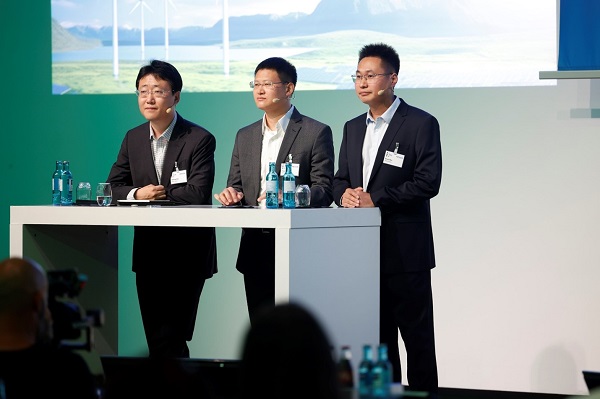
As the global plastics and chemicals industry preparing for K 2025, one of the most impactful trade fairs in the industry, Wanhua Chemical is set to be in the spotlight with the theme “Innovative Solutions for A Sustainable Life”. In a recent K 2025 Preview, Mr. Bruce Wen, Senior Executive of Wanhua, provided insightful information into the company’s strategic focus, especially in the areas of research and development, sustainability, and market responsiveness. With a strong conviction that innovation is the key to success, Wanhua is driving change in the materials landscape through aggressive investments in cutting-edge technologies and sustainable business models.
Wanhua Chemical is well-known for its robust R&D abilities, backed by a team of more than 5,000 committed researchers. Mr. Wen stated that the company committed over 4.5 billion RMB (around 570 million) to R&D last year, highlighting Wanhua’s dedication to long-term innovation. The company’s research efforts are directed at addressing several key market needs, especially improving quality of life through advanced material solutions Wen explained, emphasizing the company’s dedication to enhancing the everyday experiences of consumers.
Mr. Bruce Wen, Senior Executive of Wanhua Chemical, Photo Credit: Messe Düsseldorf
“To meet the demand for improving life quality, we supply a series of materials like TPU and PoE,”
One of the most dynamic areas Wanhua is focusing on involves the electrification of the automotive industry and the rapid integration of artificial intelligence. These trends are generating new requirements for high-performance materials, especially in optical applications. In response, Wanhua has established a specialized optical material platform designed to meet the increasing need for clarity, durability, and performance in lighting, displays, and sensors. This strategic move positions the company to support the ongoing evolution of smart mobility and autonomous vehicle technologies.
Sustainability, however, remains a cornerstone of Wanhua’s corporate strategy. Mr. Wen was candid in stating, “Sustainability is a very hot topic these years. We can’t escape.” Wanhua is addressing this challenge comprehensively by transforming its energy framework and incorporating clean energy solutions like nuclear power, solar energy, and wind power. The transition to renewable energy has been accompanied by internal actions to enhance production efficiency and lower total energy usage. On the materials front, Wanhua has come up with end-to-end solutions encompassing bio-based and recycled products that help customers achieve sustainability targets without compromising on performance and costs.
Photo Credit: Messe Düsseldorf
In response to wider market trends, Wanhua is also expanding its knowledge into the healthcare and green energy industries. Wanhua already supplies materials such as medical-grade polycarbonate, TPU, and PVC and is now engineering more advanced alternatives like medical-grade polysulfone. These materials facilitate numerous medical uses, indicating an increasing demand for safety, biocompatibility, and dependability in healthcare items. Meanwhile, Wanhua is also proactively contributing to the transition towards green energy through the provision of materials like BOE, nylon, and TPU, which are vital in the manufacturing of wind turbine blades, solar panel encapsulants, and energy storage systems. “There’s broad consensus globally on the importance of clean energy,” Mr. Wen noted, “and in turn, we provide various materials to support the development of the green energy industry.”
Looking ahead to K 2025 in Düsseldorf, Mr. Wen expressed strong enthusiasm about the opportunities the event will present. For Wanhua, K is not just a trade show—it is a platform for collaboration, discovery, and industry-wide dialogue. “Collaborative, sustainable for a broad future,” he said, describing not only the company’s K 2025 motto but its overall vision. The company aims to engage with partners and customers from around the world, share insights into its latest innovations, and foster long-term relationships that can drive shared success.
While the plastics sector is under increasing environmental, technological, and regulatory strains, Wanhua Chemical’s strategy serves as a template for innovation in the future. The balance between market responsiveness and long-term sustainability that the company demonstrates is not only reengineering its own operations but transforming the business ecosystem as a whole. Mr. Wen’s words uncover a science-based company focused on solving tough problems and enthusiastic about co-creating a better tomorrow through cooperation and openness.
With K 2025 on the horizon to command international attention, Wanhua’s presence will certainly be one of the event’s showstoppers. The company’s message is simple: by way of innovation, collaboration, and relentless dedication to sustainability, the plastics industry can make sustainable strides. Wanhua Chemical stands ready to take that lead.
AKG Ahler Steps Up Global Engagement with Entry into the Global Rotogravure Association
The Global Rotogravure Association (GRA) is pleased to announce that AKG Ahler Gravuren GmbH has joined as its newest member.As part of Matthews International Corporation since 2023, AKG Ahler Gravuren GmbH continues to uphold its reputation as a leading provider of high-precision engraving services for the gravure printing industry.
Located in Vreden, Germany, AKG Ahler Gravuren GmbH specializes in cylinder engraving, digital imaging, and both electromechanical and laser-based processes. The company’s commitment to technical precision and continuous modernization ensures maximum flexibility for its clients across the packaging, publication, and decorative printing sectors.
AKG‘s integration into the Matthews International Corporation and collaboration with the SAUERESSIG Group enhances its capabilities, allowing for comprehensive solutions from data preparation to cylinder production and final printing
About GRA
The Global Rotogravure Association (GRA) brings together gravure printers, cylinder manufacturers, engravers, and supply industries from across the globe. Building on the legacy of the European Rotogravure Association (ERA), GRA is committed to fostering international cooperation, technological progress, and industry excellence in rotogravure printing.
Future-Ready Robotics Set to Transform Industry at K 2025
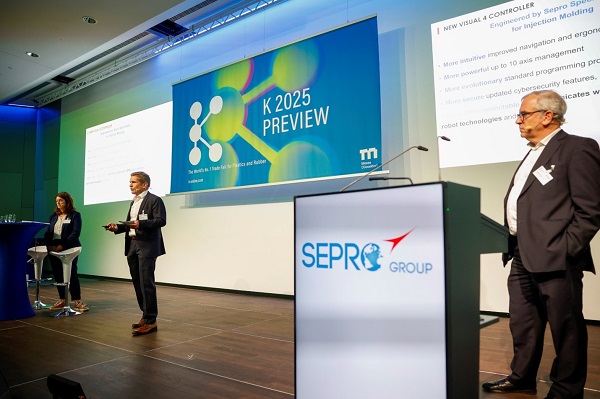
With the plastics industry undergoing rapid technological transformation, automation is no longer a luxury—it’s a necessity. As K 2025 approaches, Sepro Robotique is stepping confidently into the spotlight, showcasing a bold suite of innovations that reinforce its position as a leader in robotic solutions for injection molding. At the official K 2025 Preview event in Düsseldorf, where more than 80 international journalists gathered to explore upcoming trends, Sepro was represented by Caroline Chamard, Philippe Lang, and Dirk Schröder. The trio offered an exclusive look at what Sepro will present this October, and it’s clear that the company is ready to deliver not only on performance but also on customization, connectivity, and ease of use.
Mr. Dirk Schröder outlined what makes Sepro stand out in a competitive global market. “Sepro is one of the very few robot manufacturers who has the DNA to develop its own control, and when I say ‘own control,’ I mean we develop both the hardware and the software in-house.”
Photo Credit: Messe Düsseldorf
This level of autonomy is rare in the robotics world and allows Sepro to offer highly tailored solutions. By managing the full stack—from mechanics to controls—the company can design and refine each element with the end user in mind. “This sets us apart and gives us the potential to make our robots more tailor-made to customer needs,” Schröder emphasized.
Beyond robot manufacturing, Sepro is evolving into a full-spectrum automation integrator. “We are moving deeper into automation because that’s what our customers are asking for,” Schröder explained. “Today, we integrate our own robots into automation systems and develop additional modules such as conveyors, modular axes, and sorting systems.” This modular philosophy gives Sepro unmatched flexibility in designing customized systems. It also feeds a continuous improvement loop, where the experience of integrating and deploying the company’s own products reveals opportunities for innovation and optimization. “By integrating our own systems, we know exactly where to improve—whether it’s on the control side or in the mechanics,” he said.
At K 2025, Sepro is set to unveil a series of groundbreaking developments that reflect this strategic vision. One of the key highlights will be the launch of the Visual 4 control system, a next-generation interface designed to make robot operation more intuitive than ever. “It’s much easier to operate, much easier to program, and more secure,” Schröder noted. “It’s a huge leap in terms of usability and connectivity.” As robotics becomes more widespread across varying levels of technical expertise, control systems like Visual 4 ensure accessibility without sacrificing advanced functionality.
Another major innovation is the introduction of the S-Line robot series, the successor to Sepro’s widely adopted S5 and 5X lines. This new generation offers faster speeds, higher performance, and longer strokes, with greater payload capacity and a wider working envelope. “This robot is ideally suited for automation,” Schröder said, emphasizing the wide array of applications the S-Line can support. With greater adaptability and more optional configurations, the S-Line reflects Sepro’s mission to empower processors with tools that evolve with their needs.
Dirk Schröder Managing Director – Sepro Group GmbH, Photo Credit: Messe Düsseldorf
“Sepro is one of the very few robot manufacturers who has the DNA to develop its own control, and when I say ‘own control,’ I mean we develop both the hardware and the software in-house.”Dirk Schröder Managing Director – Sepro Group GmbH, Photo Credit: Messe Düsseldorf
Sepro will also demonstrate its capacity to engineer large, custom configurations, notably through the presentation of the 7X-100XL robot, a high-performance unit with two beams, each capable of handling 100 kilograms. This solution showcases Sepro’s expertise in creating customized systems for heavy-duty applications. “It’s a symbol of how we tailor our products to meet specific customer requirements,” Schröder explained.
Perhaps one of the most engaging features of Sepro’s K 2025 booth will be a live automation cell assembling a model sailing boat. This setup is designed to reflect Sepro’s modular automation strategy, where the robot is just one of many components working together. Conveyors, axes, sorting systems, and additional modules will be arranged in a way that encourages visitors to think of automation as building blocks. “The idea is to present it like Lego bricks,” said Schröder. “So customers can look at the modules and imagine how to configure them for their own specific product lines.”
Reflecting on the broader industry context, Mr. Schröder also addressed the meaning behind this year’s K 2025 motto: The Power of Plastics. In an era where plastic often finds itself at the center of environmental debates, he advocated for a more informed and balanced conversation. “We have areas where people do bashing about plastics,” he said. “But we should be smart and use our engineering capabilities. The power of plastics is about using them where it makes sense and where they deliver value responsibly.” For Sepro, that responsibility means supporting customers in making better products with the right materials—and the right automation behind them.
Sepro’s journey from robot supplier to automation integrator represents more than a business evolution; it’s a strategic response to real-world demands in plastics manufacturing. With full control over software, hardware, and system integration, Sepro offers an unmatched value proposition: scalable, customizable, and future-ready automation. K 2025 will be a platform not only for demonstrating what’s new but for showing how robotics and automation can be seamlessly aligned to the demands of modern manufacturing.
Whether it’s the cutting-edge S-Line robots, the user-friendly Visual 4 control system, or the modular automation showcase, Sepro is ready to shape the next era of plastics production—one customer solution at a time. With engineering precision and practical insight, Sepro proves that in the evolving world of plastics, smart automation isn’t just possible—it’s essential.
See the Future Now: K 2025 Demos Advanced Measurement and Sorting Tech
Photo Credit: Messe Düsseldorf
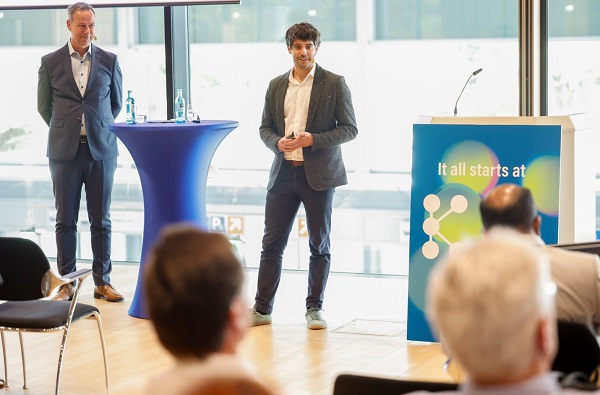
It all starts at K: SIKORA will showcase cutting-edge measuring, control, inspection, and sorting solutions for quality control in the plastics industry at K 2025, which will take place in Düsseldorf from October 8 to 15. The largest model of the CENTERWAVE 6000 family to date for accurate measurement of minimum wall thickness, centering, diameter, and ovality of pipes up to 1,600 mm in diameter will be among the future-focused solutions for tube, pipe, hose, and sheet extrusion that will be the main focus.
SIKORA will introduce a new solution for the accurate measurement of single-layer products for the first time, as well as a measuring system for the AI-based measurement of double-wall corrugated tubes and pipes. This will lead to the best product quality and the most economical and efficient use of materials. SIKORA encourages guests to test the inspection and analysis system by bringing their own pellet samples, under the motto “Human vs. Machine.” PURITY CONCEPT V. SIKORA’s measurement presentation effectively illustrates the ways in which contemporary measuring technology supports automation and environmentally friendly production.
Measuring system for large dimensions: CENTERWAVE 6000/1600 measures pipes from 250 to 1,600 mm diameter
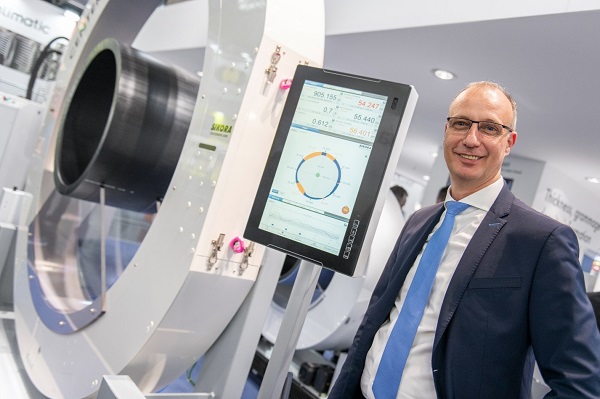
With the CENTERWAVE 6000/1600, they presents a further expansion stage of its proven radar technology for non-contact online measurement of wall thickness, centering, diameter, inner profile and ovality over the entire circumference of plastic pipes at the K 2025. The new model was specially developed for the diameter range from 250 to 1,600 mm and has become an indispensable part of large pipe production. “Thanks to its compact design, the system can be easily integrated into existing extrusion lines and is particularly suitable for production lines in which pipes with diameters of up to 1,600 mm are manufactured,” explains Christian Schalich, Head of Sales – Hose & Tube. In the line, the CENTERWAVE 6000 supports fast centering, seamless quality monitoring and optional automatic control – all in real time. All models of the CENTERWAVE 6000 series enable intuitive operation at the touch of a button. Once switched on, the systems immediately provide continuous, precise measured values – without any presettings, coupling medium or calibration. The basis for this is the automatic determination of the refractive index of the material, which was patented by SIKORA.
Christian Schalich, Head of Sales – BU Hose and Tube Sikora, Photo Credit: Messe Düsseldorf
“This predictive measurement makes all the difference: it enables the operator to make immediate adjustments before deviations even occur, Operating errors are avoided thanks to the one-button operation, start-up scrap is reduced, target values are reached more quickly, and processes are controlled efficiently.”
A particular highlight is the integrated “Dynamic Shrinkage Prediction” function: Immediately after the first vacuum tank, the measuring system not only determines the current pipe dimensions in the hot state, but also precisely predicts the final dimensions that the pipe will have after cooling at the end of the extrusion line. The CENTERWAVE 6000 thus acts as a kind of virtual measuring head for the final dimensions of the product – a decisive advantage for early process optimization and quality assurance. With the presentation of the largest CENTERWAVE model, SIKORA once again underlines its claim to supply suitable measuring device solutions for specific applications – as an important component of an automated and self-sufficient extrusion process.
Customers are invited to bring a small amount of pellets to K and challenge the PURITY CONCEPT V inspection and analysis system.
Measuring system for small dimensions: CENTERWAVE 6000/250 measures tubes and pipes from 32 to 250 mm
The CENTERWAVE 6000/250 complements the CENTERWAVE family in the lower diameter range and has been specially developed for tubes and pipes from 32 to 250 mm. With wall thicknesses from 1.6 mm, the system measures wall thickness, centering, diameter, inner profile and ovality continuously and without contact – 360° over the entire circumference of the product. A key feature is the automatic adjustment of the measuring speed to the line speed. This ensures permanent 100 % coverage in real time – regardless of product speed or diameter. As with all CENTERWAVE models, the proven radar technology is also used here.
Innovation: X-RAY 6000 PRO C-PIPEAI for measuring corrugated pipes (DWC) using AI
At the K 2025 in Düsseldorf, SIKORA presents the X-RAY 6000 PRO C-PIPE, a new system for precise and reliable measurement of layer transitions during the production of double-wall corrugated pipes and tubes (DWC). The system combines an X-ray-based measurement process with newly developed, AI-supported software and thus enables highly accurate evaluation of the X-ray data – even for the complex hill-valley outer contour of corrugated pipes and tubes. The X-RAY 6000 PRO C-PIPE ensures early measurement of wall thickness and eccentricity, particularly in the critical start-up phase of extrusion. This enables fast and efficient centering and significantly reduces the amount of start-up scrap. Continuous quality control in real time not only ensures maximum process reliability, but also enables considerable cost savings.
Visitors to the SIKORA booth can expect freshly prepared culinary specialties as well as a fine selection of refreshments and coffee specialties in addition to the opportunity to talk and exchange ideas.
Measurement of single-layer products: the X-RAY 6000 PURE for measuring all dimensions including the minimum wall thickness
With the X-RAY 6070 PURE, SIKORA presents a new type of X-ray measuring system for the precise measurement of the total wall thickness of tubes and hoses in the diameter range from 6 to 65 mm – for both single and multi-layer products. Unlike the X-RAY 6000 PRO, which was developed for measuring the layers of multi-layer products, the PURE specifically measures the total wall thickness. As an efficient alternative, the X-RAY 6070 PURE replaces classic ultrasonic technology in price-sensitive markets – with higher precision and stability at the same time. In combination with the ECOCONTROL, the measurement data is visualized, documented and used for targeted process optimization.
Innovation: LM SMART for contactless length and speed measurement in extrusion lines
The LM SMART is a new, non-contact length and speed measuring device for tube, pipe and hose extrusion. The system measures lengths with an extremely high accuracy of 0.05 % without any wear or slippage. Based on the proven laser doppler method, the LM SMART measures independently of the color, surface and diameter of the product and can be easily integrated into existing lines thanks to its compact design. The unique, permanent calibration and maintenance-free technology ensure maximum availability – and significant savings potential in production thanks to the precise length measurement.
PURITY SCANNER ADVANCED: Inspection and sorting for demanding plastic applications
Inspection and sorting of plastic pellets with the PURITY SCANNER ADVANCED.
With increasing demands on the purity of technical plastics – for example in the cable market when using XLPE – the need for reliable quality control is also growing. The same applies to high-performance plastics such as fluoropolymers (e.g. flame-retardant plastics) or standard materials such as polypropylene (PP): flawless material quality is crucial in all areas of application. Impurities can not only impair functionality, but also cause considerable economic losses.
To meet these challenges, SIKORA offers the PURITY SCANNER ADVANCED, a flexibly configurable inspection and sorting system that combines maximum precision with modular technology. “Critical contaminants – even of minimal size – are reliably detected and automatically sorted out. The detection and the blow-out system work together perfectly,” explains Ralf Kulenkampff, Head of Sales – Plastics at SIKORA. Depending on the application, different camera types can be integrated. In addition to high-resolution optical cameras, which detect black specks from 25 µm, for example, an X-ray camera is also available as an option – especially for detecting metal particles in the pellets. While conventional systems on the market often work with a maximum of two cameras and therefore only cover limited fields of view, SIKORA expands the spectrum with an additional black and white camera. “This third camera enables a significantly higher detection rate – a unique selling point of our system,” Kulenkampff continues. Another highlight is the specially developed hybrid blow-out system: customers can define which types of contamination are tolerable, for example small, light-colored black specks, and sort them out with a smaller blow-out unit. For critical contaminants such as metal particles, on the other hand, a larger blow-out unit is used. This intelligent interaction minimizes unnecessary material loss (“by-catch”) and makes a significant contribution to economical and sustainable production. “The system combines maximum detection reliability with efficiency – a decisive advantage for our customers,” summarizes Kulenkampff.
The smallest model of the CENTERWAVE family for small product diameters from 32 to 250 mm.
“Human vs. Machine” – How pure is your material really? Live tests with the PURITY CONCEPT V
Many material manufacturers are convinced that their pellets are clean. But how does it look when a high-precision testing technology takes a look? Under the motto “Human vs. Machine”, SIKORA invites visitors of the K 2025 to find out exactly that. The focus is on the PURITY CONCEPT V inspection system, which inspects pellets or test plates for optical impurities such as black specks within a few seconds. The system detects, visualizes and records even the smallest contamination and provides a comprehensive statistical evaluation – automated and reproducible. Live material tests with the PURITY CONCEPT V will be carried out at the SIKORA booth. Visitors can bring small quantities of pellets or test plates – and put their material to the test. Participation is free of charge and offers an ideal opportunity to see the precision, speed and user-friendliness of the system – and to perhaps make a surprising discovery. And best of all: if the system does not detect any contamination in the material, participants can expect a little surprise. If, on the other hand, contamination is detected, the visitor receives a detailed test report that provides valuable information on material quality.
The PURITY CONCEPT V is a laboratory testing device for inspecting and analyzing pellets, flakes and test plates.
Experience Service competence live: Focus on availability, efficiency and training
Maximum availability and efficiency of SIKORA systems for the customer – this is SIKORA’s top priority. At the K 2025, the service team will present the complete range of services related to support and training. From the first day with professional installation and commissioning to comprehensive consulting and maintenance, SIKORA supports its customers worldwide as a partner. A special highlight is the presentation of the SIKORA Academy: With specially developed training programs, it offers practical training on the devices – on site at the factory, online or at SIKORA. The training courses provide in-depth knowledge on the optimal use, maintenance and fault diagnosis of the systems. This not only minimizes downtimes, but also sustainably increases process reliability and efficiency. Visitors to the trade fair will have the opportunity to talk to the service team and discuss individual solutions for their requirements.
Inspiring exchange with enjoyable highlights
On the second level of the exhibition stand, visitors can expect an exclusive area for personal discussions with the SIKORA experts. In a relaxed atmosphere, freshly prepared culinary specialties as well as a fine selection of refreshing drinks and coffee specialties invite visitors to linger and exchange ideas. The lounge also offers an impressive view of their innovative technologies and thus creates the perfect setting for informative meetings.
K 2025 Sets the Tone for Carbon Neutrality Through Strategic Specialization
DOMO Chemicals, a top-tier supplier of high-performance polyamide materials, will showcase how it is accelerating its march toward a more specialized, low-carbon portfolio, setting new standards in innovative and sustainable polyamides. With the motto “Building the Future Together,” DOMO invites customers and industry partners to discover how working together, innovation, and sustainability can create the future of performance materials.
Juha Jokinen, CCO of DOMO Engineered Materials, Photo Credit: Messe Düsseldorf
“We offer the broadest sustainable polyamide portfolio on the market, supported by local application expertise that helps customers integrate recycled materials into their specific applications,” says Juha Jokinen, CCO of DOMO Engineered Materials.
With 10 production sites, 14 sales offices, and a strong European base, DOMO focuses its progress on its Engineered Materials and Polymer & Intermediates businesses by combining global scale with local application expertise. “Backed by a robust sustainability strategy, we are increasing capacity in Asia, optimizing our European operations and focusing on renewable energy, partnerships and technological breakthroughs,” says Yves Bonte, CEO of DOMO Chemicals.
Technological innovation with post-consumer polyamide. Compound produced with 30% post-consumer PA66 from physical recycling (dissolution process) of end-of-life vehicles. Copyright: AUDI AG
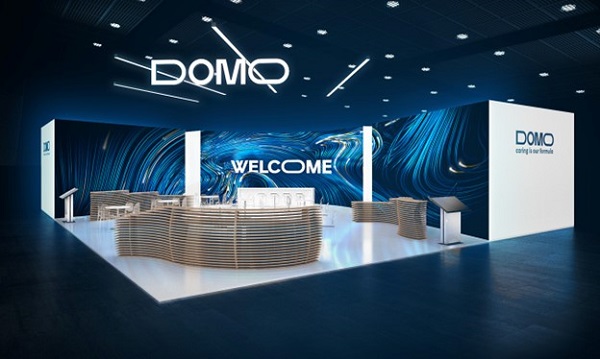
DOMO’s fully digital and interactive booth will showcase its innovations across four key application pillars—each inspired by one of the four classical elements. Under “EARTH,” DOMO will present bio-based and recycled polyamide solutions. “AIR” represents lightweight materials enabling metal replacement and CO₂ reduction. “FIRE” focuses on flame-retardant and high-temperature-resistant materials for EVs, E&E, and performance fibers. “WATER” highlights safe, high-performance solutions for fluid handling and sanitation. “This insightful concept helps illustrate how our tailored polyamide solutions contribute to lighter, safer and more circular applications,” Bonte added.
Photo Credit: Messe Düsseldorf
DOMO’s leadership in sustainable polyamide recycling will also take center stage. Visitors will see applications developed using mechanical recycling, the patented MOVE 4EARTH process, chemical recycling with depolymerized polyamide-based solutions, mass balance bio-circular solutions (ISCC PLUS certified), and physical recycling (dissolution). At the stand, visitors will discover parts developed with a new physical recycling technology (dissolution), which is the result of a collaborative project between AUDI AG, the Fraunhofer Institute, and DOMO. In the pilot project, both PA6 and PA66-based applications have been successfully molded using a 30% recycled PCR from end-of-life vehicles, meeting OEM requirements.
In a milestone for climate-neutral innovation, they will present DOMAMID MBB—a mass-balanced, bio-attributed PA6 with up to 69% bio-attributed content and ISCC PLUS certification.
“These materials achieve a significant CO₂ reduction compared to fossil-based alternatives,” says Vedran Kujundzic, CCO of DOMO Polymers & Intermediates. “They are ideal for food and pharma packaging, textiles, and engineering plastics.”
Sustainable mobility begins with lighter components. DOMO’s booth will highlight a one-piece gas-molded bicycle handlebar using a TECHNYL compound in combination with UD tapes reinforcements for Canyon in collaboration with ENGEL, a child car seat that combines lightweight design, safety, and sustainability, and a hybrid bonding solution enabling optimal adhesion of polyamides to metals developed for Sogefi Air & Cooling.
Technological innovation with post-consumer polyamide. Compound produced with 30% post-consumer PA6 from physical recycling (dissolution process) of end-of-life vehicles. Copyright: AUDI AG
As electrification accelerates, so do safety demands. They will showcase for the first time new TECHNYL STAR halogen-free FR solutions for EV battery modules and busbars, a breakthrough material for battery housing applications, and advanced developments in halogen-free flame-retardant solutions for electrical and electronics applications under the TECHNYL PROTECT brand. In addition, Siemens Smart Infrastructure and DOMO Chemicals have recently introduced Siemens’ first residual current circuit breaker (RCCB) made with sustainable TECHNYL 4EARTH polyamide, which contains 50% chemically recycled content and delivers identical performance and quality to conventional materials. This UL-certified material, developed by DOMO, enables Siemens to significantly reduce the environmental impact of its SENTRON 5SV3 RCCBs while maintaining the highest safety and quality standards.
DOMO’s advanced polyamides also support smarter water management by helping to reduce costs, enhance system reliability, and promote sustainability in water infrastructure. At K 2025, DOMO will showcase TECHNYL SAFE, certified for food and drinking water contact—now available for use in household, water meter, and sanitary applications.
DOMO’s progress toward its 2030 sustainability goals will soon be published in its Sustainability Report. Key highlights include receiving an EcoVadis Platinum rating in 2024, a leap from Silver to Platinum in just two years; generating more than 10% of Engineered Materials sales from circular and bio-based materials; and achieving significant gains in renewable energy use, water efficiency, and energy intensity improvement.
Pioneering Circularity: Certified Materials in the Spotlight at K Preview 2025
Photo Credit: Messe Düsseldorf
At K Preview 2025, CHIMEI Corporation sent a bold and ambitious message to the world, reaffirming itself as a sustainability-driven leader in the performance materials sector. The event was a key stage for the Taiwan-based company to showcase its latest advancements in bio-based and recycled plastics, focused on materials that not only perform to high levels of utilization but also comply with tough international standards, such as ISCC PLUS and ISO 14067. The certifications demonstrate CHIMEI’s commitment to full traceability, guaranteed carbon accounting, and environmentally sustainable use of resources—priorities that are very much in alignment with the industry move towards a circular economy.
At the core of CHIMEI’s message was the strength of collaboration and openness. Represented by company leaders Morris Ling and Shang Ju Yang (Roy), CHIMEI led the way with a resounding win that transcended product specifications, creating dialogue aimed at structural changes taking place in the industry of materials production and consumption. The company’s presentation emphasized how circular solutions, enabled by certified materials and digital traceability tools, can convert waste into valuable resources. Their ISCC PLUS-certified products are mass balance-based, allowing seamless integration into existing value chains, while ISO 14067 certification provides a reliable method for tracking and managing carbon footprints. These tools together offer CHIMEI’s partners the confidence to pursue more ambitious environmental goals without compromising on quality or performance.
Shang Ju Yang (Roy), Sustainable material solution Department Manager at Chimei Corporation, Photo Credit: Messe Düsseldorf
“Our approach is about closing the loop. But it’s not something any one company can do alone. What we saw at K Preview was a global willingness to co-create, and that’s what inspires us.” Roy Yang noted during a discussion at the event
A central theme that resonated throughout the preview was the necessity of co-creation. CHIMEI’s recycled plastics, which utilize both post-consumer and post-industrial waste, were presented not only as end products but as building blocks for new collaborative opportunities. The materials are already being used in applications such as automotive interiors, consumer electronics, and durable packaging, where strict mechanical and safety standards must be met. This pragmatic approach—coupled with proven sustainability—resonated with K Preview attendees from many different industries, such as OEMs, product designers, and circular economy advisors.
This sentiment was echoed in the strong turnout and the quality of engagement at CHIMEI’s booth, where decision-makers sought both inspiration and actionable insights into how certified materials can unlock low-carbon transformation in their industries.
With this momentum, CHIMEI now looks forward to K 2025 with new vigor and direction. At K 2025, CHIMEI will showcase a further portfolio of sustainable solutions, such as next-generation recycled ABS and PC blends, bio-attributed materials, and new digital platforms for feedstock traceability and carbon footprint monitoring. Attendees can also expect to learn about CHIMEI’s growing ecosystem of partnerships—across Europe, Asia, and North America—where real-world case studies are demonstrating how material innovation and responsible sourcing can go hand in hand.
CHIMEI’s proactive participation at K Preview 2025 made it clear that the company is not merely responding to sustainability trends, but actively shaping them. Its approach is grounded in data-backed environmental transparency, process innovation, and a systems-level mindset. By aligning with international standards, investing in green technologies, and encouraging open dialogue across the value chain, CHIMEI is helping shift the industry’s focus from short-term compliance to long-term transformation.
In the lead-up to K 2025, the company continues to invest in advanced recycling technologies, renewable energy integration, and life cycle assessment tools to reduce the environmental footprint of its operations and products. CHIMEI’s circular strategies are embedded not only in R&D but also in production, marketing, and supply chain practices, reflecting a holistic commitment to sustainability that is rarely seen at this scale.
CHIMEI’s participation was not only an exhibition at K Preview 2025, but a commitment to action. The company proved how innovative thinking, global certification and true collaboration within the plastics industry can overcome the challenges which face us today. With that CHIMEI has the world to join it in this conversation at K 2025 with a clear and inspiring message: Sustainability is not a destination—it’s a journey best taken together.
K 2025 Unveils Disruptive Solution Turning Compost into Biodegradable Plastic Products
“Microplastics are everywhere.” This direct statement lays the groundwork for the challenge that drives Caleyda, a new-generation, biodegradable material from the Dutch company Paques Biomaterials. With rising environmental protection measures and consumer tastes turning toward sustainability, Caleyda steps up as an attractive solution—providing a natural, scalable, and sustainable alternative to traditional plastics. That breakthrough will be highlighted at K 2025, the world’s leading plastics and rubber trade fair, where material circularity and next-generation solutions come to the forefront.
At its core, Caleyda is based on polyhydroxyalkanoates (PHAs), a class of biopolymers naturally synthesized by microbes as energy and carbon reserves. These polymers are unique in their ability to biodegrade in soil and marine environments—breaking down like cellulose or starch, without leaving behind microplastic residues. This makes PHAs, and by extension Caleyda, a promising answer to the persistent threat of plastic pollution.
“We’ve tested, piloted, and validated Caleyda through years of iteration. We’re ready to scale,” says Richard Schrama, head of business development.
Unlike earlier bioplastics that rely on crop-derived feedstocks, Caleyda utilizes waste feedstocks sourced from industrial and municipal wastewater. “PHA‑producing microbes can be found in wastewater treatment plants and selectively enriched,” explain the Paques Biomaterials team. This innovative approach not only diverts organic waste from treatment systems but also supports a circular economy by upcycling it into valuable biomaterial.
Caleyda’s development began in 2011, with extensive lab research and pilot trials spanning 2012 to 2023. A major turning point came in 2018, when a solvent‑based extraction process was introduced, improving material consistency. By 2021, a dedicated business unit—Paques Biomaterials—was established to commercialize Caleyda, and external pilots further validated its market readiness.
Photo Credit: Messe Düsseldorf
Scaling up PHA production poses significant challenges—from grams to kilograms, and now to industrial scale. By 2025, Paques Biomaterials aims to produce pilot batches of 25 to 100 kg, with plans to launch large‑scale manufacturing by 2027. Central to this strategy is the PHA Hub and Caleyda extraction plant in Emmen, Netherlands—part of the GECKO Project—designed to yield up to 6,000 tonnes per year of PHA.
Paques Biomaterials has crafted a hybrid value‑chain model that combines centralized extraction with decentralized PHA‑X production at wastewater facilities. This mix ensures both economies of scale and local stakeholder engagement, facilitating a modular approach that’s adaptable globally.
Market trends underscore the timeliness of Caleyda. Global PHA production currently stands at roughly 100,000 tonnes per year, with forecasts projecting growth to over 1 million tonnes by 2029. Although bioplastics are costlier than fossil-derived plastics, niche markets—such as coatings, adhesives, agricultural films, textiles, and high-value packaging—are increasingly open to paying premiums for sustainability. Emerging applications in 3D printing and ecosystem restoration further broaden its appeal.
The regulatory landscape is also a key factor. Laws like the EU’s Single-Use Plastics Directive are phasing out traditional plastics, while ESG mandates are pushing corporations toward sustainable sourcing. “The material transition shall take time,” acknowledges the team, “but the economy of scale in biobased production shall support demand across many markets.”
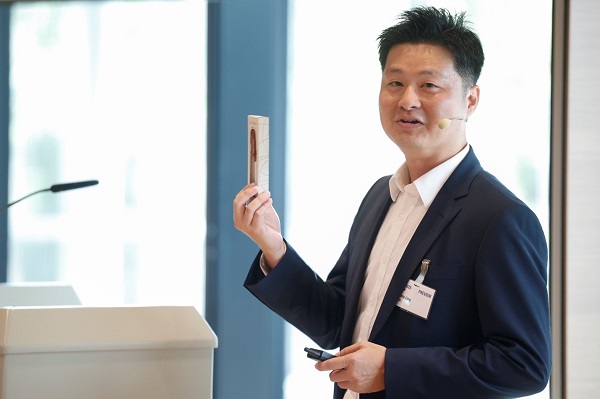
Dr. João Sousa, Technology Development Leader at Paques Biomaterials, Photo Credit: Messe Düsseldorf
“We are not just offering a new material—we are offering a new system,” says João Sousa
Caleyda’s commercial strategy is multi-stage and client-focused. From early prototyping to conditional offtake agreements and proof-of-concept validation, Paques Biomaterials is nurturing partnerships with converters and brands from the outset who leads technology development. This consultative engagement fosters trust and paves the way for long-term alliances.
To guide the introduction of Caleyda, Paques Biomaterials has brought together a multidisciplinary team of application engineering, business development, quality control, analytics, and marketing. Their value proposition covers all aspects and includes not only performance, but genuine sustainability credentials and supply assurance.
The Emmen facility—GECKO PHA‑X production plant and Caleyda processing center—is expected to be up and running by 2027. Modeled as a template for scaled-up deployment, it combines wastewater feedstock treatment with downstream centralized PHA purification. Pilot production and sampling during 2025–2026 will enable domestic and foreign trials, with commercialization on a full scale by 2028.
As industry leaders, investors, and sustainability advocates convene at K 2025, Caleyda is positioned to steal the spotlight—not just with its eco-friendly credentials, but with its readiness for market delivery. Combining scientific innovation with commercial discipline, Paques Biomaterials offers more than a green material—it offers a replicable system for industrial upcycling. In an era increasingly defined by circularity, Caleyda represents a tangible pathway toward replacing single-use plastics and reshaping the materials economy.
With a solid development track record, a future-focused value chain, and a market ready for disruption, Caleyda could be one of K 2025‘s most impactful innovations. As regulations clamp down and green sourcing becomes the norm, technologies such as Caleyda will pave the way toward a genuinely circular, low-carbon future.












 With this momentum,